The Order was created in 1725 as a one class order. Over time it evolved into three classes and two divisions, military and civil.
Seal
The earliest seal of the Order was double sided and described in the statutes as: “having on one side the Representation of Our Royal Person on Horseback in Armour, the Shield Azure, Three Imperial Crowns Or, the Arms usually ascribed to the Renowned King Arthur, with this Circumscription: Sigillum Honoratissimi Ordinis Militaris de Balneo: and on the Reverse, the same Arms empaling Our Royal Arms.”
The statutes of 1847 redesign the seal to a single side, the reverse of the one described above with the omission of the word Militaris from the circumscription.
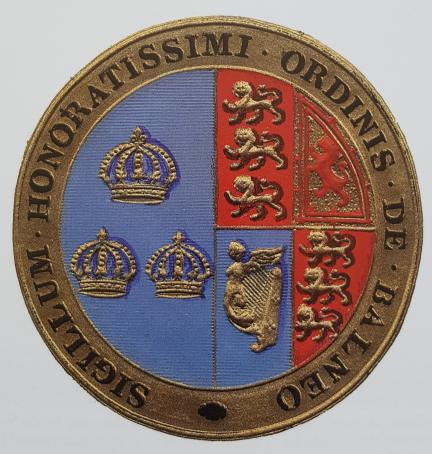
Seal in colour 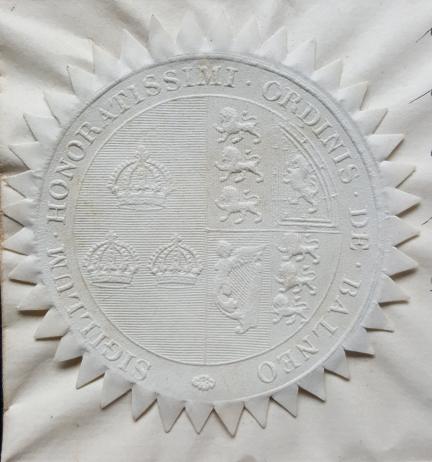
Seal 1893 impression 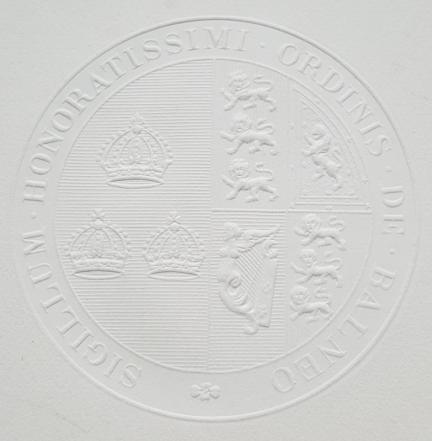
Seal 1958 impression
Smaller blind stamp seals have also been used by Officers of the Order.
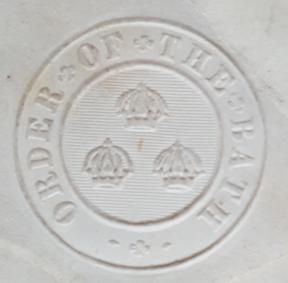
Registrar and Secretary 1871 impression 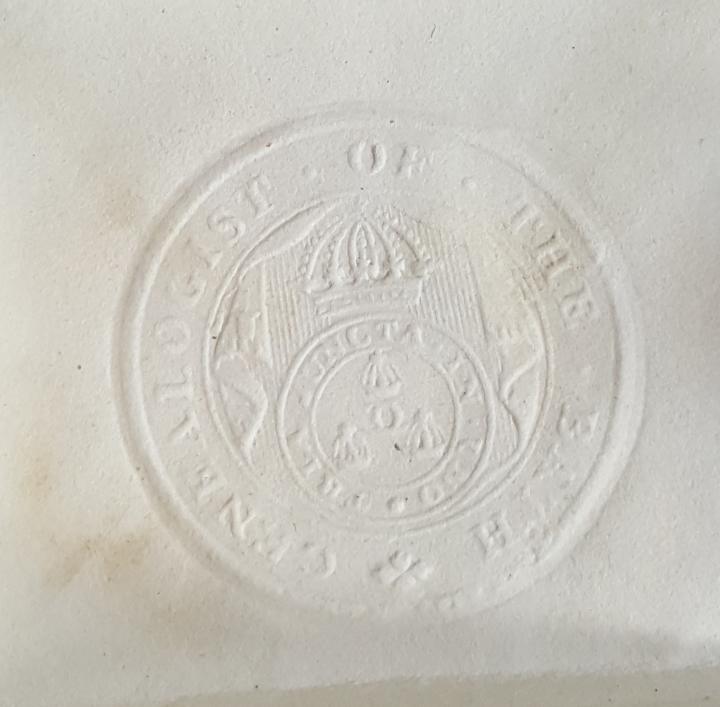
Genealogist 1818 impression
Other Signatures
Warrants are signed by the Great Master or, if that post is vacant, by the Secretary of State for War.
Other Paperwork
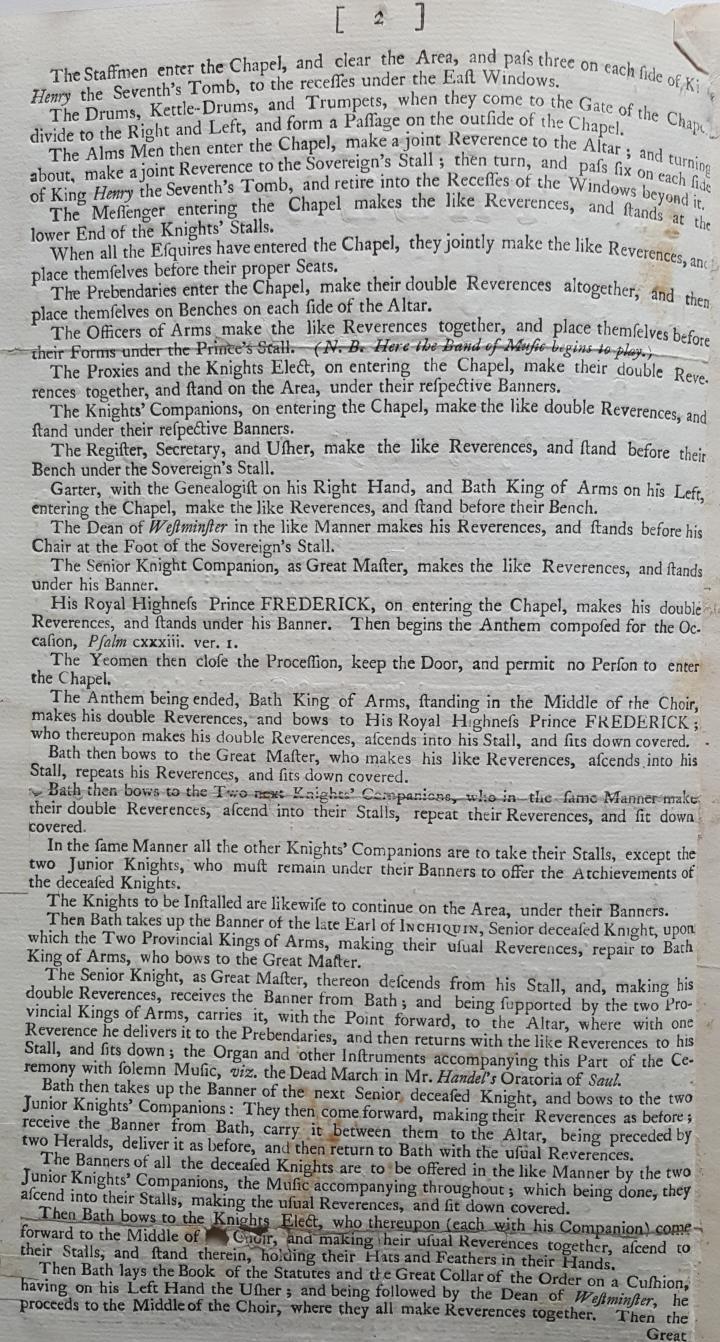
In the early days of the Order, Knights needed to attend an installation ceremony before they are allowed to wear the collar or star of the Order. One such ceremony took place on 19 May 1779. The following was prepared in advance of the installation, giving details of the ceremony.
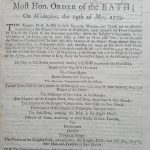
p1 
p3 
p2
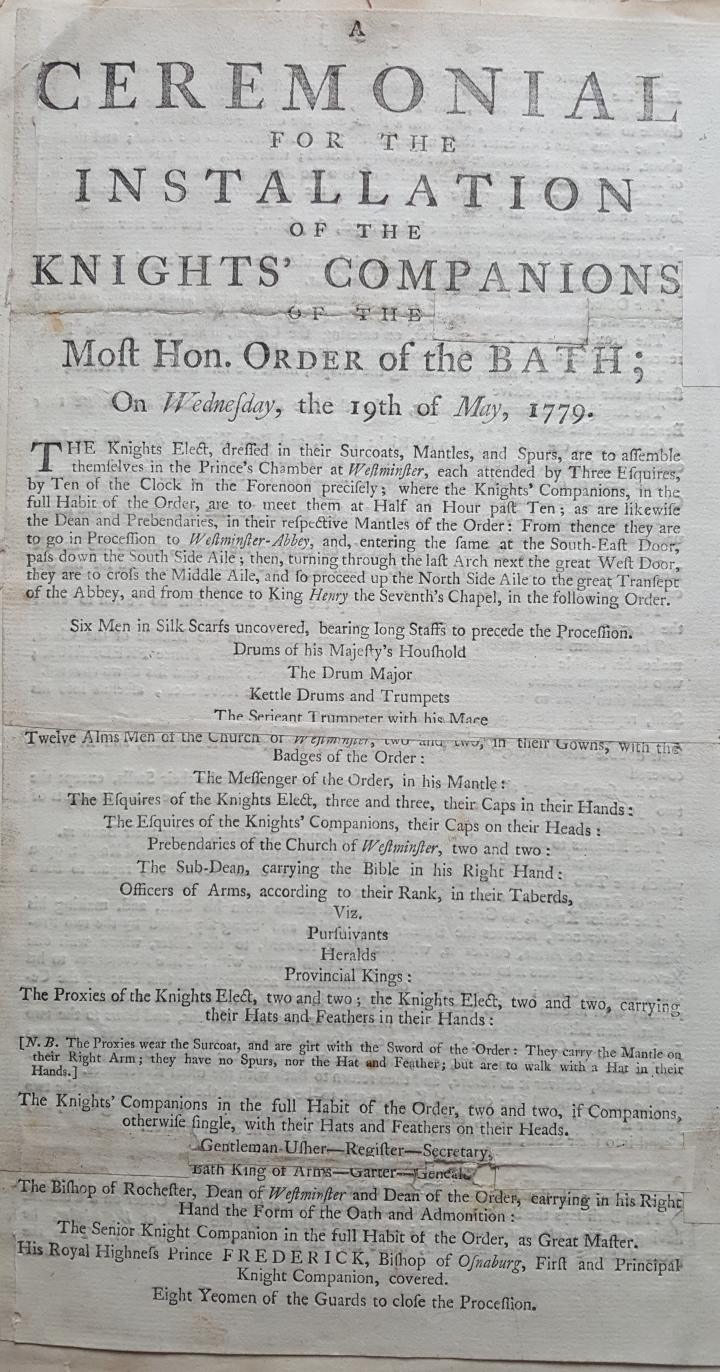
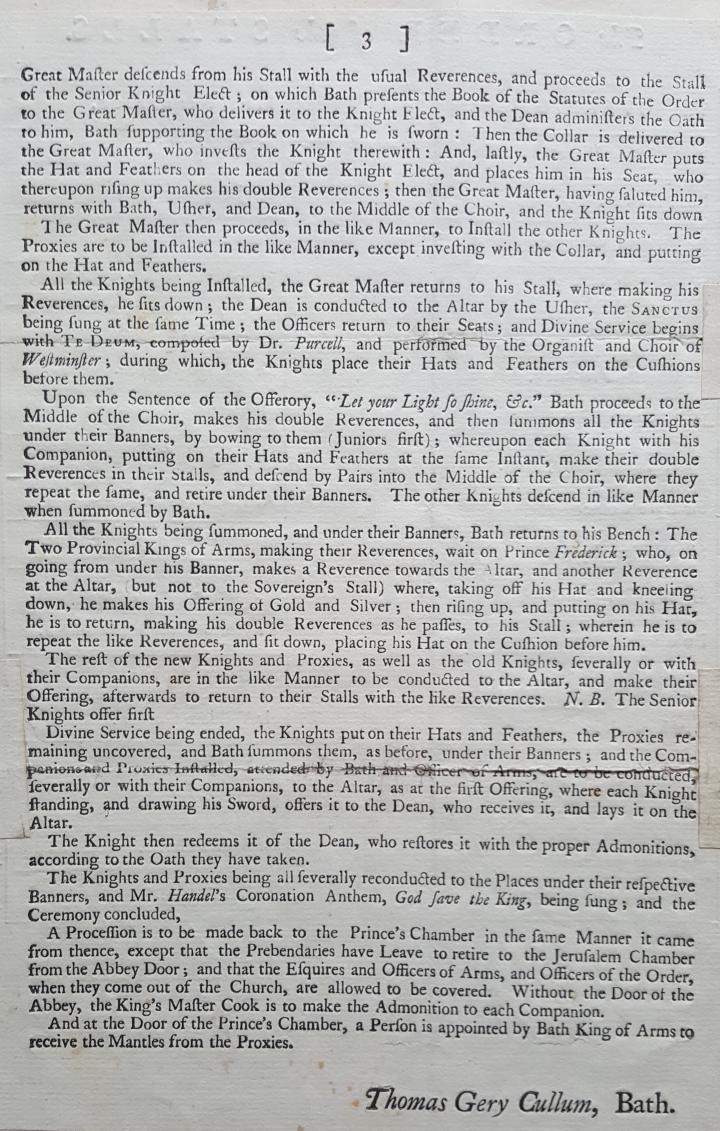
Installation services lapsed after the 1812 service and were not revived until 1913. The following is a leather bound copy of the order of service for 1913 and also pictures from the services in 1928 and 1968.
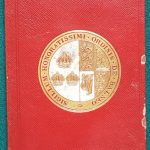
1913 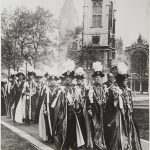
1928 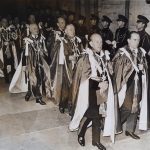
1968
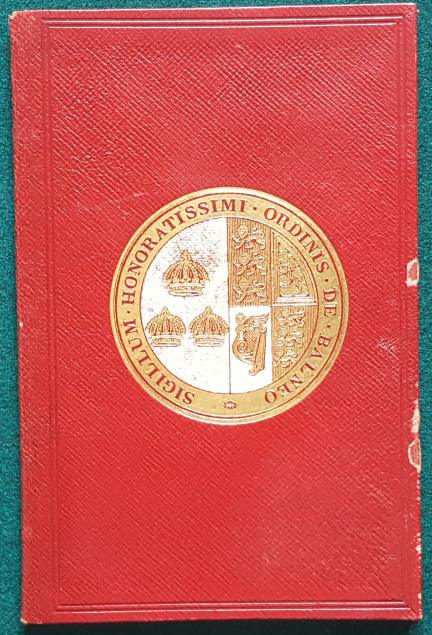
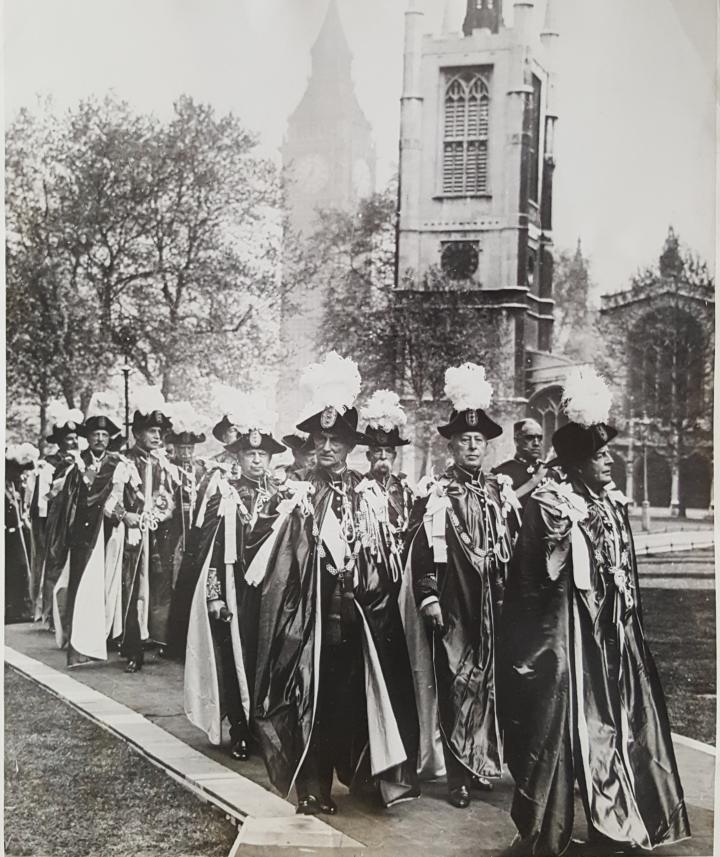
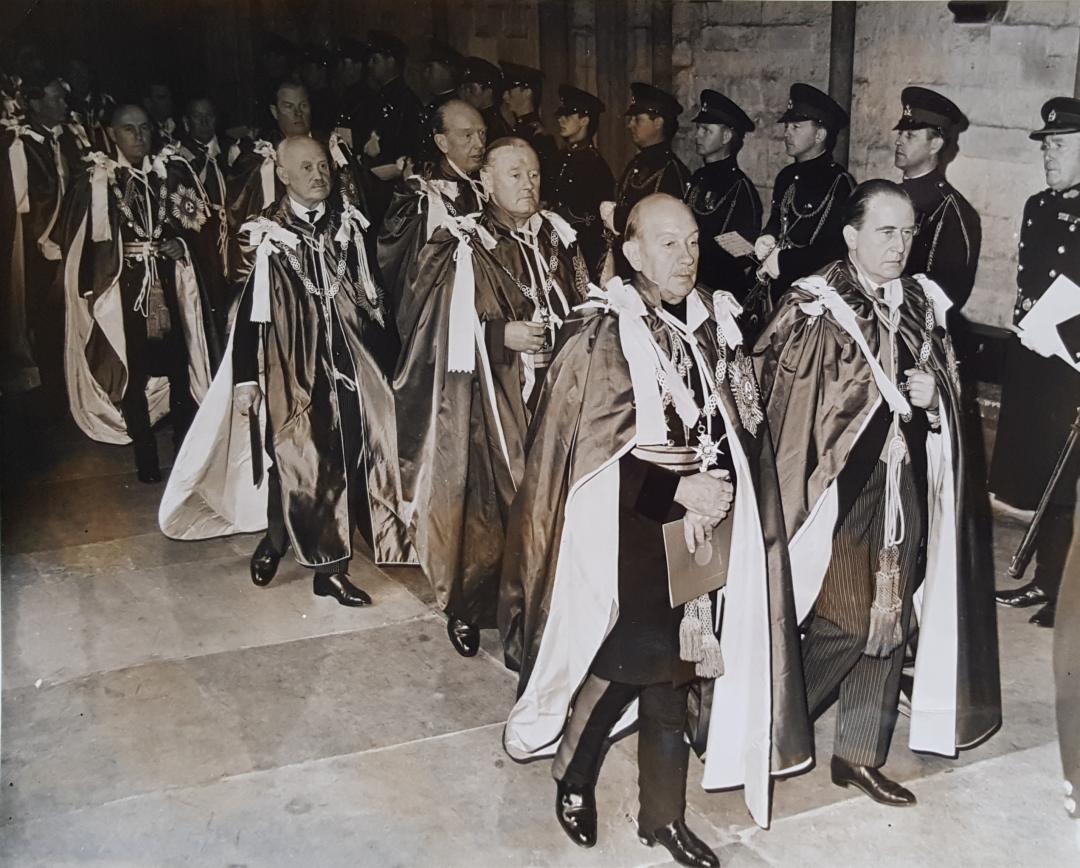
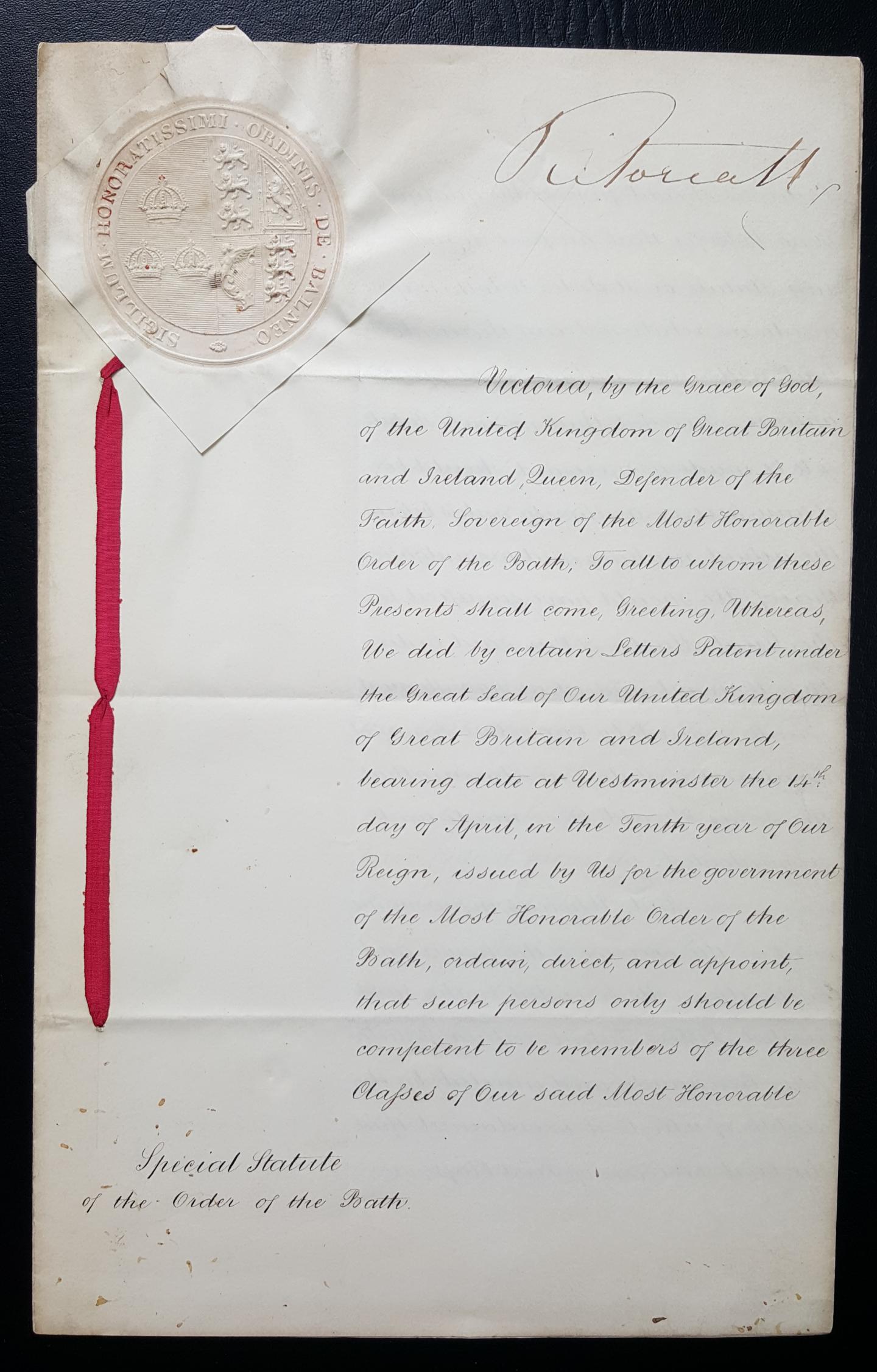
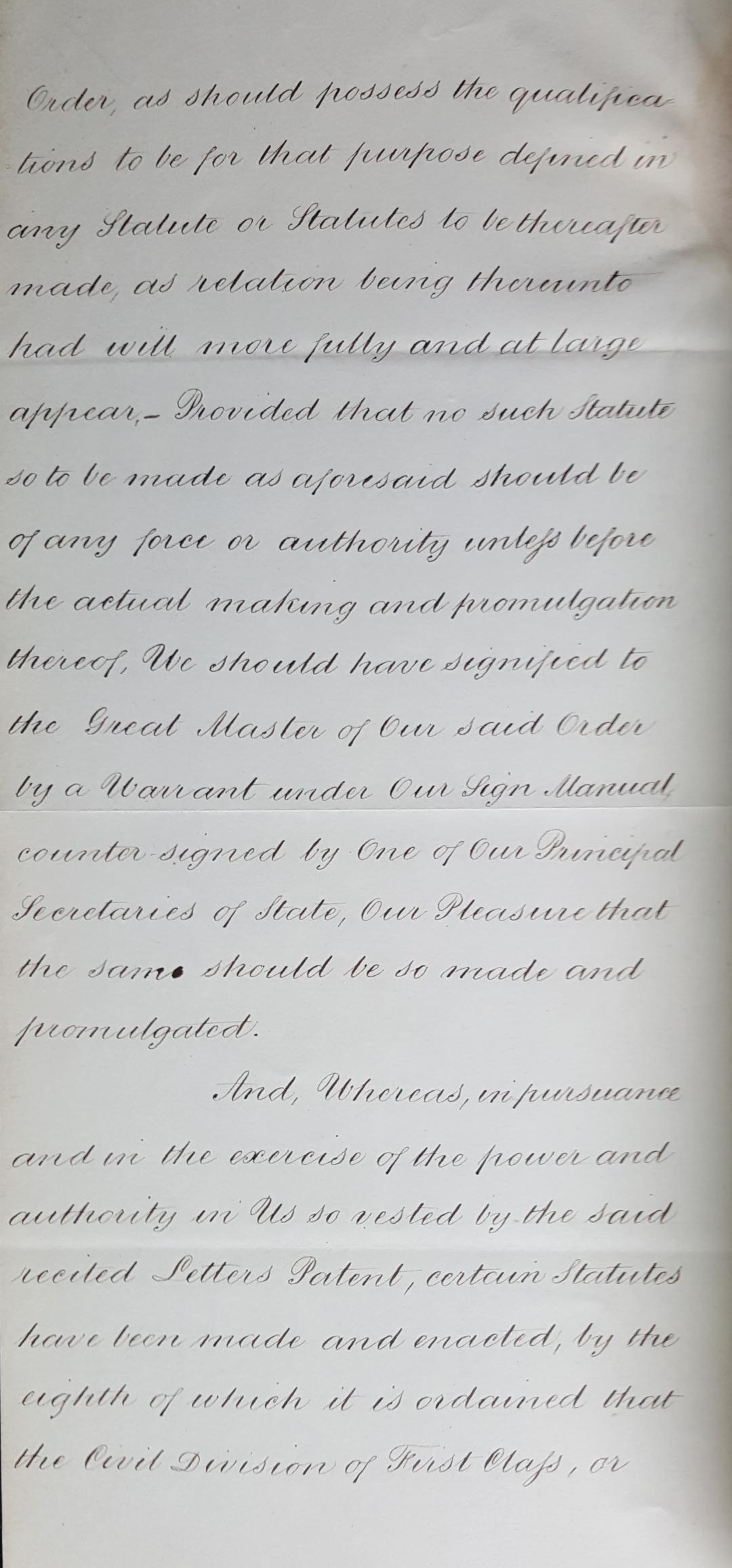
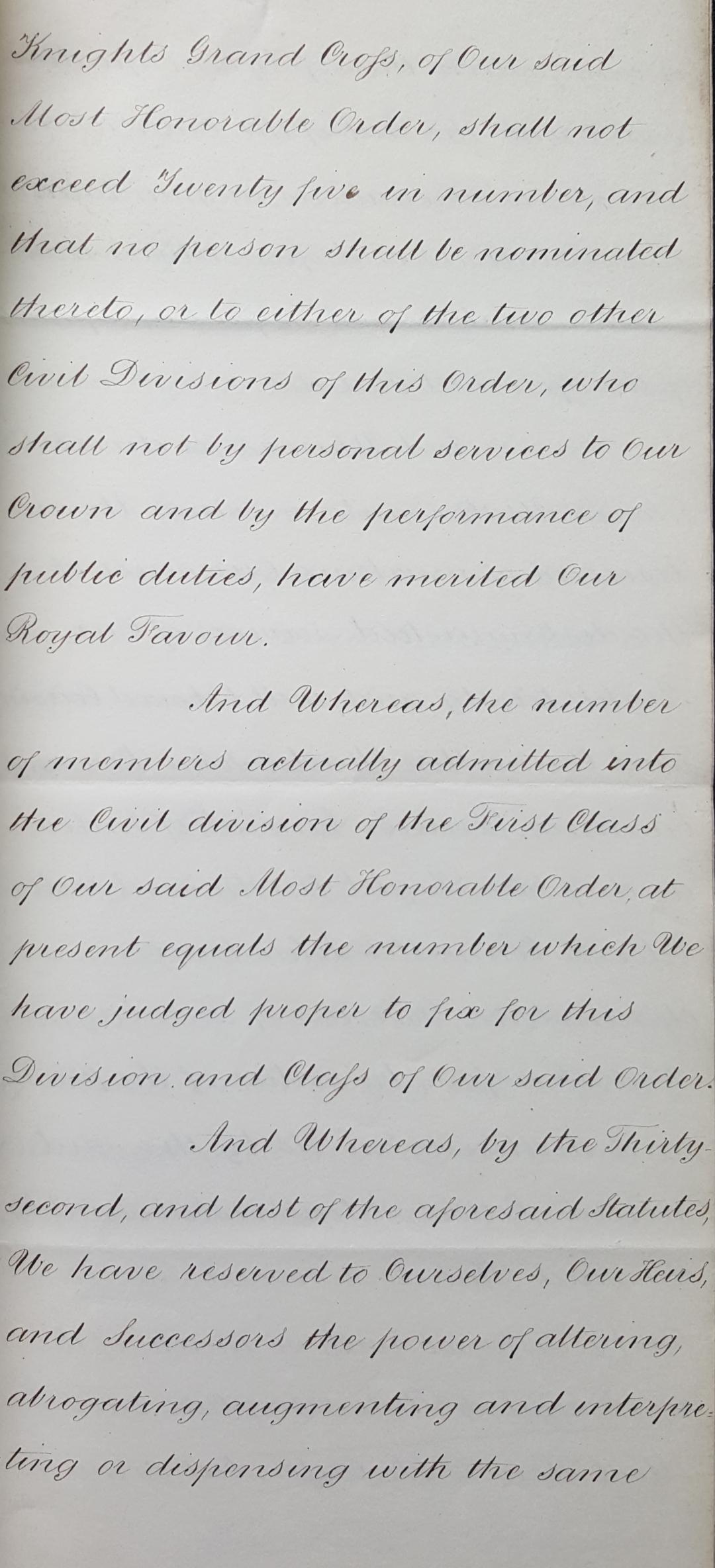
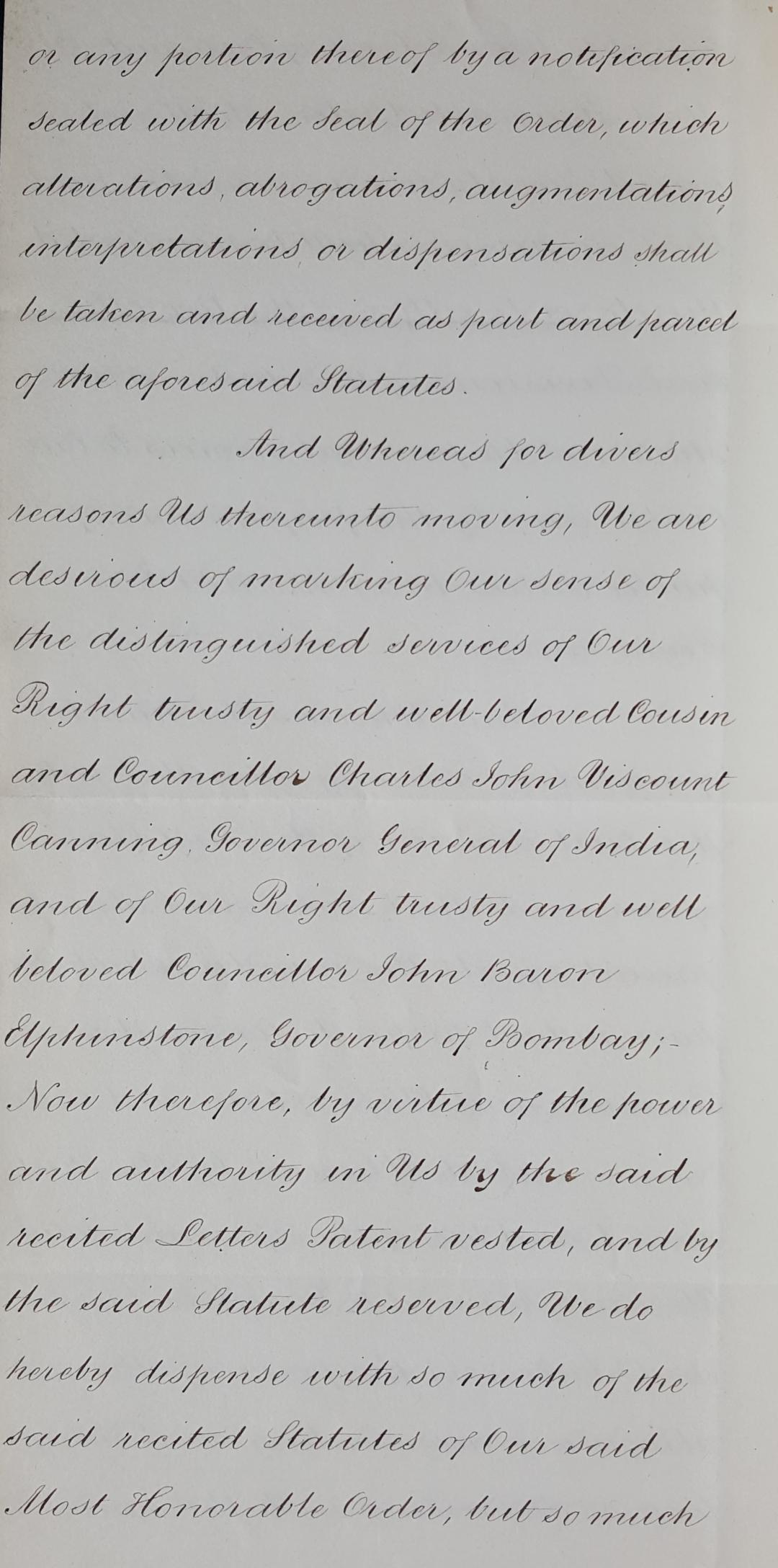
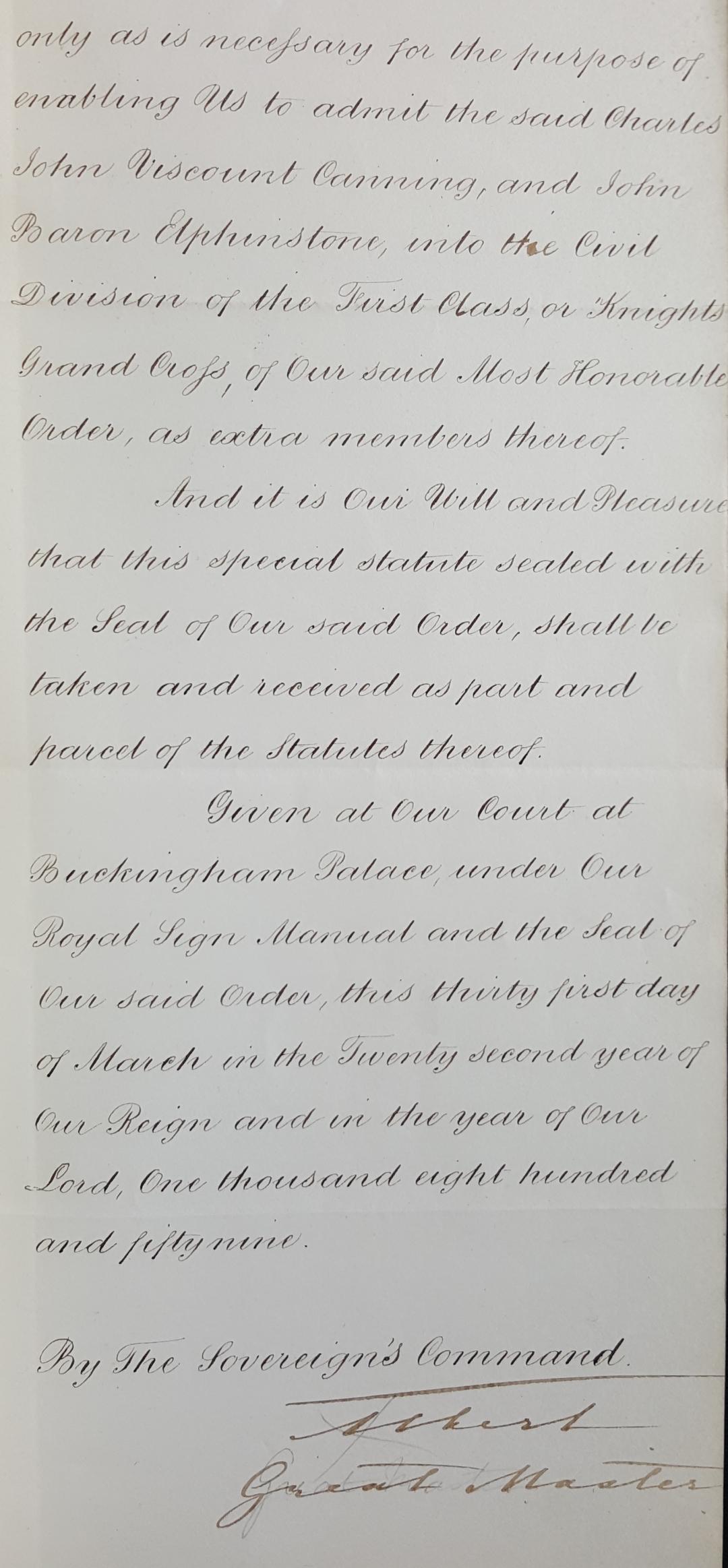
Most statutes restrict the number of members of each class of an Order to try to maintain the exclusivity of the Order. There are, however, always claims on an Order which require a certain flexibility, with additional members being appointed from time to time. In order to allow this, special statutes are created permitting the extra members. This is an example of a special statute from 1859 appointing Viscount Canning and Baron Elphinstone civil GCBs. They were Governor General of India and Governor of Bombay respectively and their positions demanded appointment to the Order.
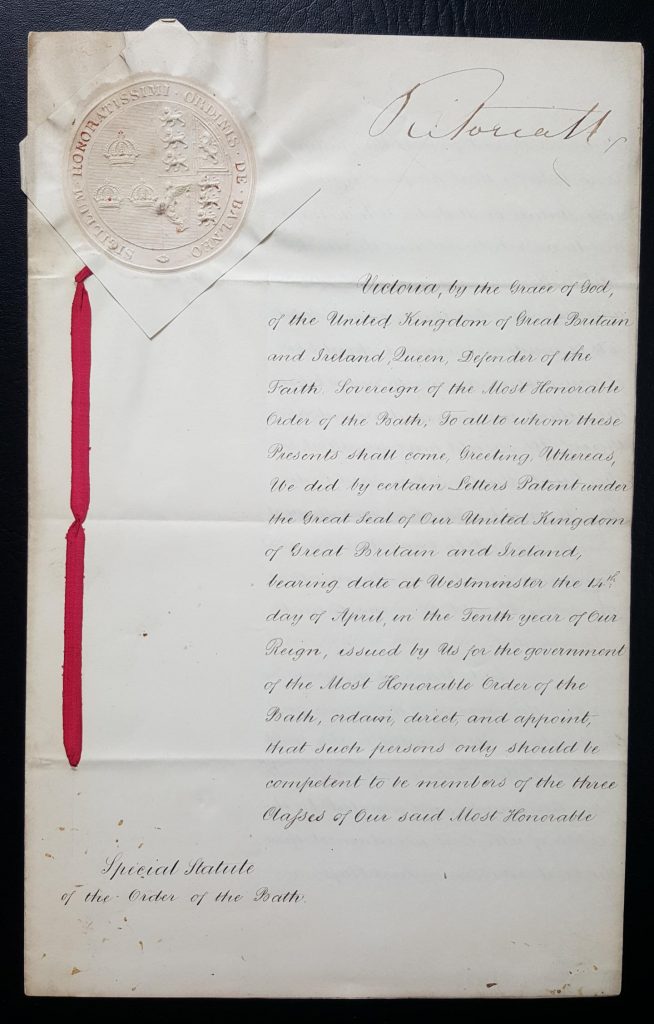
p1 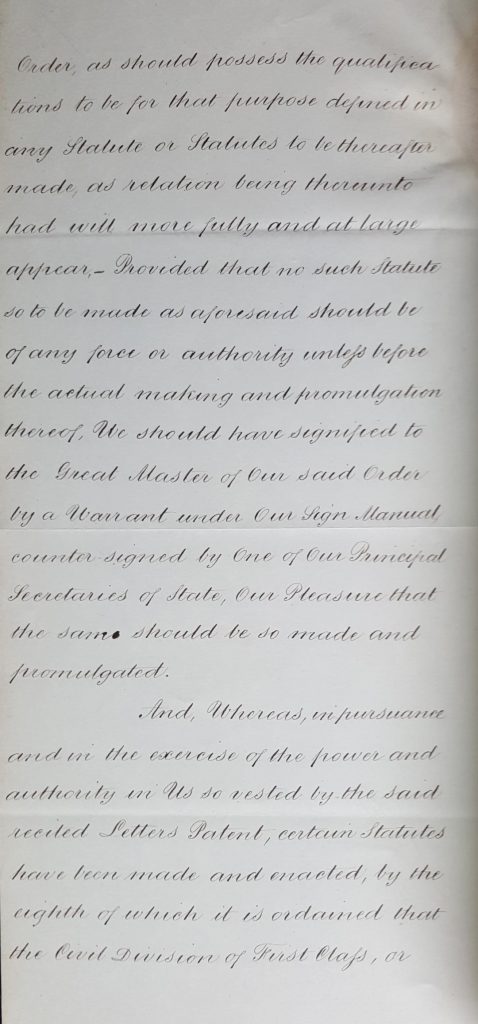
p2 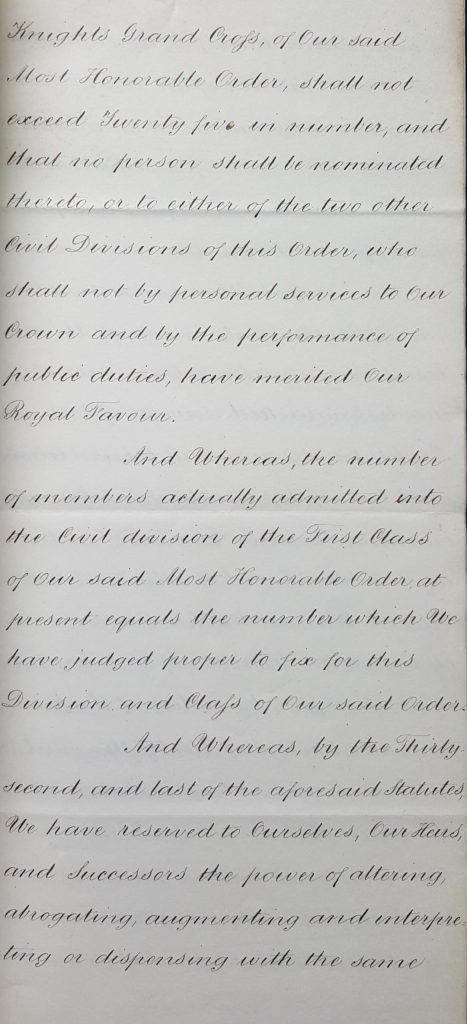
p3 
p4 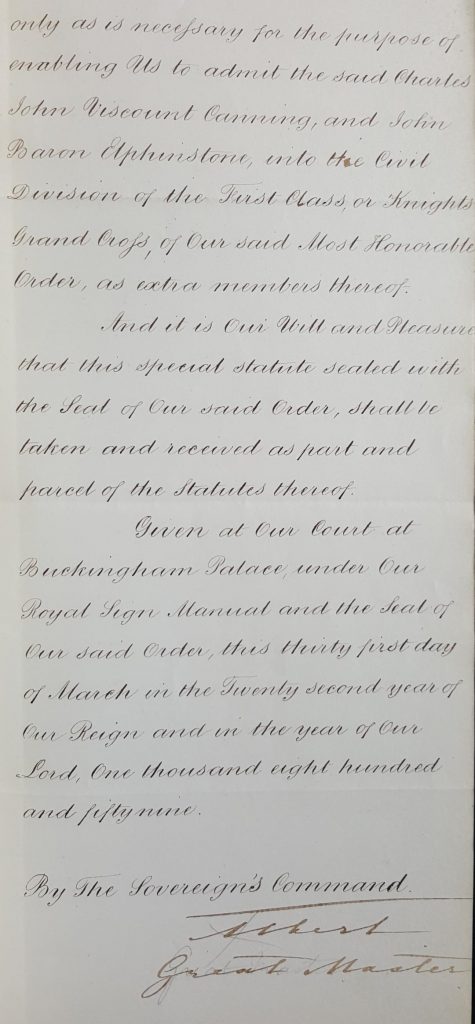
p5
Officers
Gentleman Usher of the Scarlet Rod
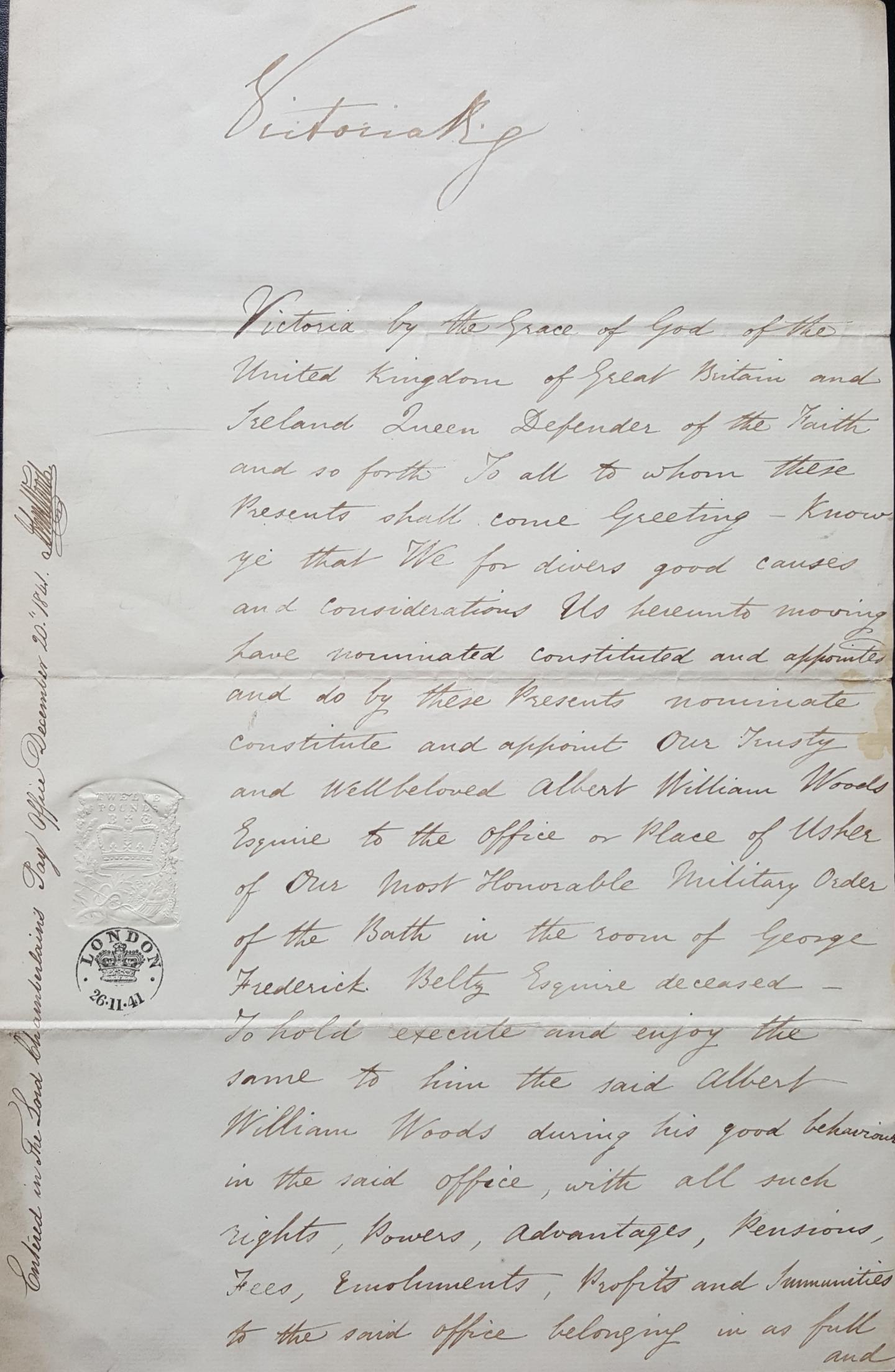
The office of Usher requires little in the way of duties, but did allow the post holder to enjoy a share of the fees charged to all new knights of the Order. These were £50 on appointment and £2 13s 4d annually thereafter.
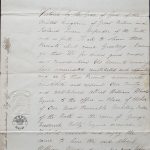
p1 
p2 
Reverse 
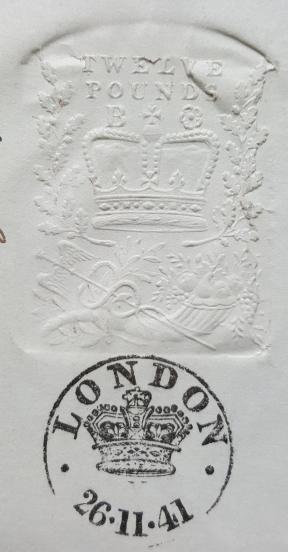
Revenue stamp
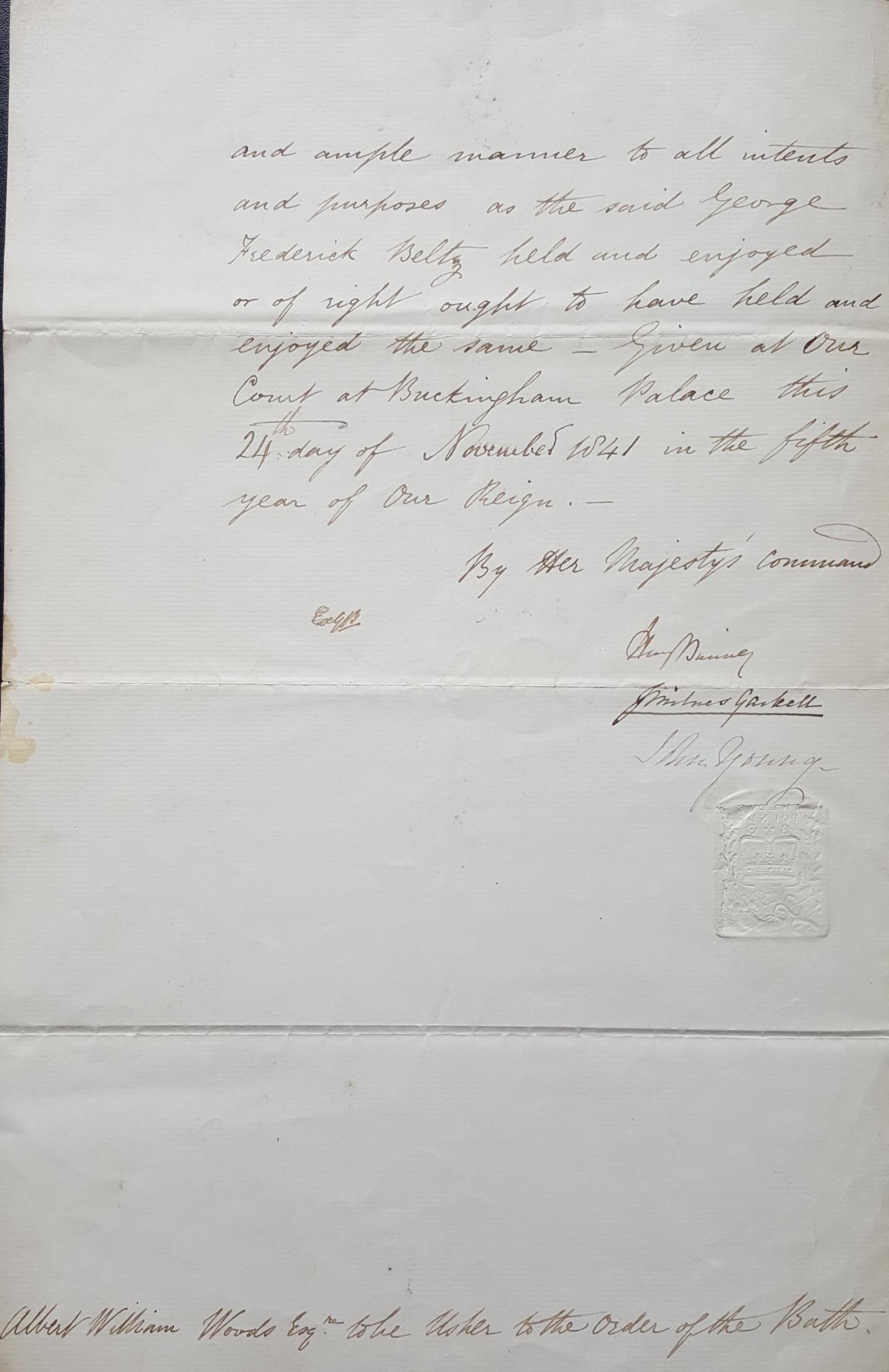
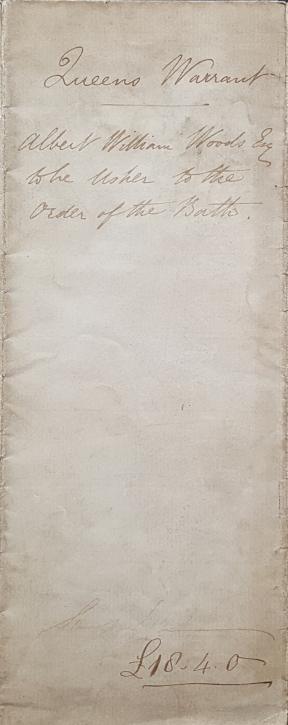
Registrar and Secretary
This is an altogether more substantive role requiring the post holder to prepare the warrants and other documents to be passed under the seal of the Order, send out copies of the statutes to members and to attend the sovereign at investitures.
p1 
p2 
Reverse
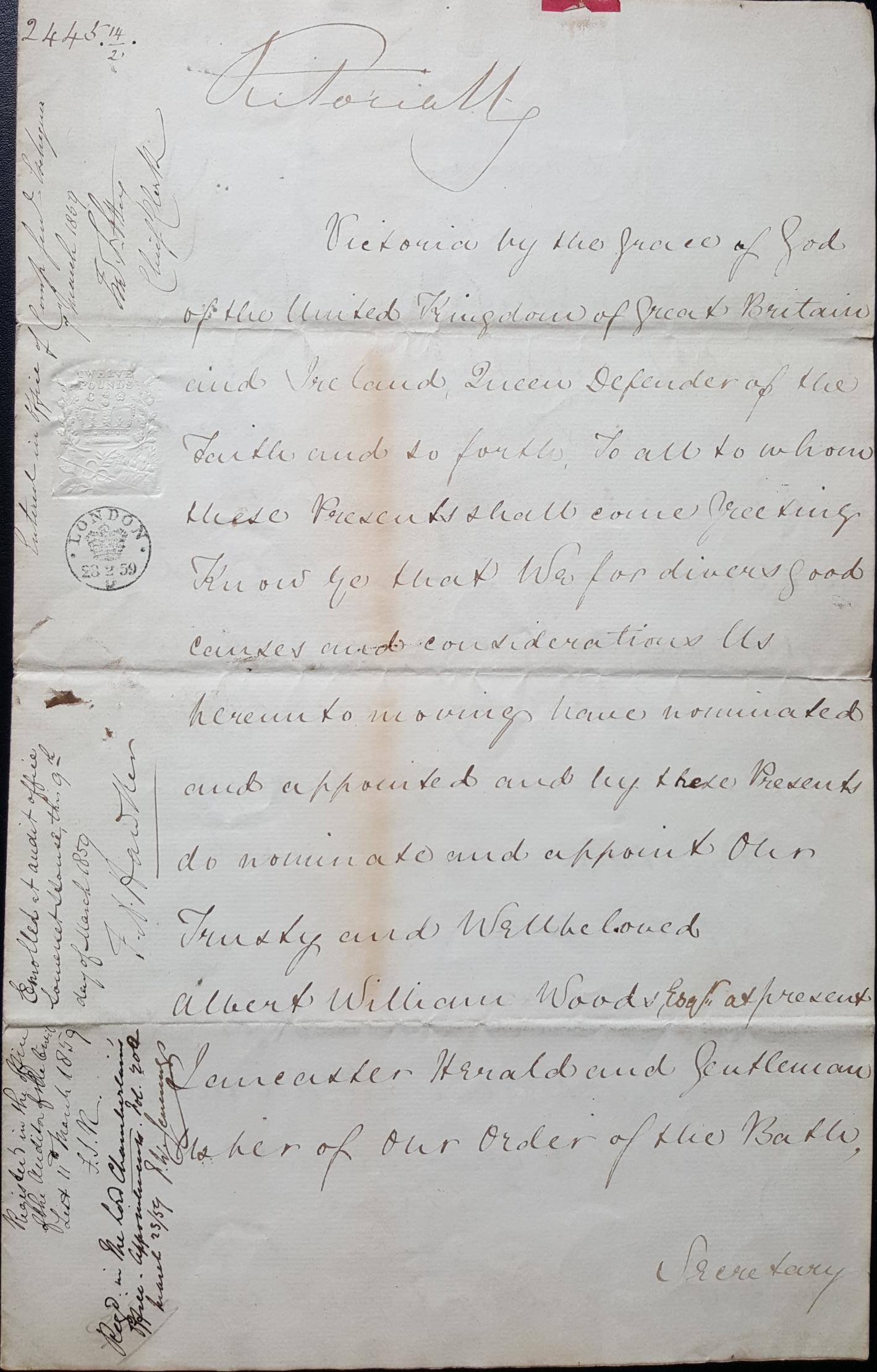
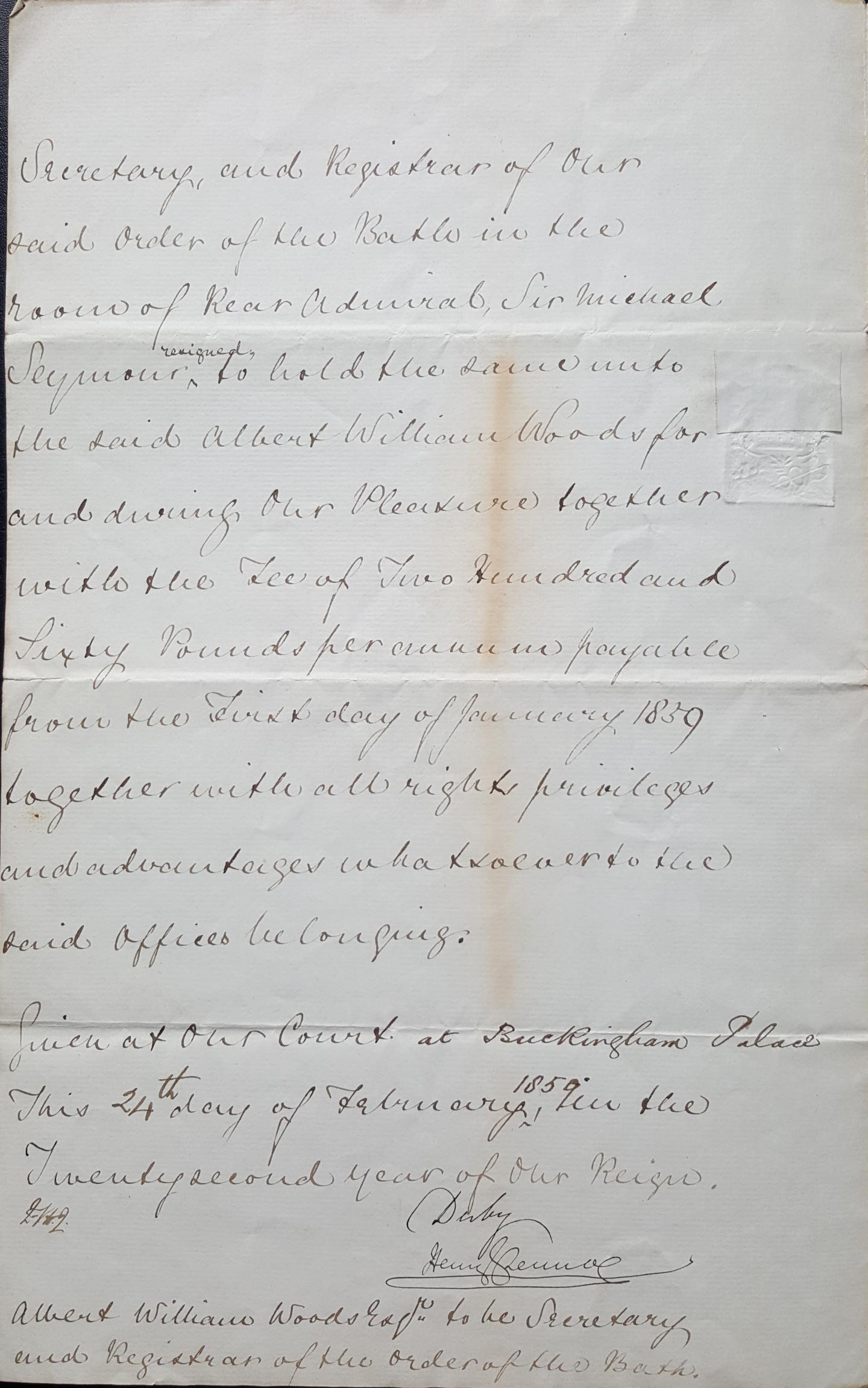
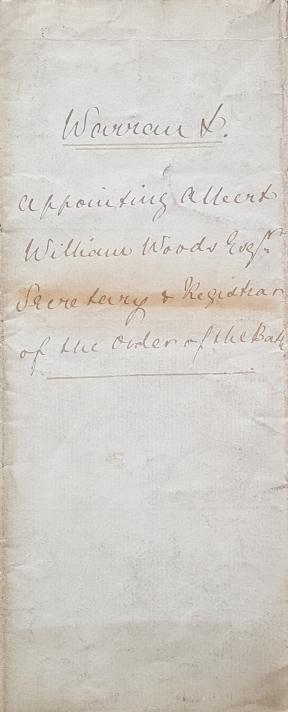
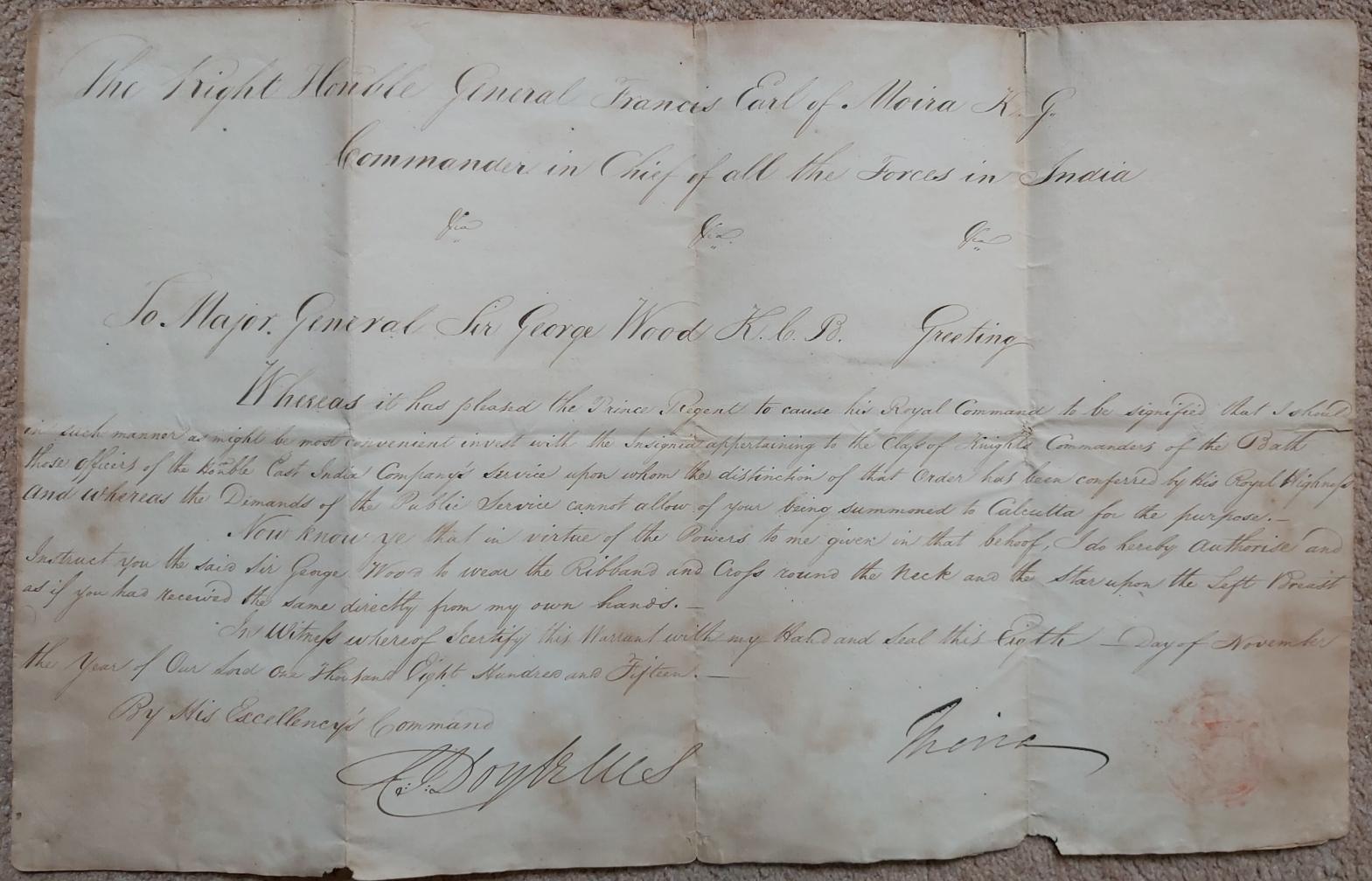
Case Study – Sir George Wood, KCB
Wood was a Major-General in the army of the East India Company. This is the warrant, dated 1815, allowing Wood to wear the insignia of a KCB as he is not able to attend Calcutta for presentation.
Case Study – Kenneth Howard, GCB, 1st Earl of Effingham
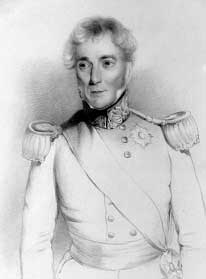
Howard was a soldier who fought in the Low Countries at the end of the 18th century and then in the Peninsula. He was appointed KCB in 1815.
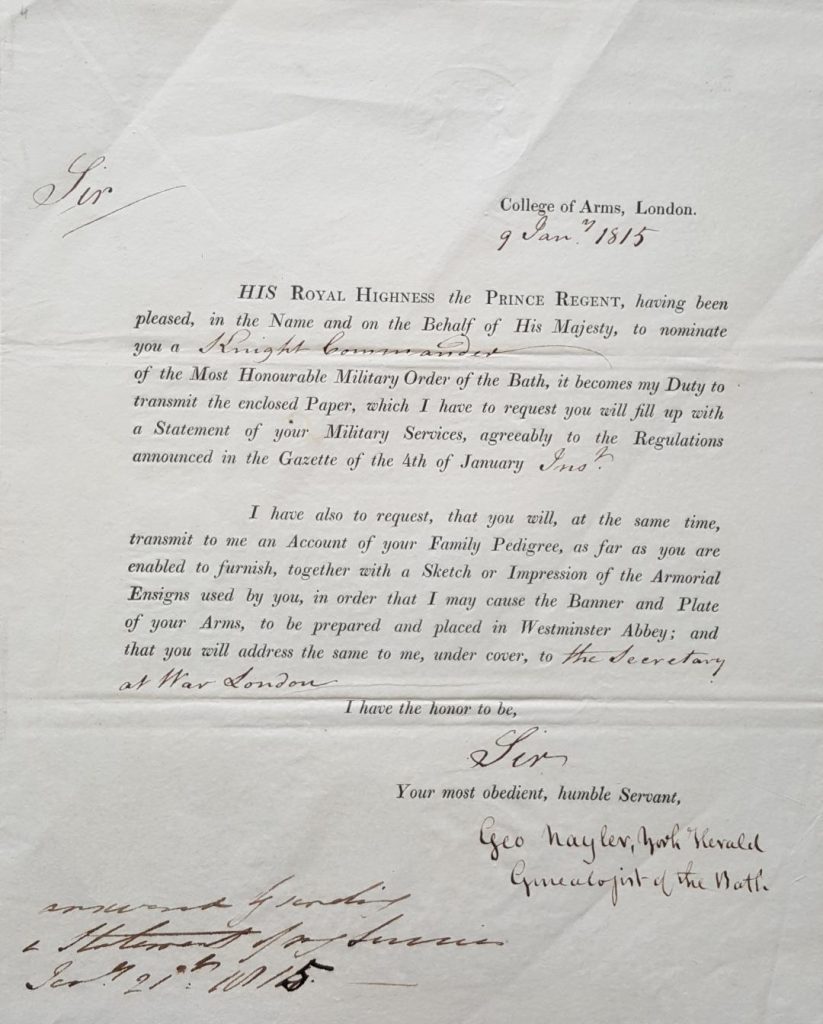
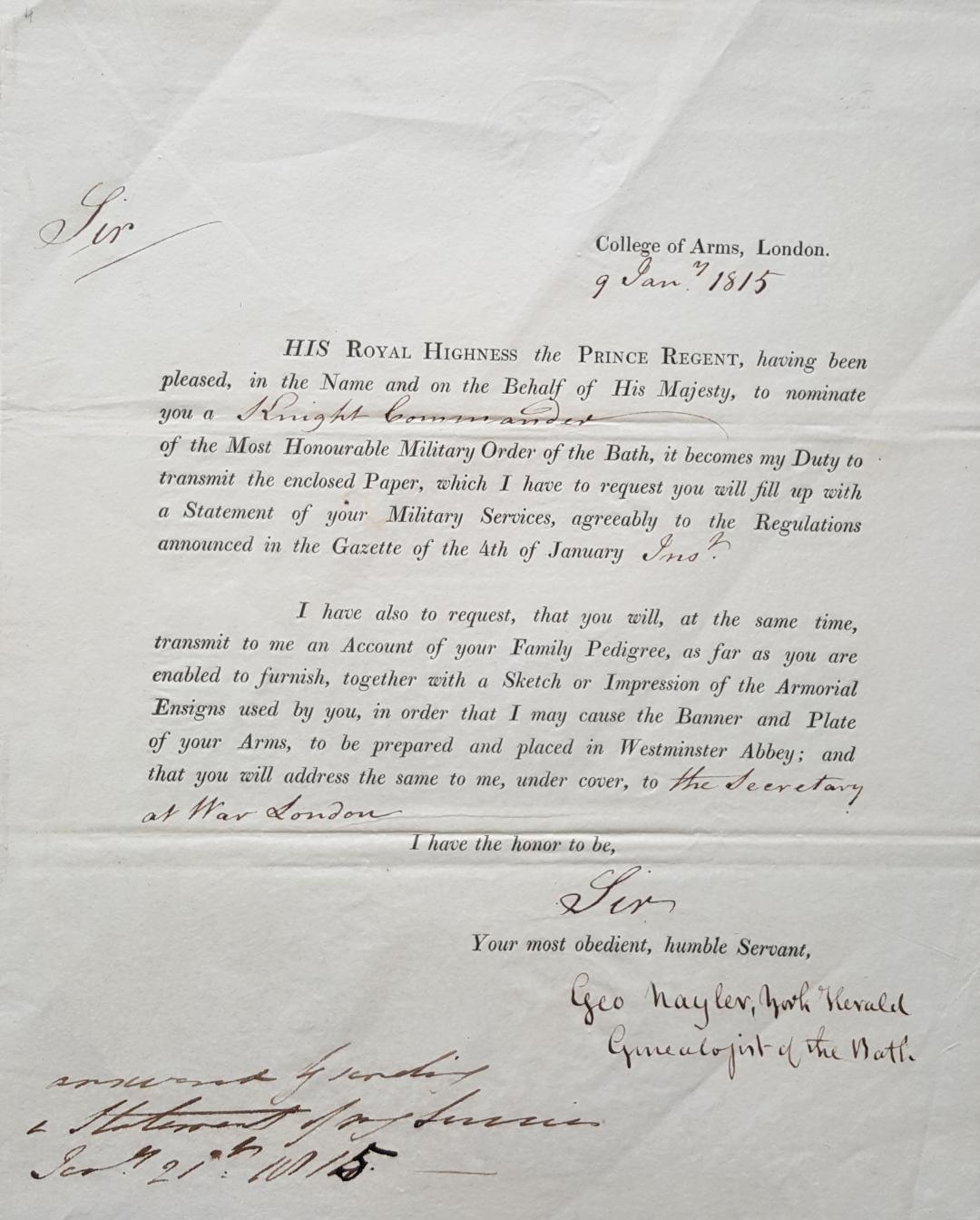
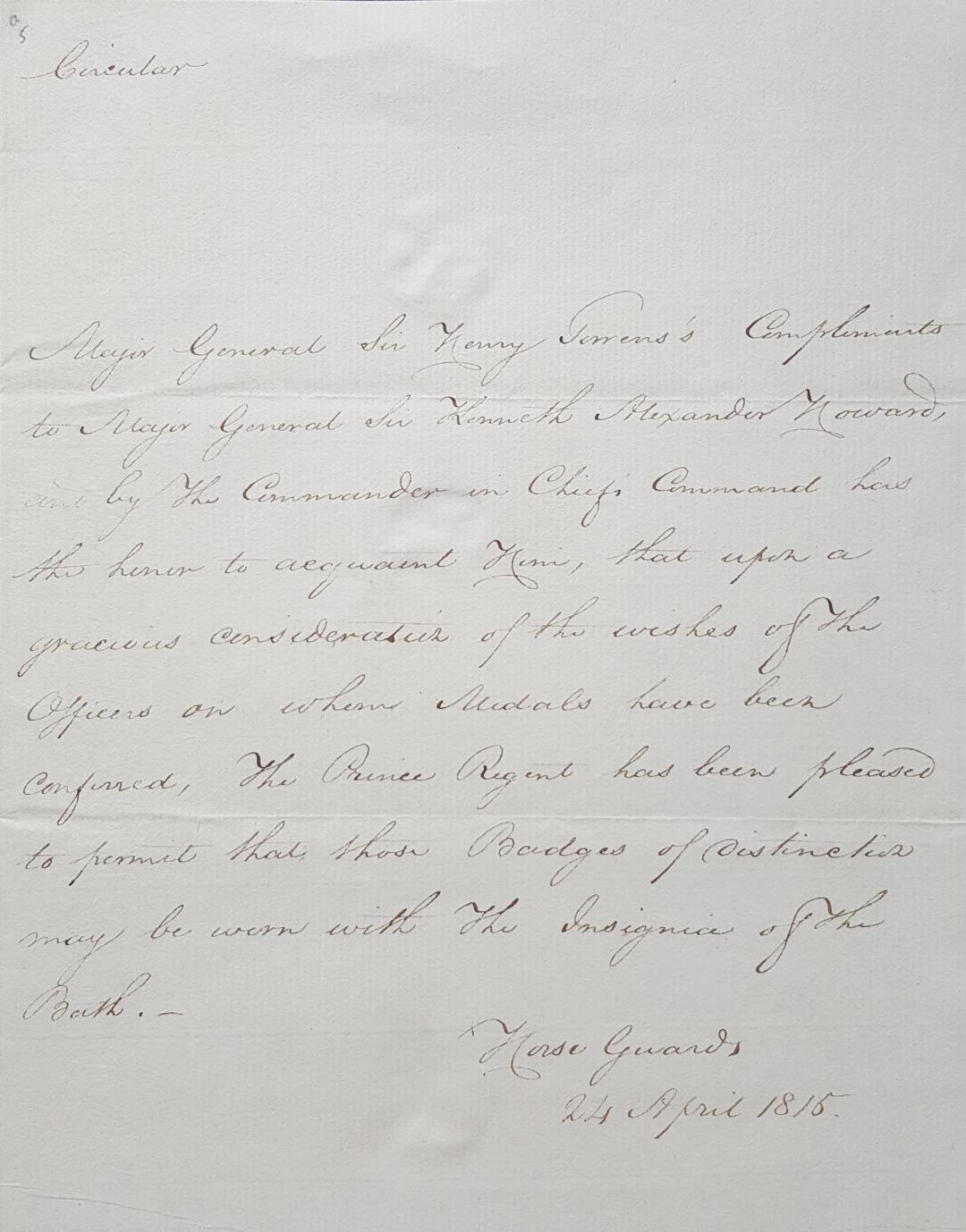
He was sent a letter on 9 January 1815, from George Nayler, Genealogist of the Order, requesting a statement of his military services and a copy of his family pedigree together with a sketch of his coat of arms. Howard responded on 21 January. Also of interest is a hand written circular saying that the Prince Regent has given permission for recipients of Army Gold Cross and Medal to wear those medals at the same time as their Bath insignia.
Letter 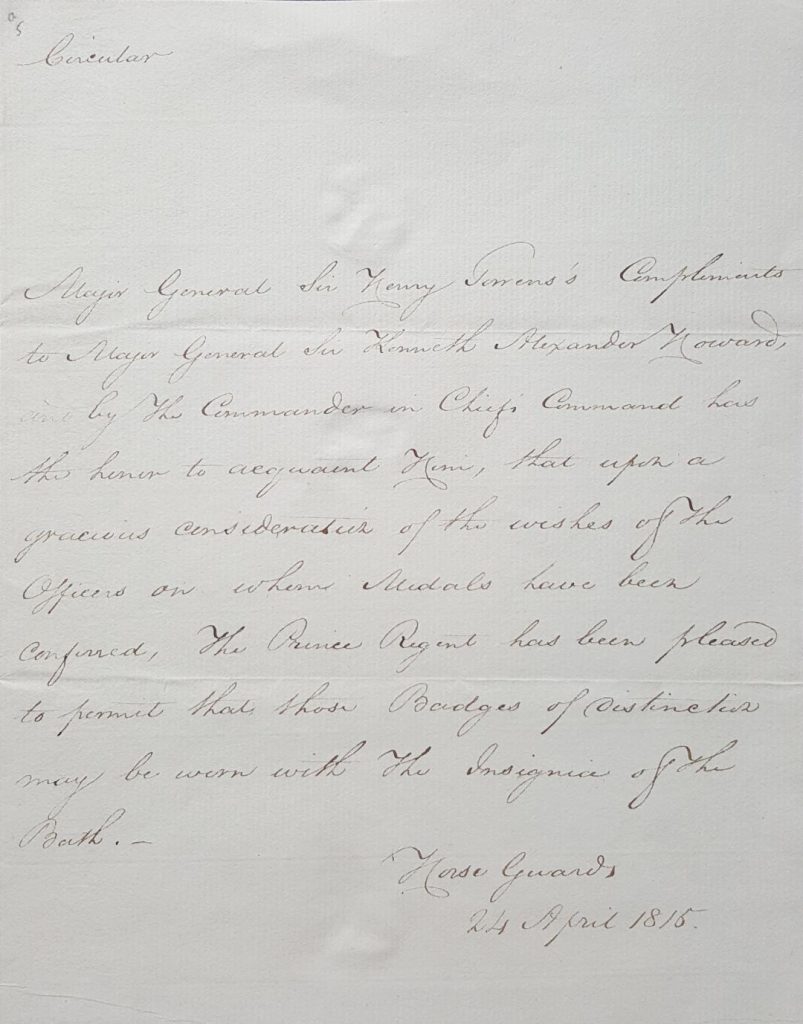
Circular
Howard was advanced to GCB in 1820. At George IV’s coronation the next year, the King wanted everybody to be resplendently dressed, including wearing their insignia. Unfortunately the last installation service for the Order had been held in 1812, so there were over 60 GCBs who were only entitled to wear the badge of the Order. Hence a warrant of dispensation was issued removing the need for the installation ceremony. The dispensation was printed because each GCB required a copy.
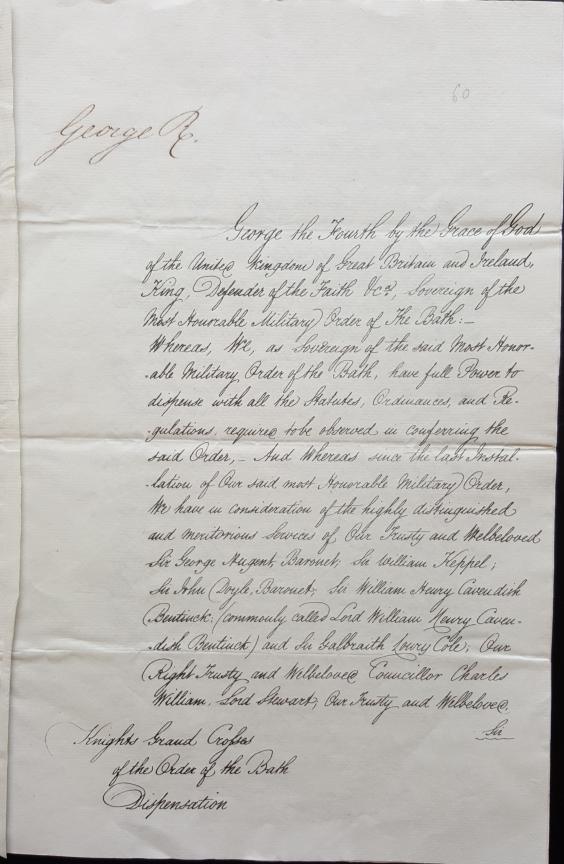
p1 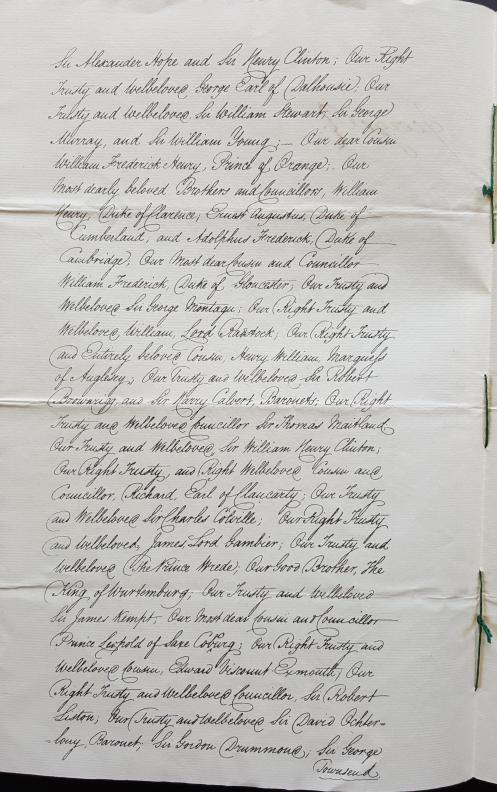
p2 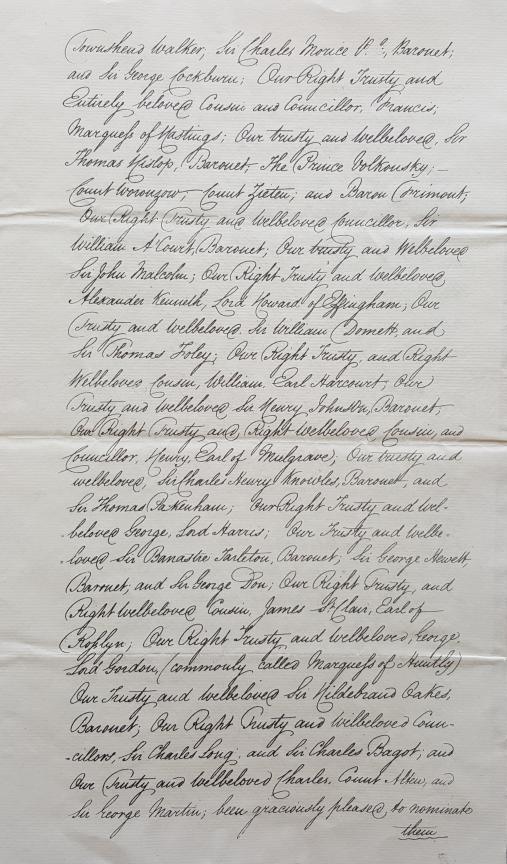
p3 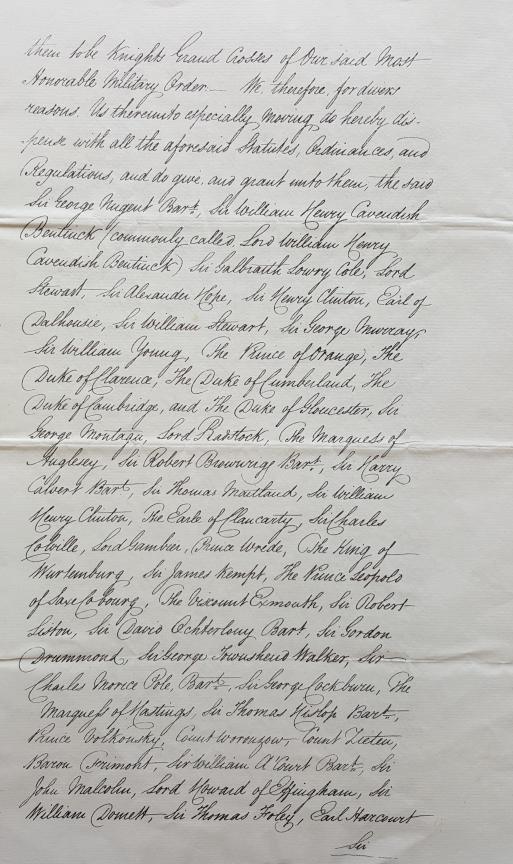
p4 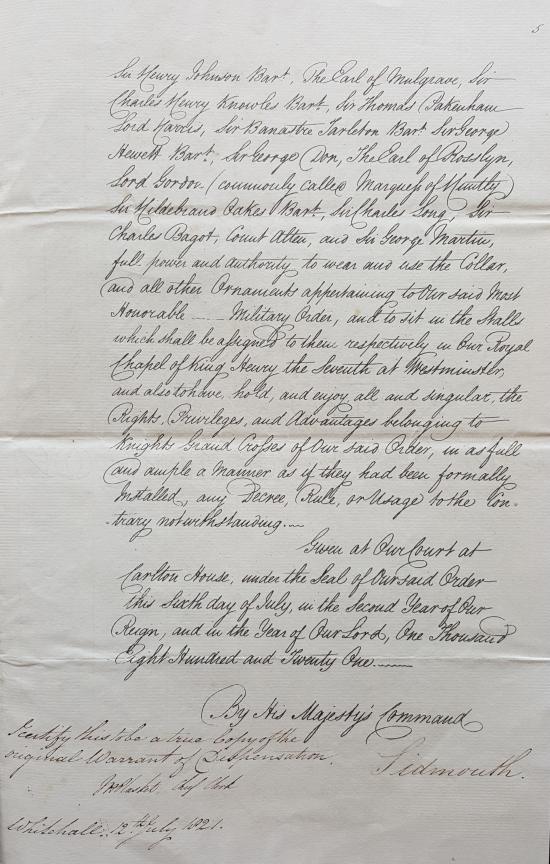
p5
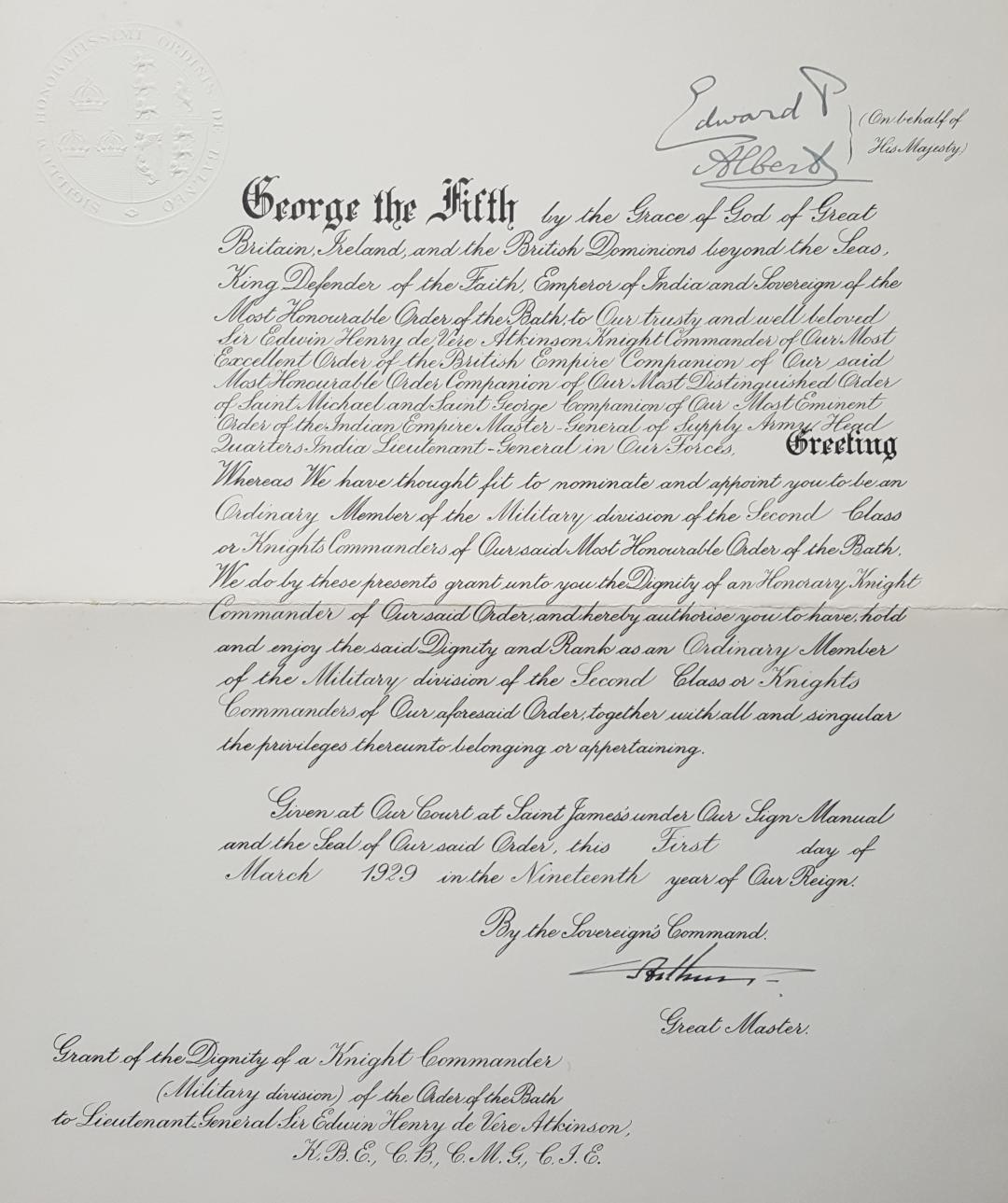
Case Study – Sir Edwin Henry de Vere Atkinson, KCB, KBE, CMG, CIE
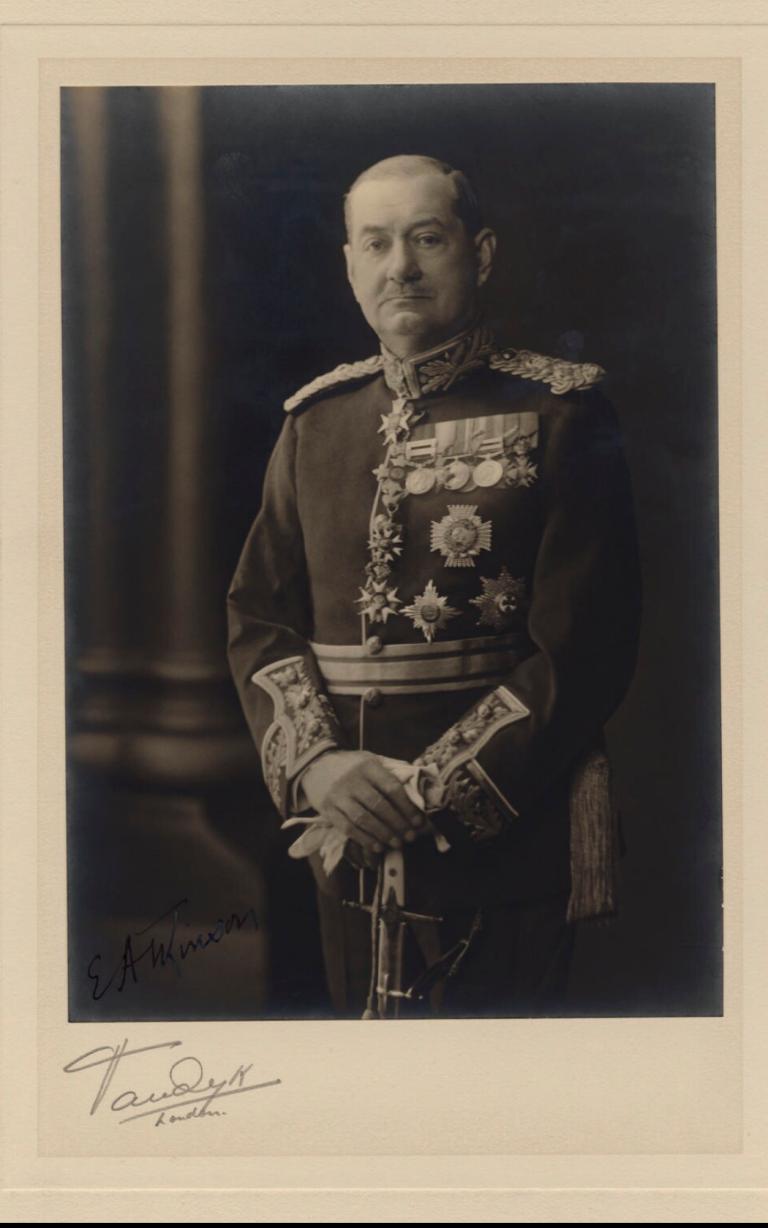
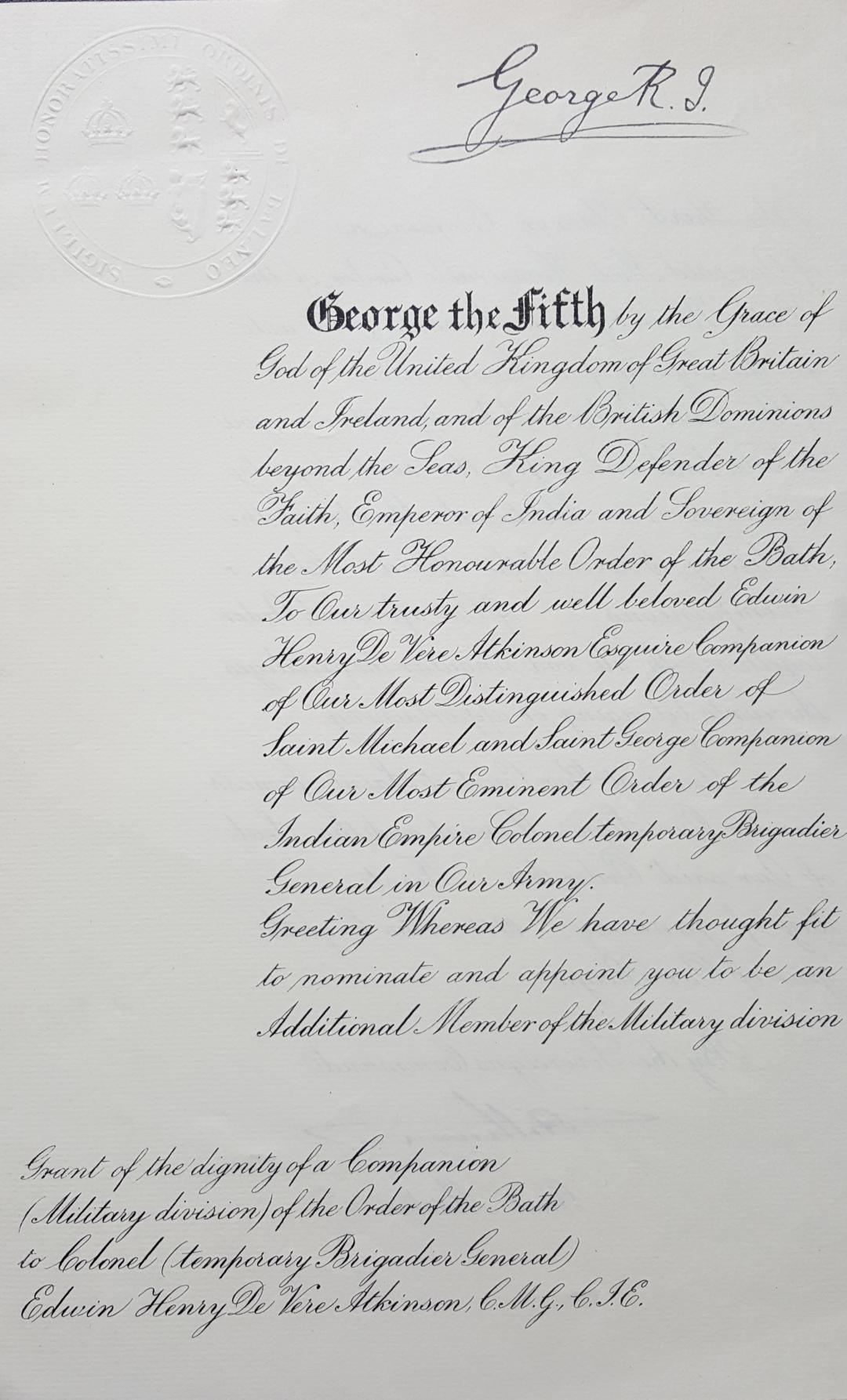
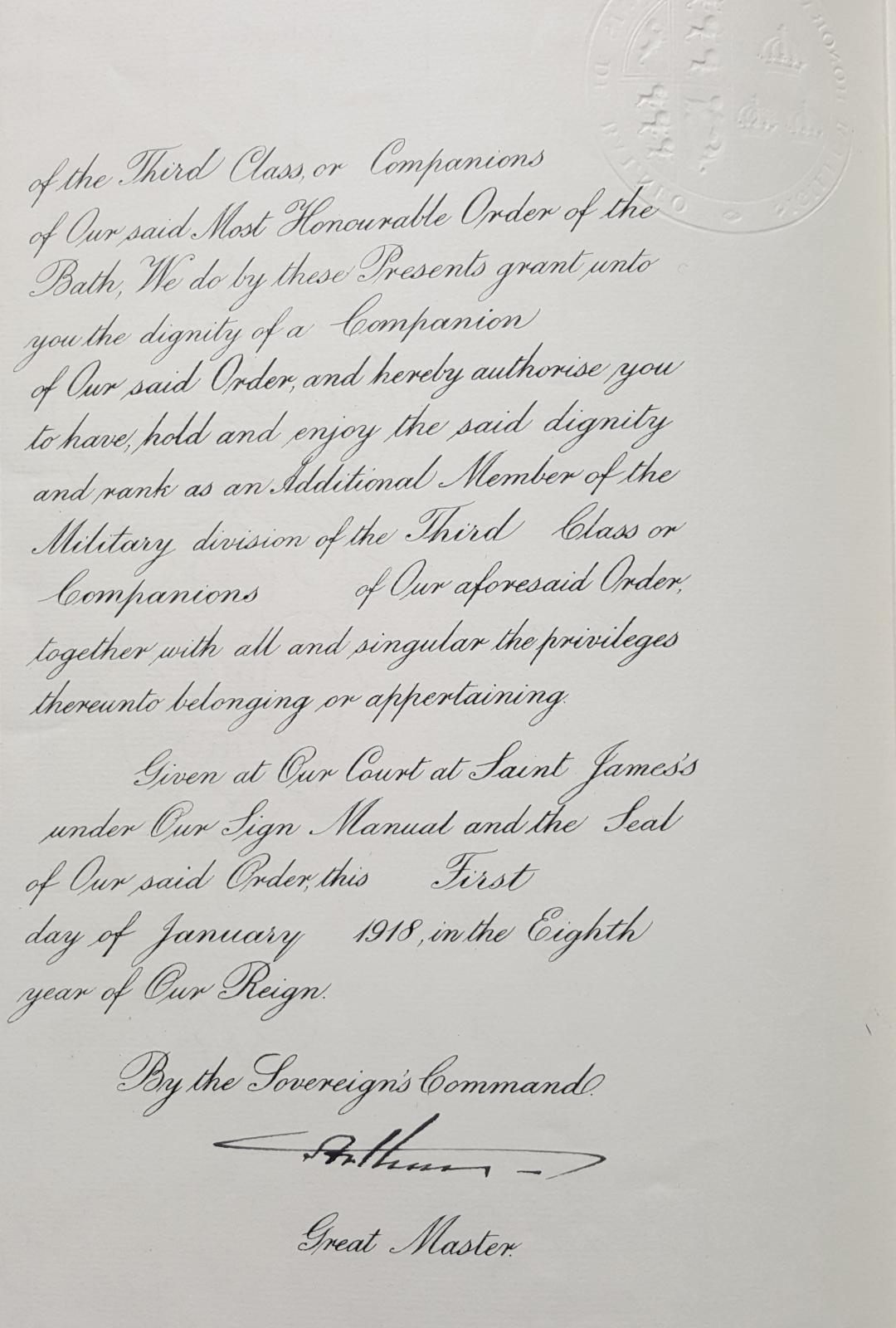
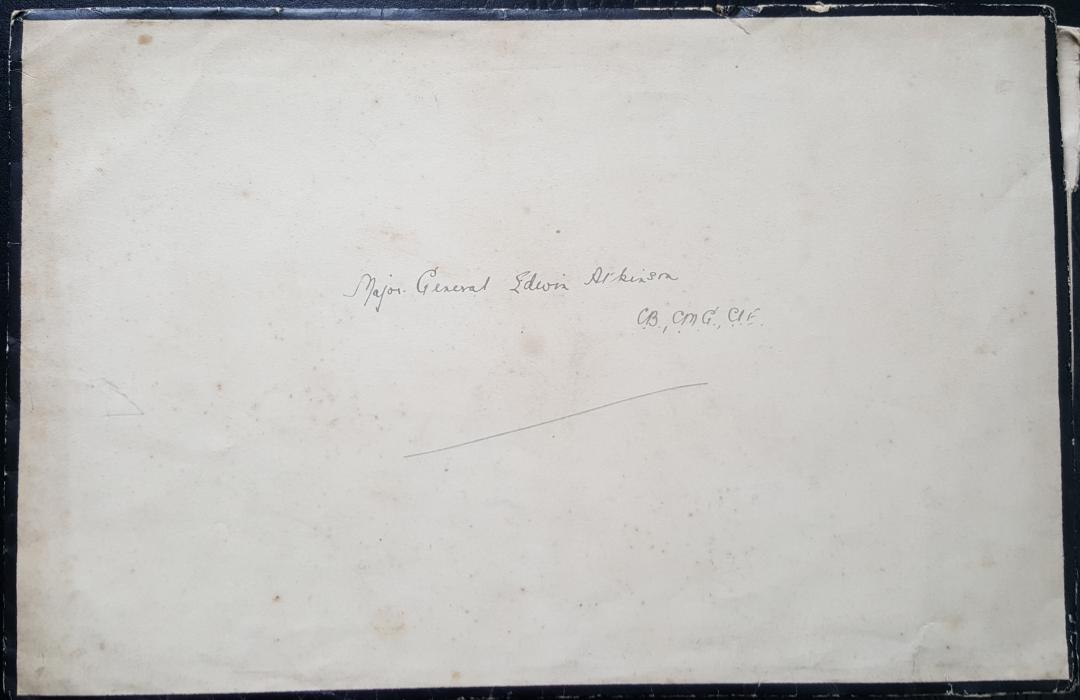
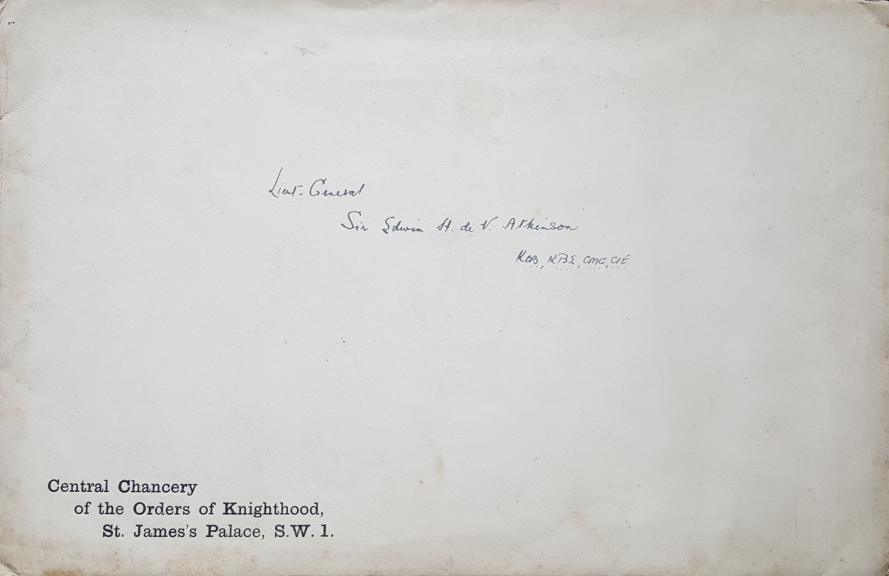
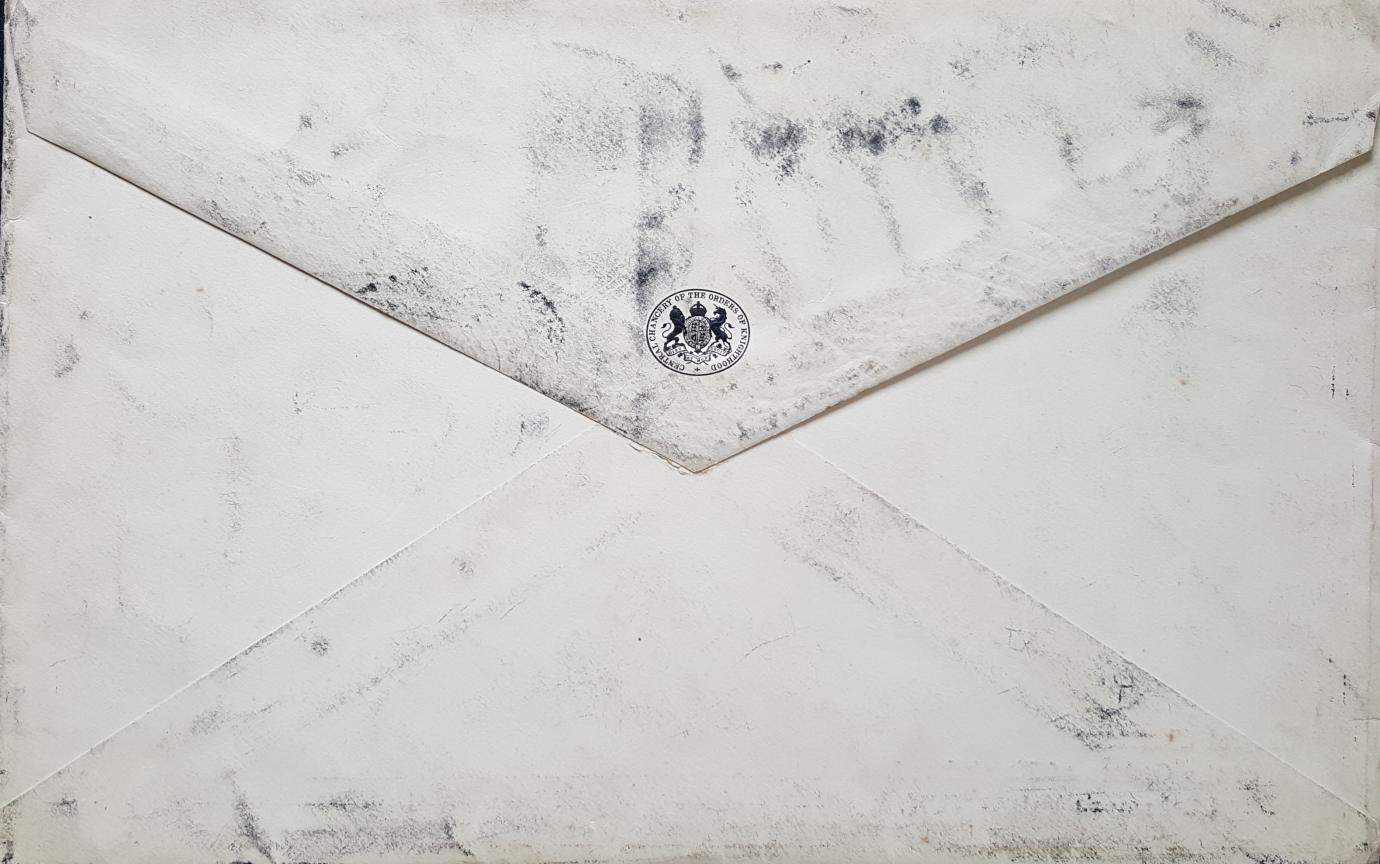
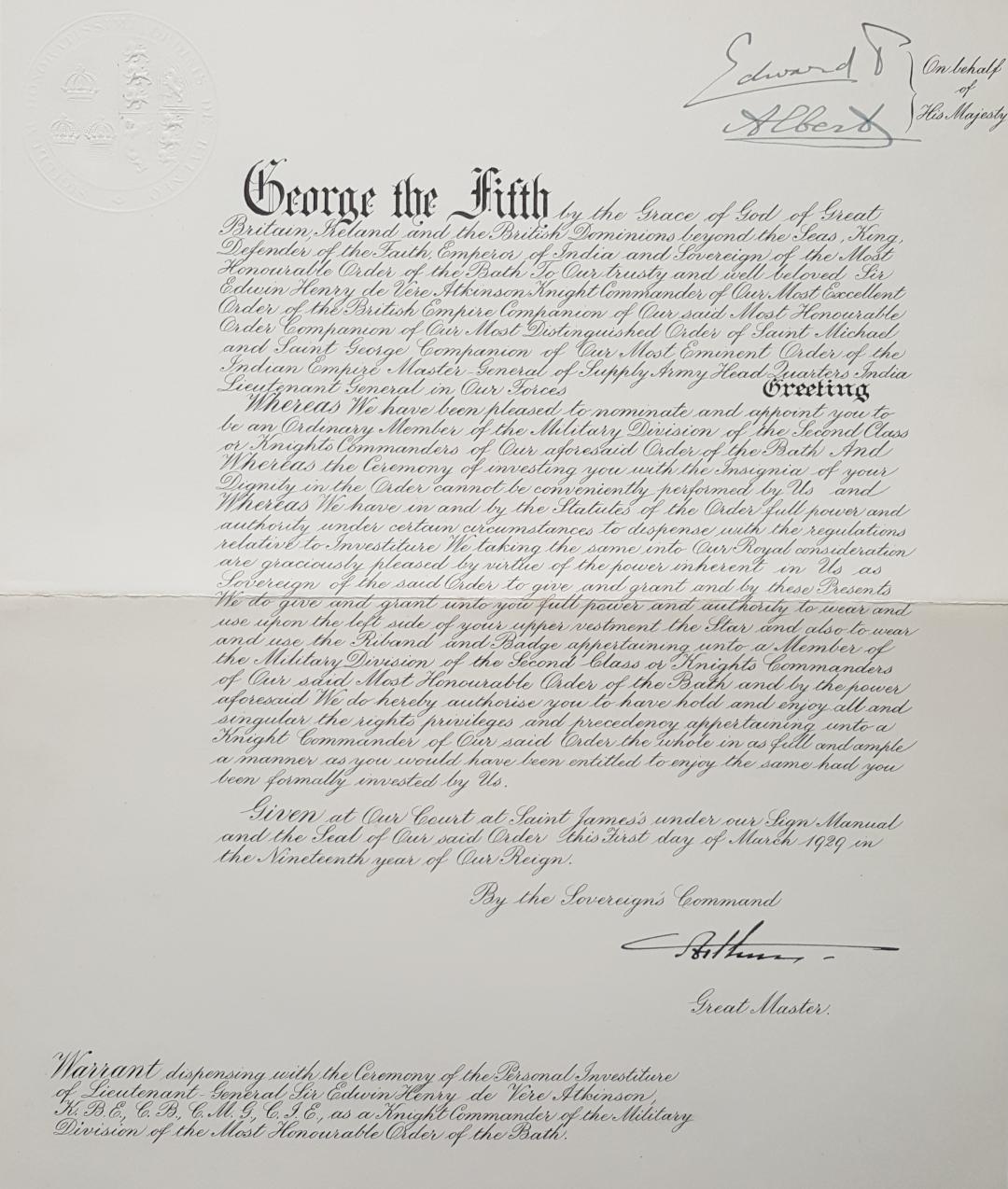
Atkinson was an officer in the Royal Engineers. He was made CB in 1918. His warrant is printed in its entirety. The King’s signature is a rubber stamp. The Great Master’s is original. It was sent out in a black bordered, mourning envelope.
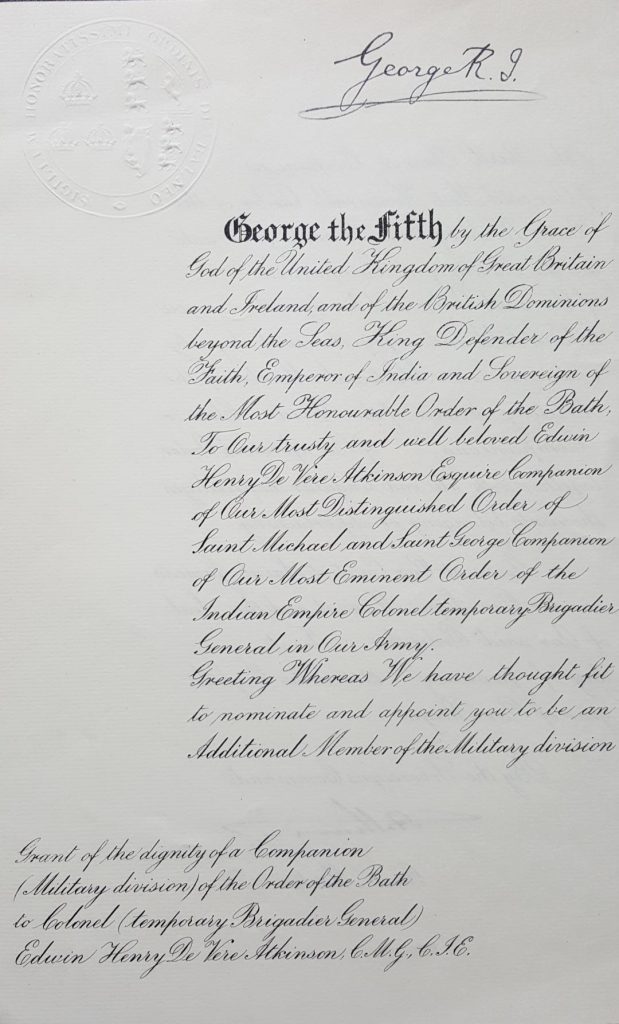
p1 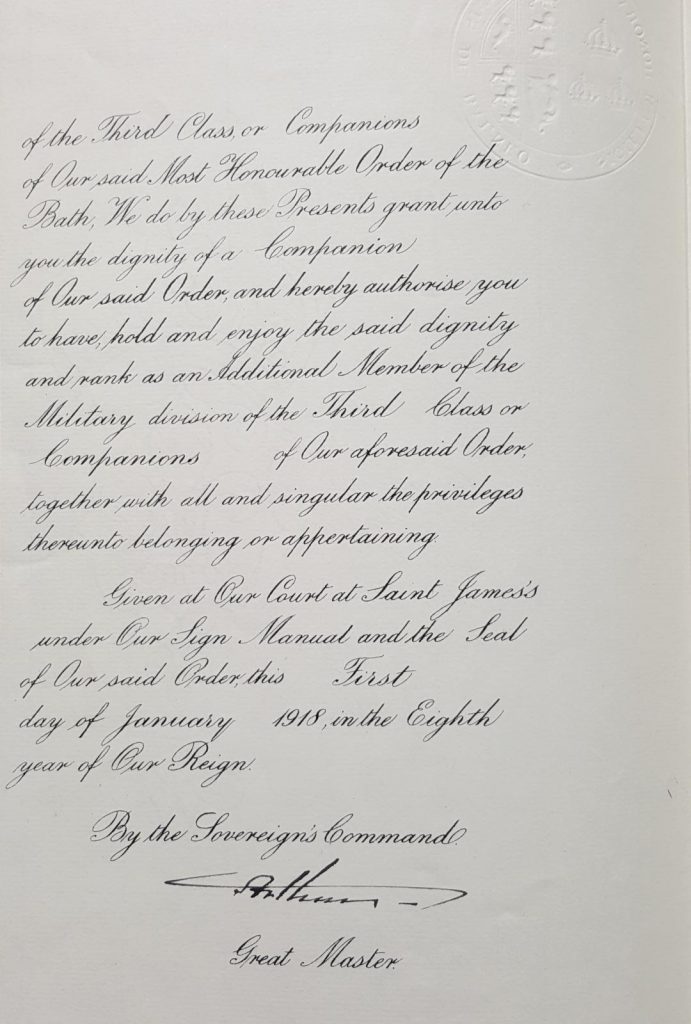
p2 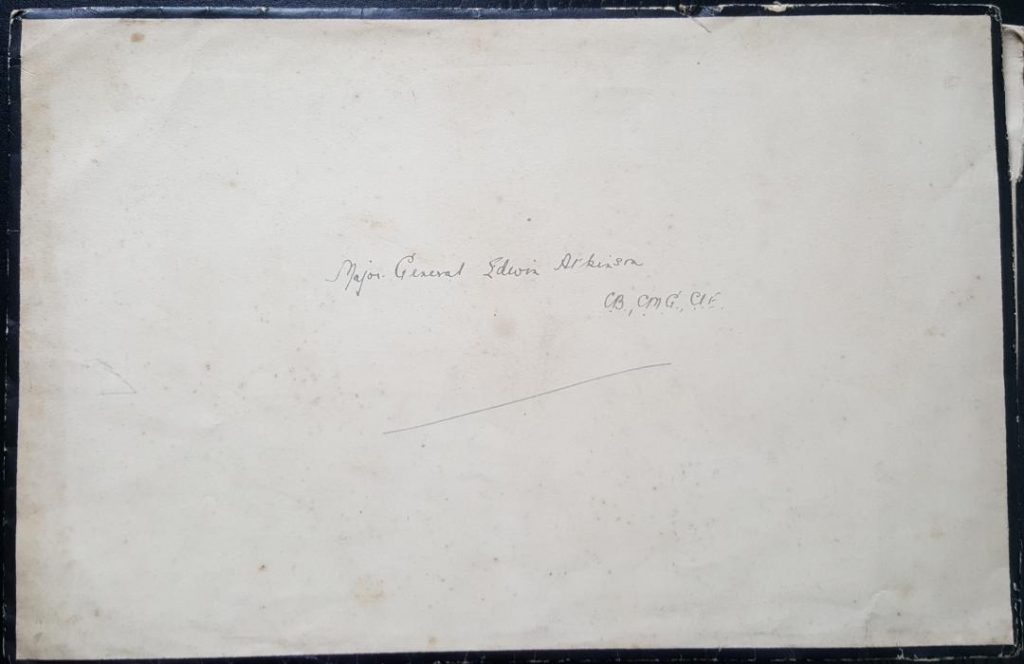
Envelope front 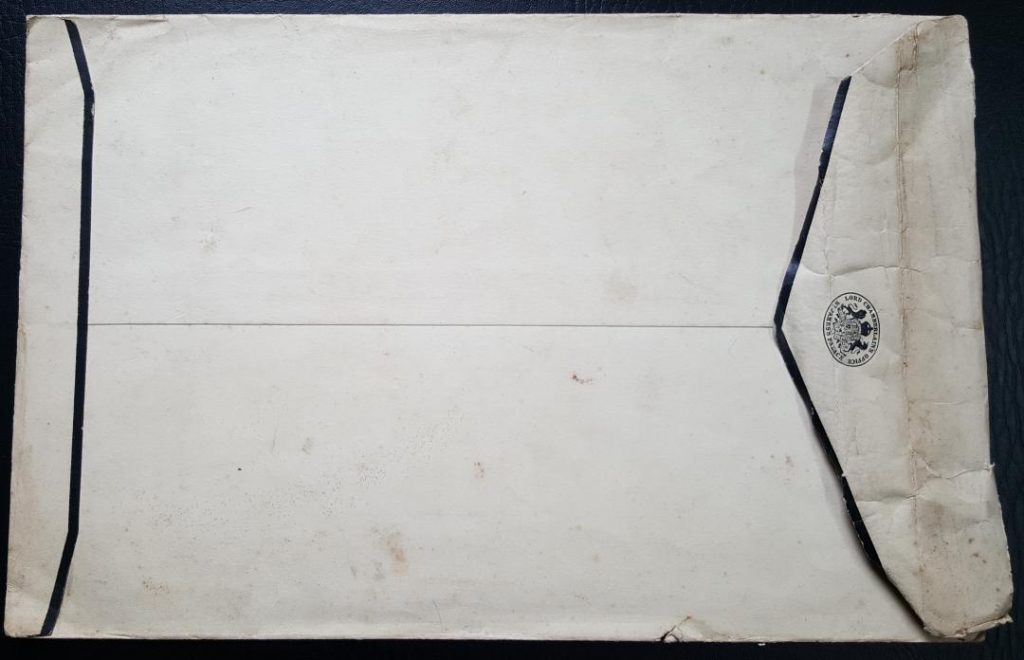
Envelope reverse
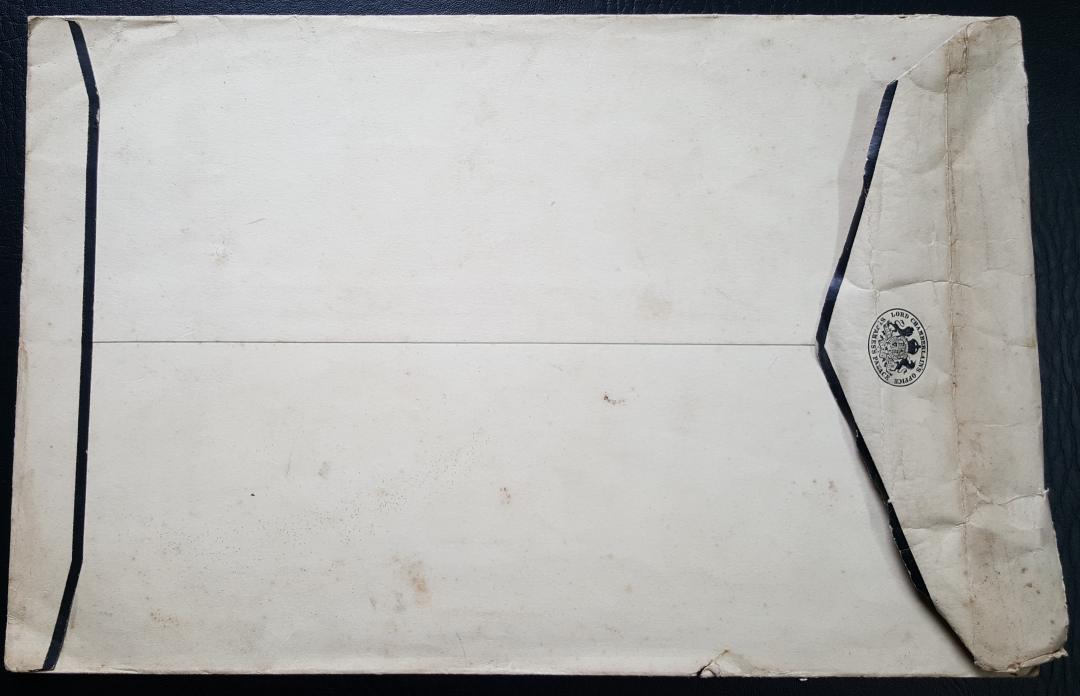
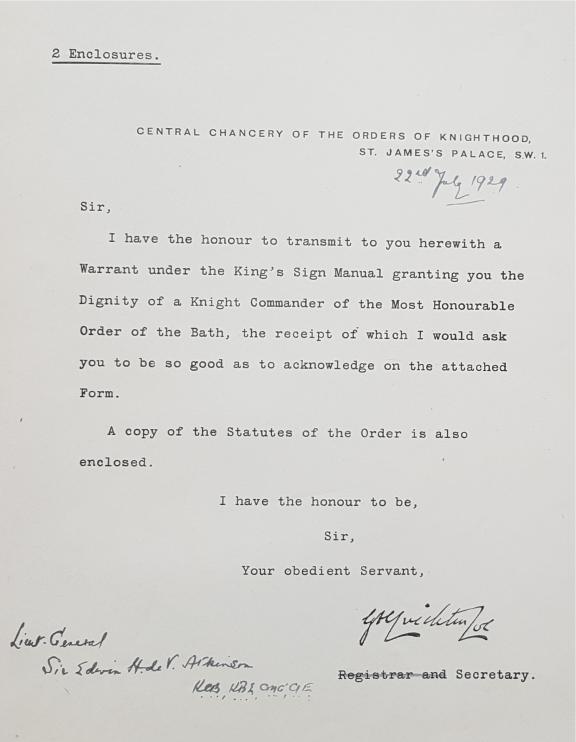
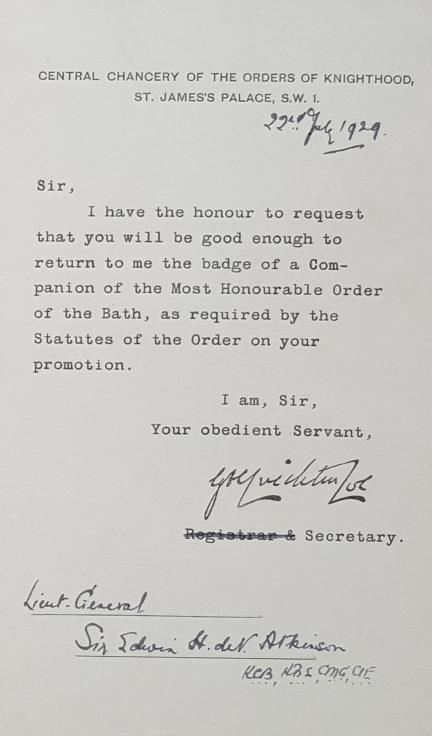
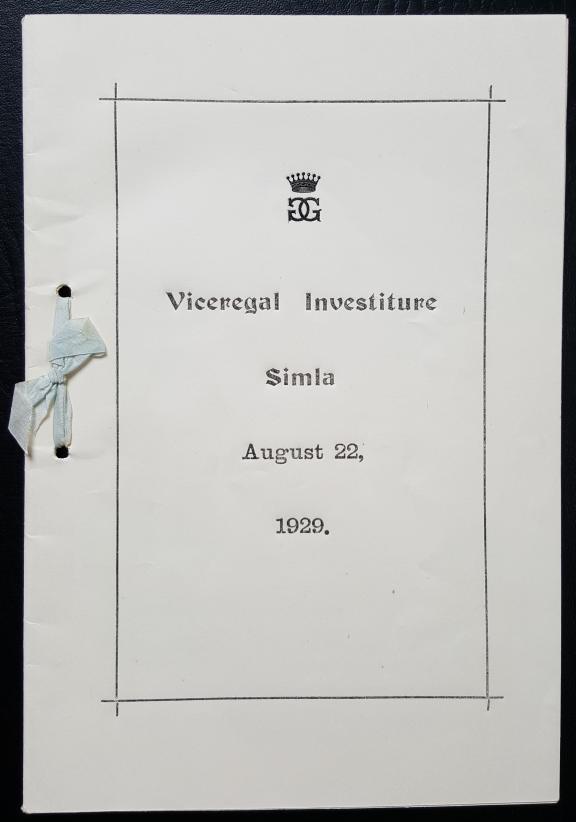
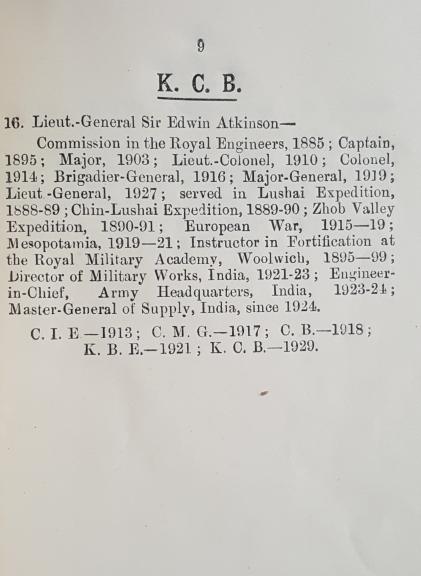
Atkinson was advanced to KCB in 1929. This was during the period of the King’s illness when a Council of State had been formed to continue the functions of the monarch, hence the warrants of appointment and dispensation are signed by Edward, Prince of Wales and Albert, Duke of York. It seems to have been assumed that as Atkinson was in India at the time, he would not be able attend an investiture, however as can be seen he was invested in Simla, by the Viceroy, later that year. As a holder of the CB he is requested to return his Companion’s badge.
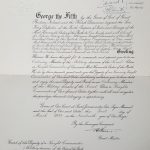
Warrant 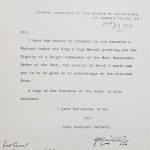
Letter with warrant 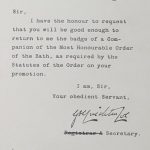
Letter requesting CB 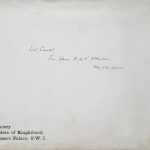
Envelope front 
Envelope rear 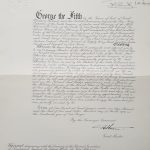
Dispensation 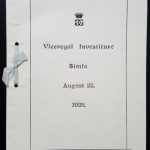
Investiture cover 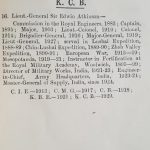
Investiture biography
Case Study – Neil Cameron, KT, GCB, CBE, DSO, DFC, Baron Cameron of Balhousie
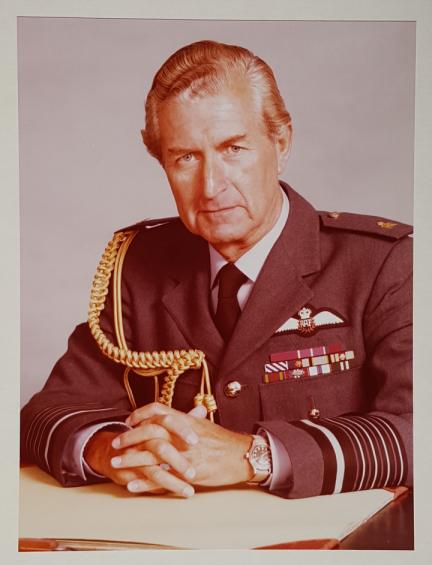
Cameron flew Hurricanes in the Battle of Britain and ended his career as Marshal of the RAF. (For further awards to Cameron see the Order of the Thistle and the DSO).
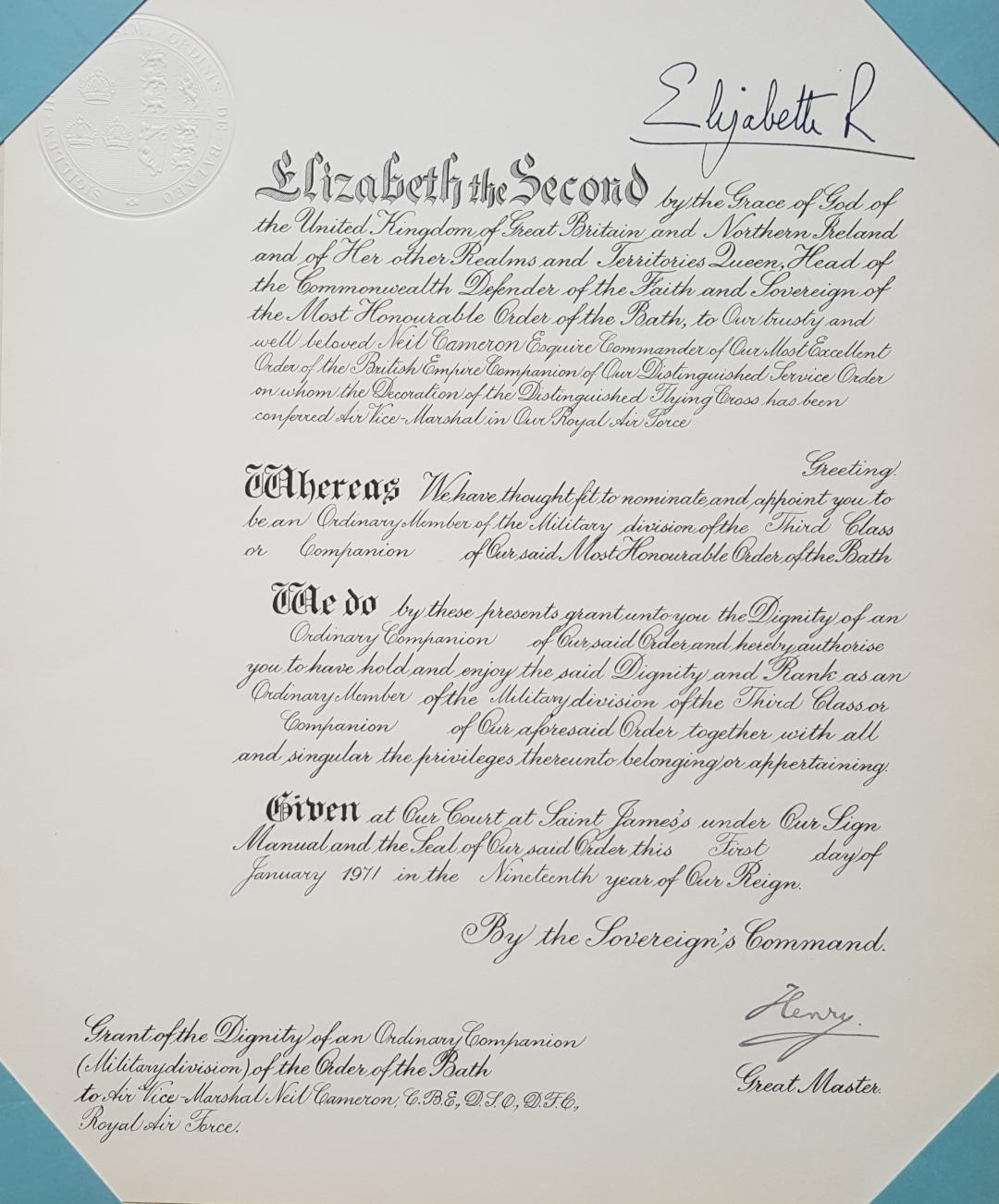
Cameron was appointed CB in 1971. Note that the Queen’s signature is autopen and that the Great Master’s signature is rubber stamped. Henry, Duke of Gloucester had been Great Master since 1942. He died in 1974; prior to that he had been ill for some time, which might explain the rubber stamped signature.
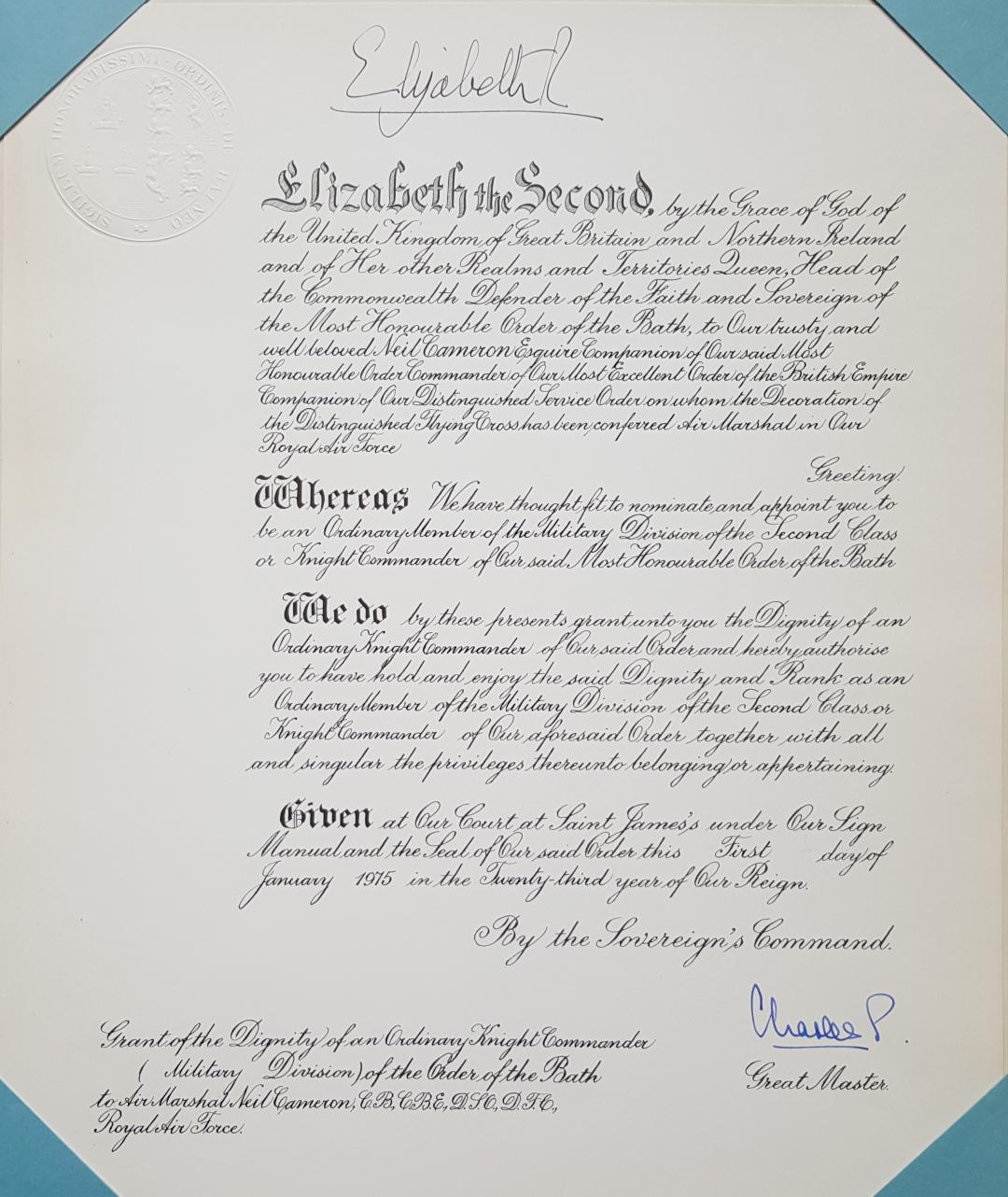
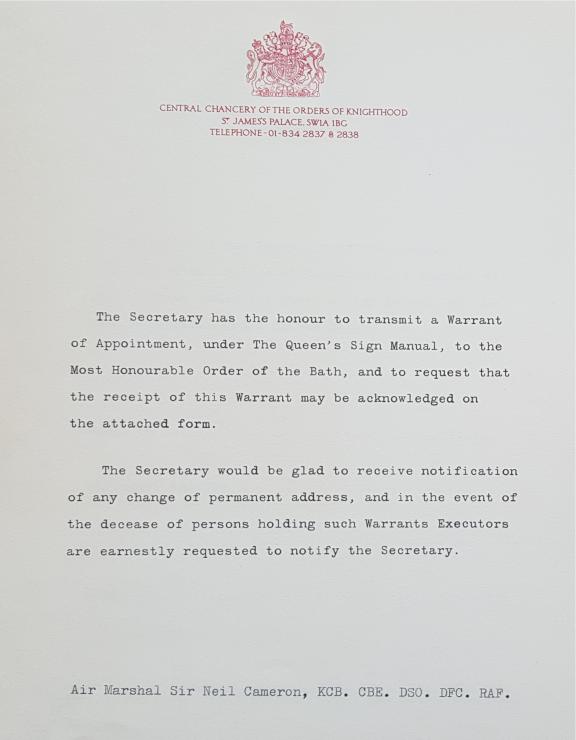
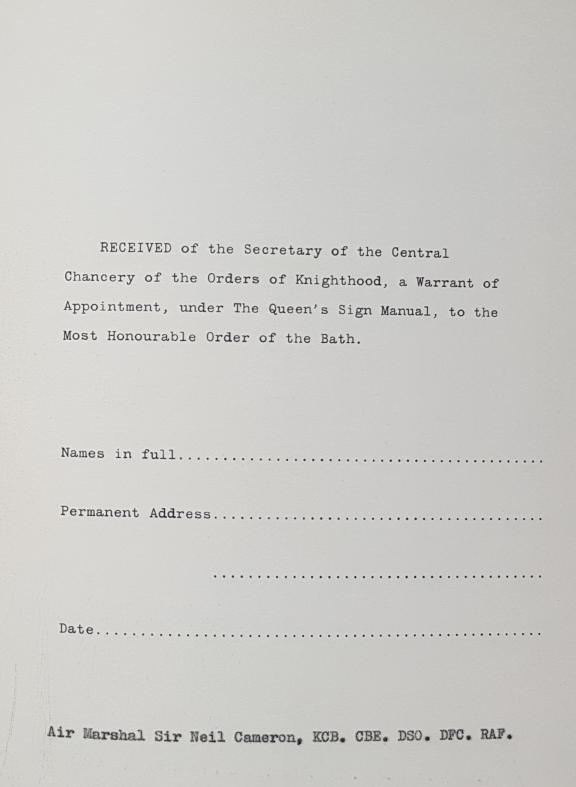
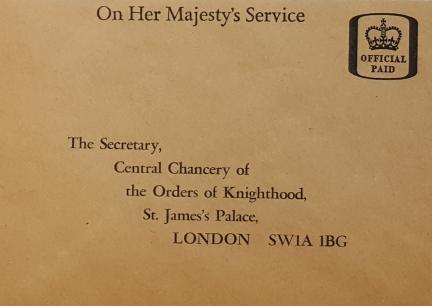
Cameron was advanced to KCB in 1975. The warrant is signed by the Queen and Prince Charles as Great Master. Also shown are the transmittal letter for the warrant and the unused acknowledgement form and return envelope.
Warrant 
Covering letter 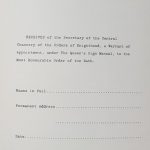
Acknowledgemnt 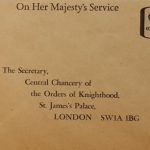
Return envelope
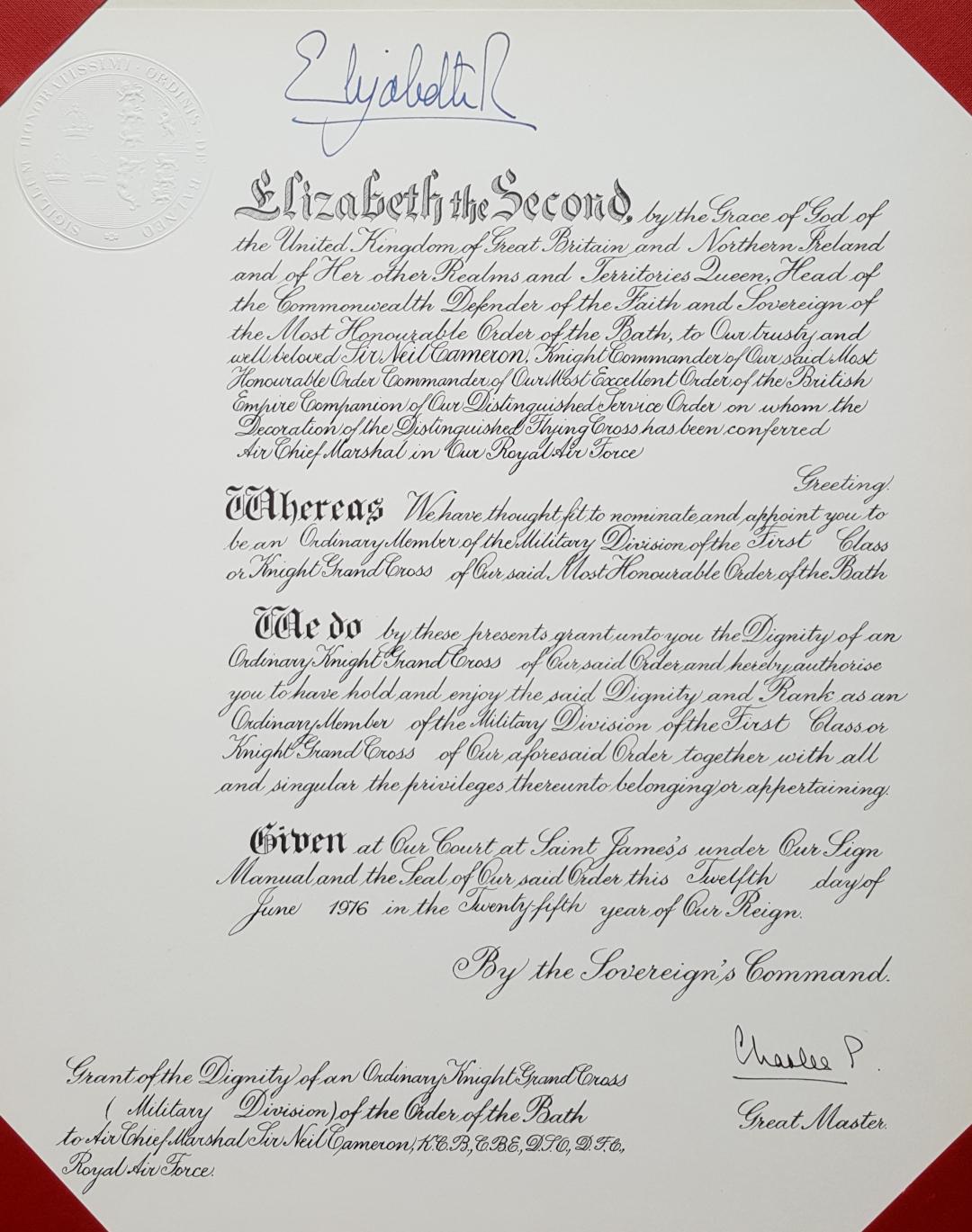
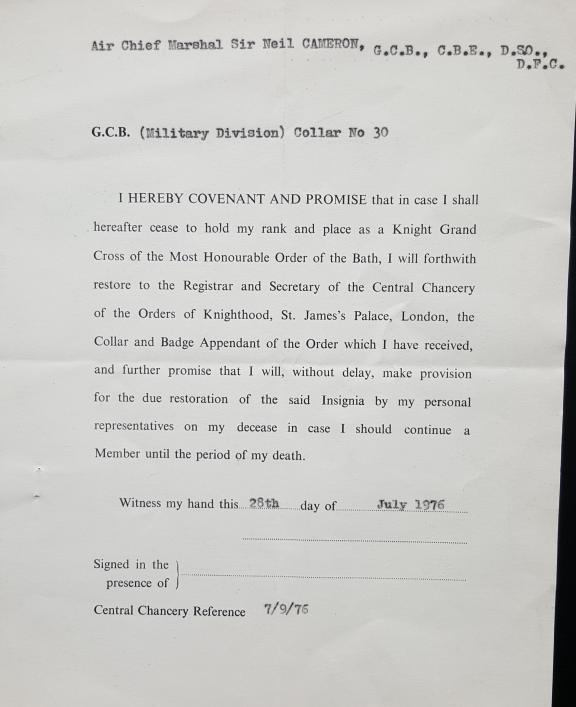
Cameron was promoted to GCB in 1976. The collar of the Order is returnable and so recipients are asked to complete a covenant to ensure its return.
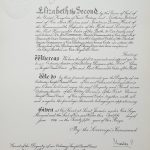
Warrant 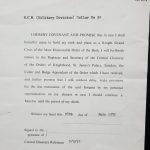
Covenant