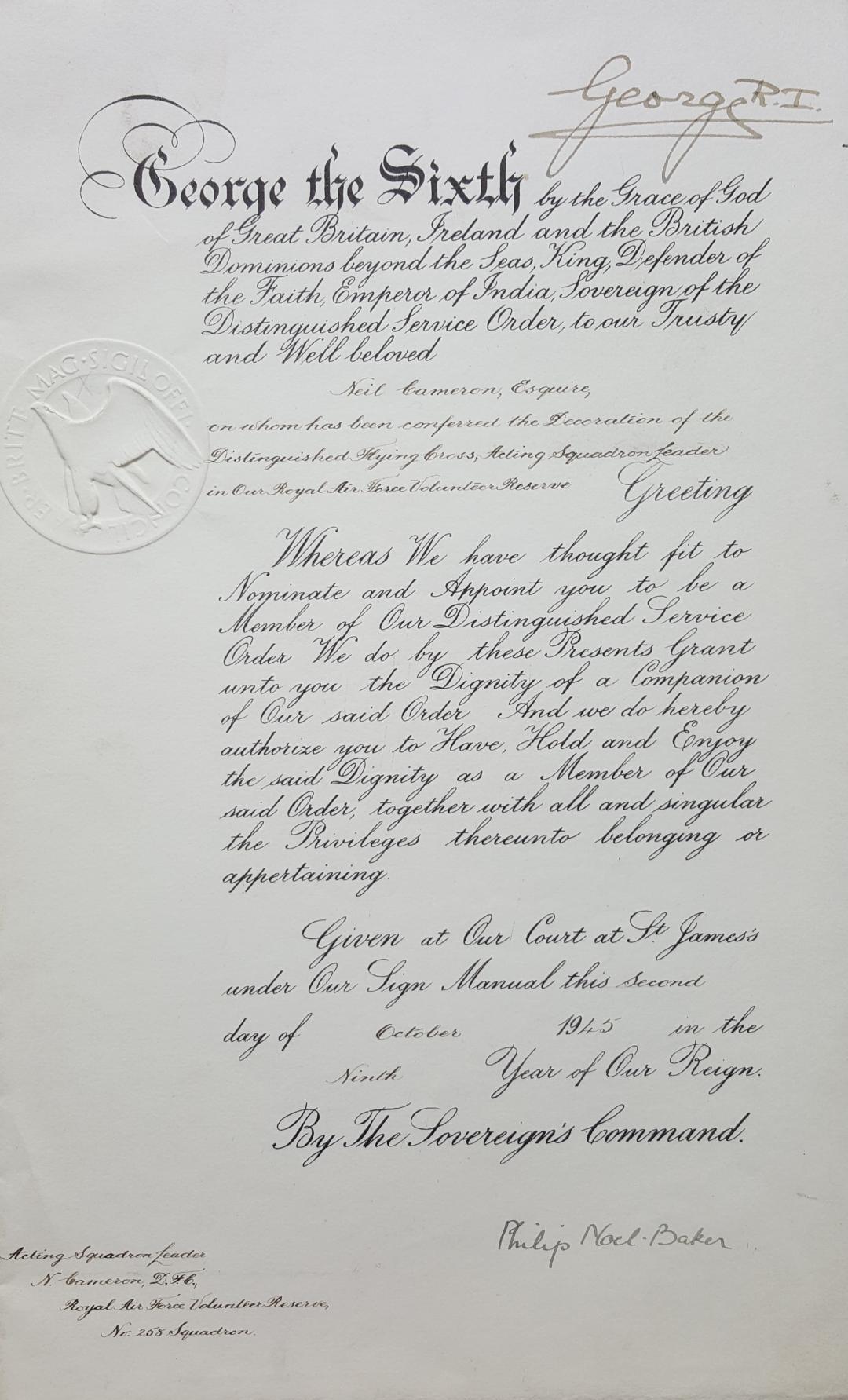
The DSO was created in 1886 to reward officers below field rank for actions which fell short of the level of bravery required for a VC. On appointment to the Order a recipient is issued with a warrant. As far as I am aware, subsequent awards of the Order do not result is further warrants being issued.
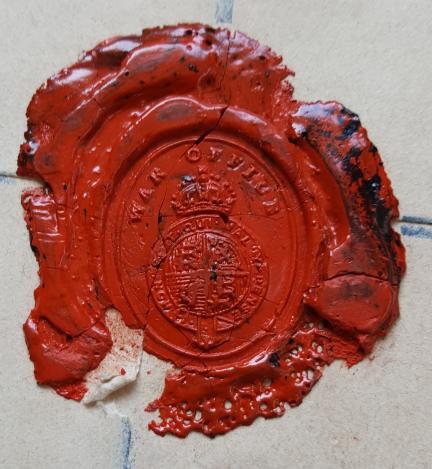
Seal
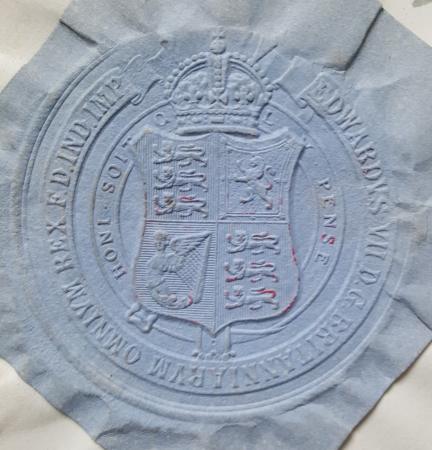
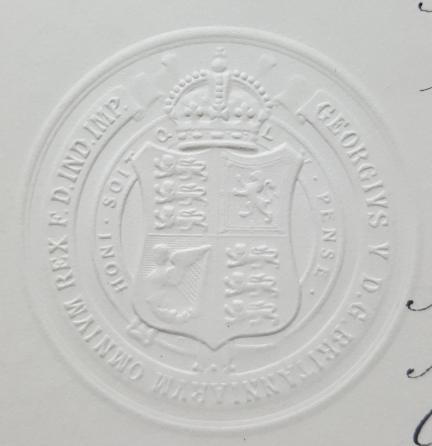
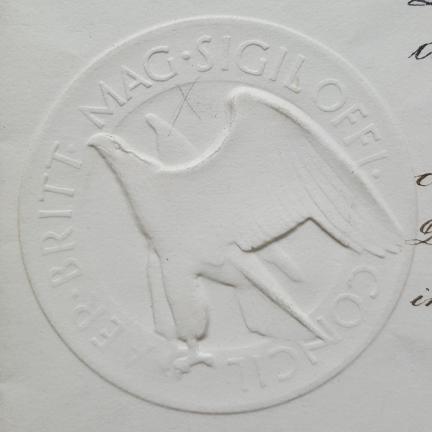
The Order does not have its own seal, but awards to land and sea forces use the seal of the Secretary of State for War or his successors. Awards to the RAF use the seal of the Air Council.
Other Signatures
Army and Royal Navy certificates are countersigned by “The Principle Secretary of State having the Department of War for the time being.” Those for the RAF are signed by the Secretary of State for Air.
Case Study – Jean Eugène Samuel Forestier
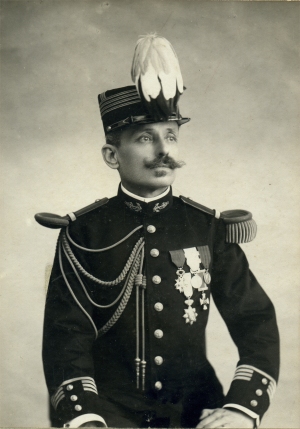
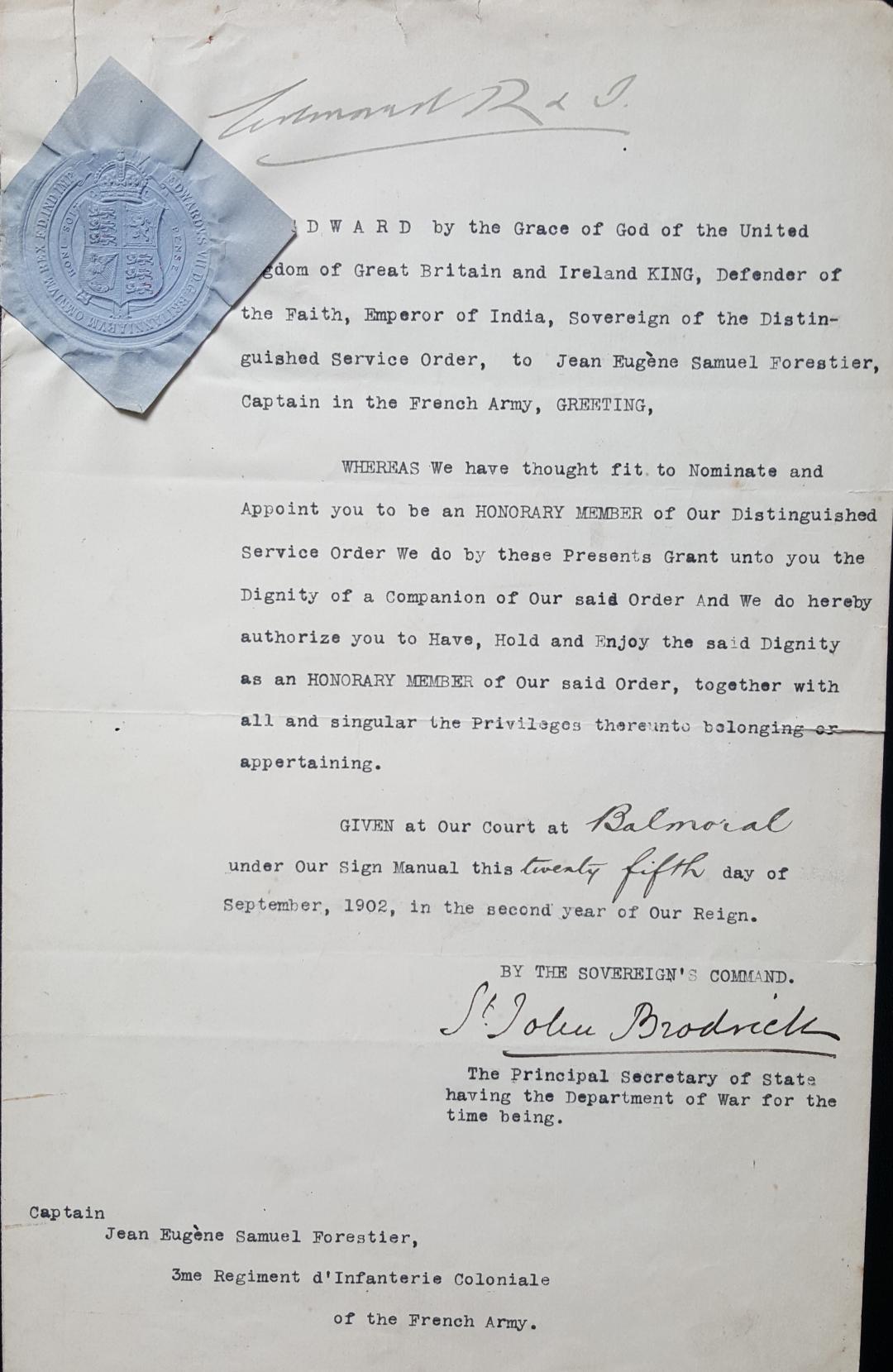
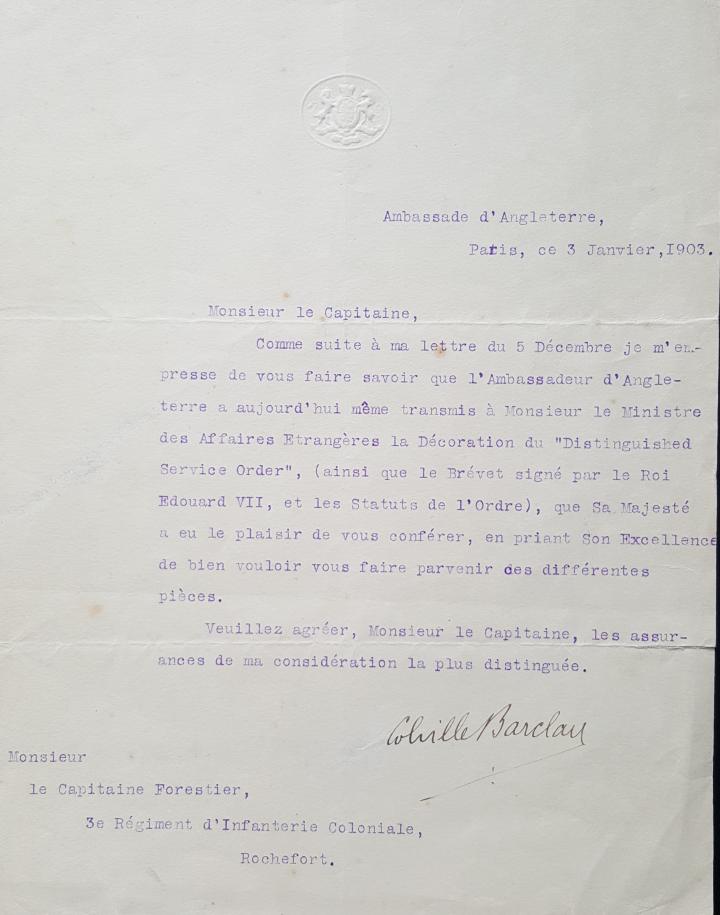
Forestier was a captain in the French third regiment of colonial infantry. He was awarded an honorary DSO in 1902 for services in The Gambia. The warrant is typed which might be because it was quite early in the reign of Edward VII and pre-printed versions had not yet been created. The covering letter is in French.
Case Study – Philip Granville Harding Hogg
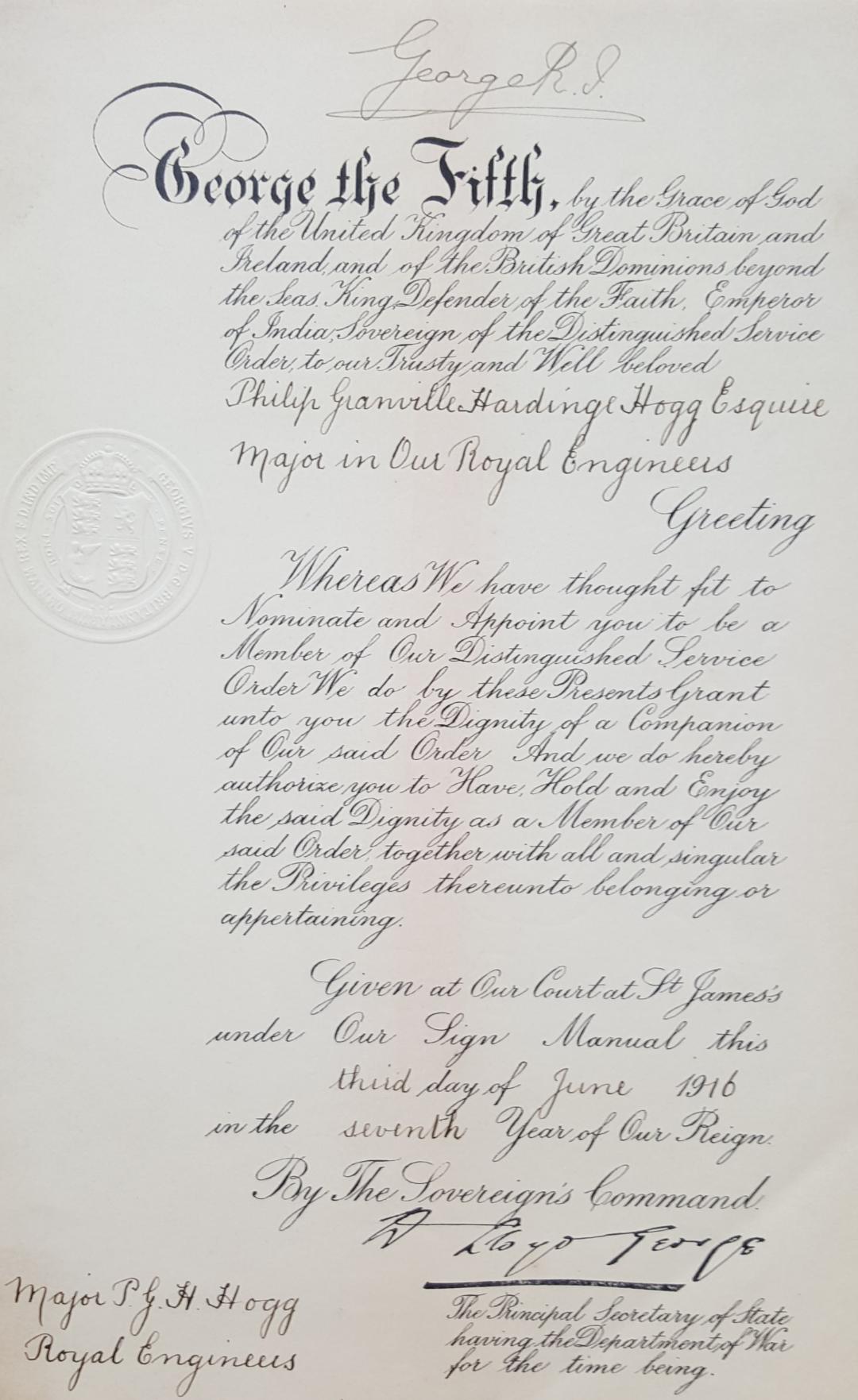
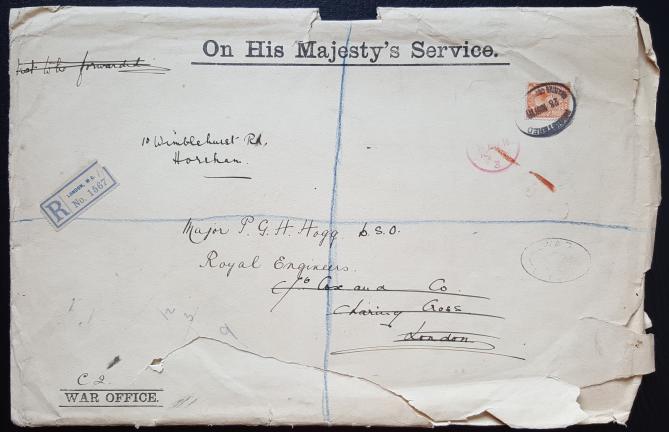
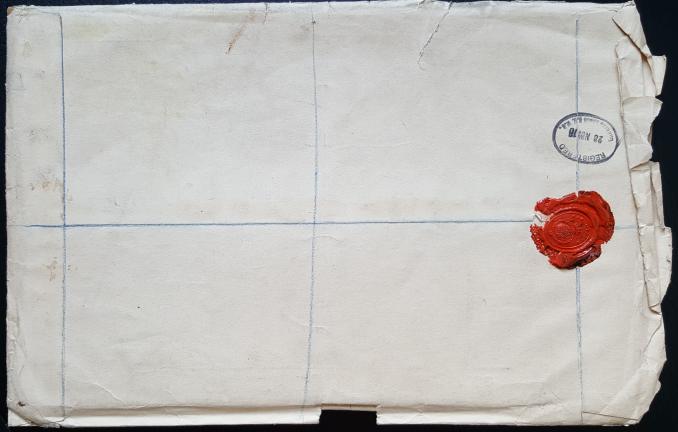
Hogg was a major in the Royal Engineers. He was awarded the DSO in 1916. The King’s signature is real but David Lloyd George’s is a rubber stamp.
Case Study – Neil Cameron, KT, GCB, CBE, DSO, DFC, Baron Cameron of Balhousie
Cameron received the DSO in 1945. Note the use of the seal of the Air Council. The counter signatory is Philip Noel Baker. At the date of the warrant he was Minister of State for Foreign Affairs, but he was Secretary of State for Air between 4 October 1946 and 7 October 1947 which may well be when the warrant was actually signed. (For further awards to Cameron see the Order of the Thistle and the Order of the Bath).