
Although much has been written on British Orders of Knighthood and their insignia, the paperwork relating to the Orders is a neglected field of study. This website seeks to redress the balance, at least in part.
It should be remembered that British Orders are issued un-named, so the paperwork may be the only link to the recipient, in the absence of named medals.
It is possible to leave a comment on each page. Please note that the comments are moderated, so they will not appear immediately.
Introduction
The general approach to paperwork is set out below. Any items specific to individual Orders is given on the page relating to that Order (please see the menu to the top right of every page).
Process of Appointment to an Order
- A person needs to be nominated by others (i.e. they may not do it themselves). For non-military or non-governmental appointments, nominations can be made on forms available here:
- If accepted, the nominee receives a “sounding letter” to ask if they are willing to accept a particular honour. The purpose of the letter is to allow intended recipients to turn down an honour before it is publically announced. This saves embarrassment on both sides. It is also a fact that once a person is a member of an Order, there is no process whereby a member can resign from an Order. They may return their insignia and state they wish to resign, but it has no effect.
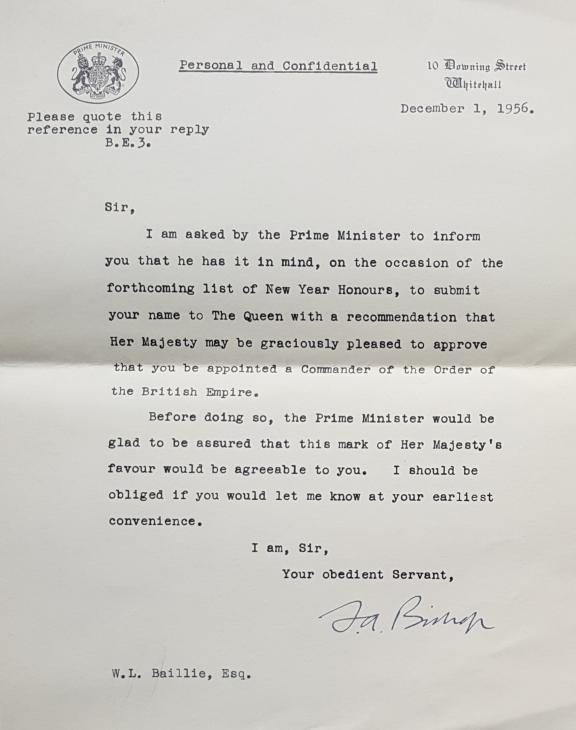
The wording of sounding letters has changed and now includes an opening paragraph saying:
The Prime Minister has asked me to inform you, in strict confidence, that having accepted the advice of the Main honours Committee, he is recommending that Her Majesty the Queen may be graciously please to approve that you be appointed [name of award] in the [next] Honours List.
Another paragraph reminds potential recipients of their responsibilities, viz:
There is a clear expectation that those invited to receive an honour are and will continue to be role models. Recipients of honours should be aware that membership can be forfeited for a variety of reasons, including criminal conviction and bringing the Order into disrepute.
- The letter includes a reply form.
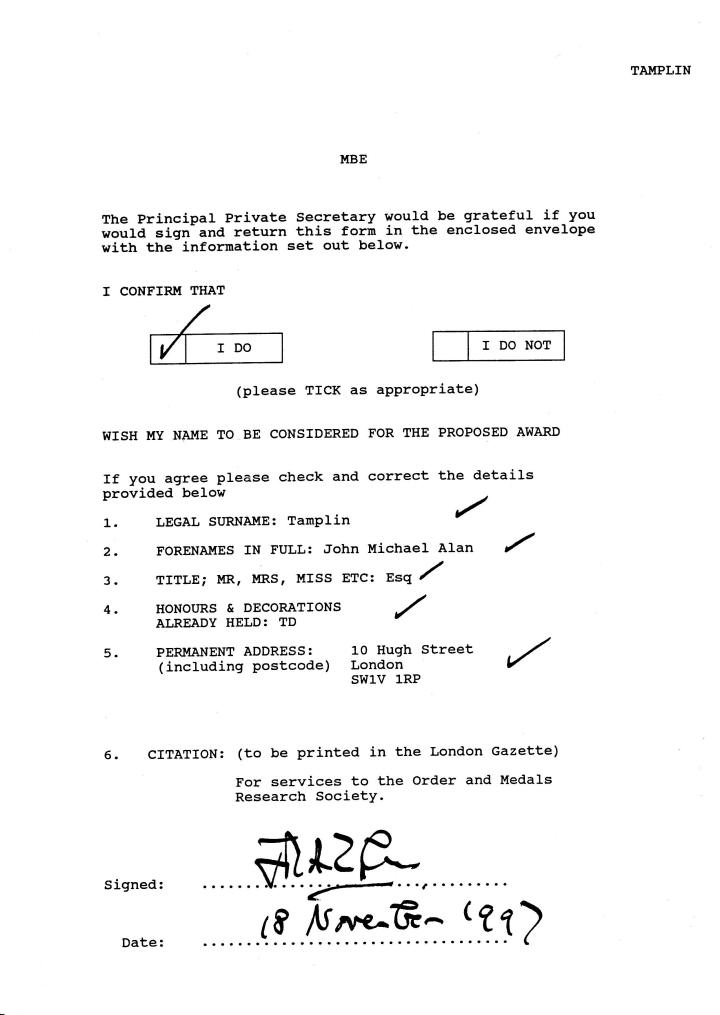
- The award is promulgated in the London Gazette usually in the New Year or Birthday honours.
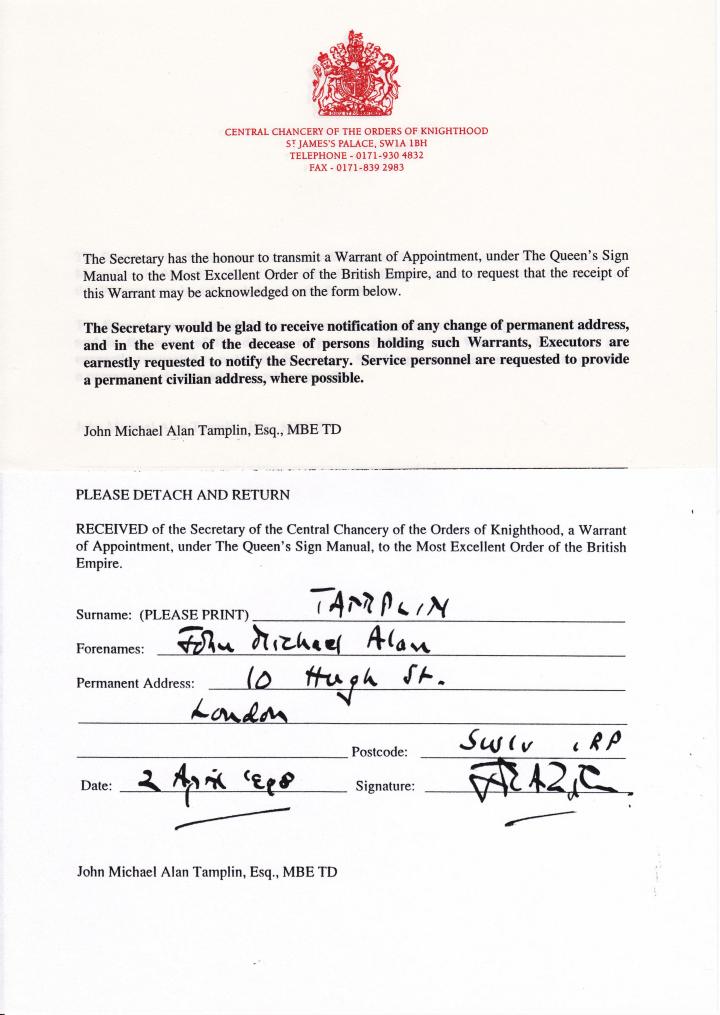
- A warrant of appointment is created showing that the nominee has been appointed to the Order. This is sent to the awardee who is asked to acknowledge receipt.
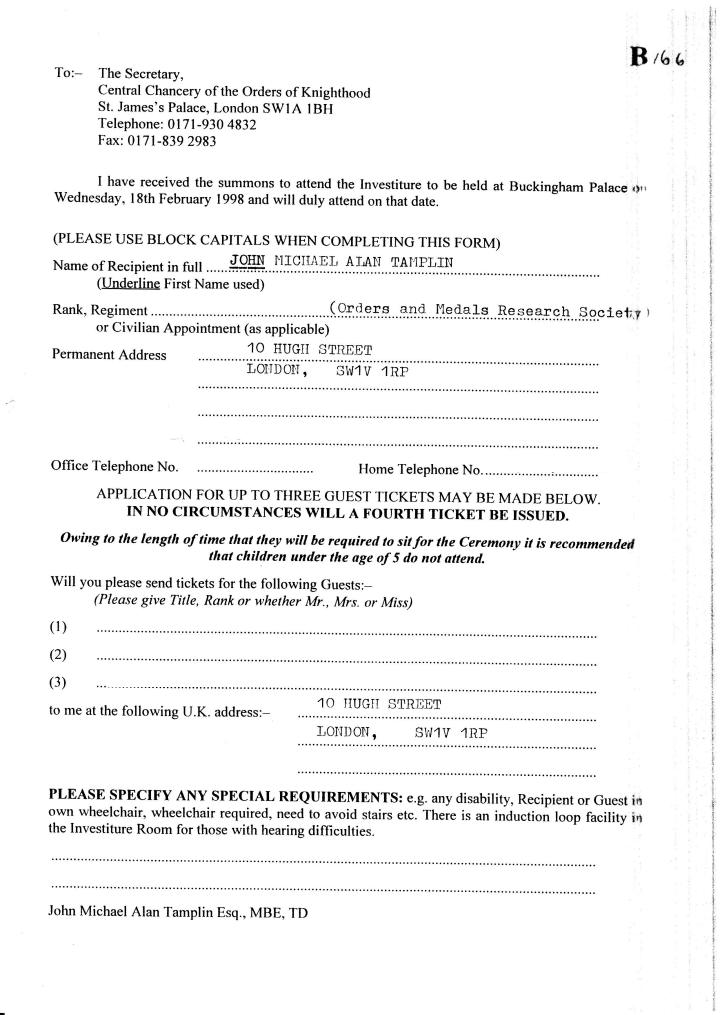
- The recipient is invited to an investiture where the insignia is presented to them.
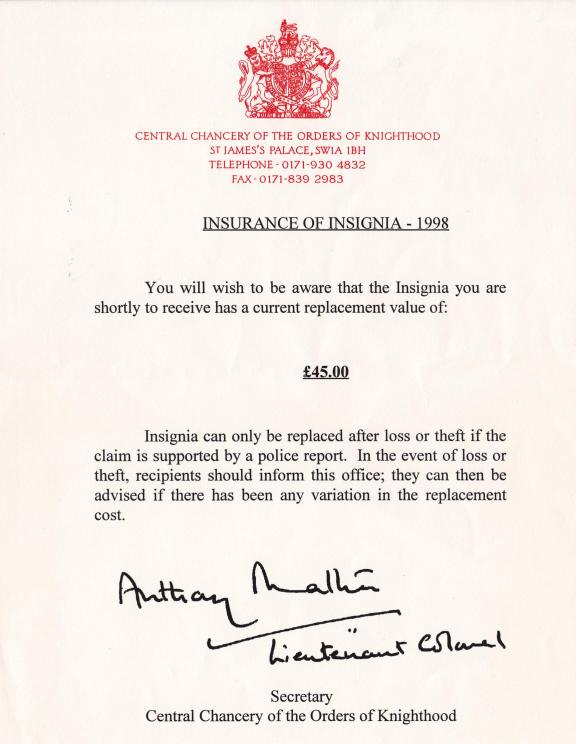
Warrants
The principal paperwork relating to British Orders is the warrant of appointment addressed to the recipient. It shows the grade of the Order and the recipient’s name. Each recipient is provided with a warrant on appointment to an Order and again if they are promoted within the Order.
Recipients were also provided with a copy of the statutes of the Order which are the governing rules and regulations of the Order. This exhibit does not cover statutes in any detail as they are a subject of study in their own right.
Some Orders have both military and civil divisions, but their is no difference in the warrants for either division.
The size of warrants has changed over time. Initially warrants were hand written on foolscap paper measuring 13.25 x 16.5 inches and folded to make four pages. The first two pages contained the written warrant.
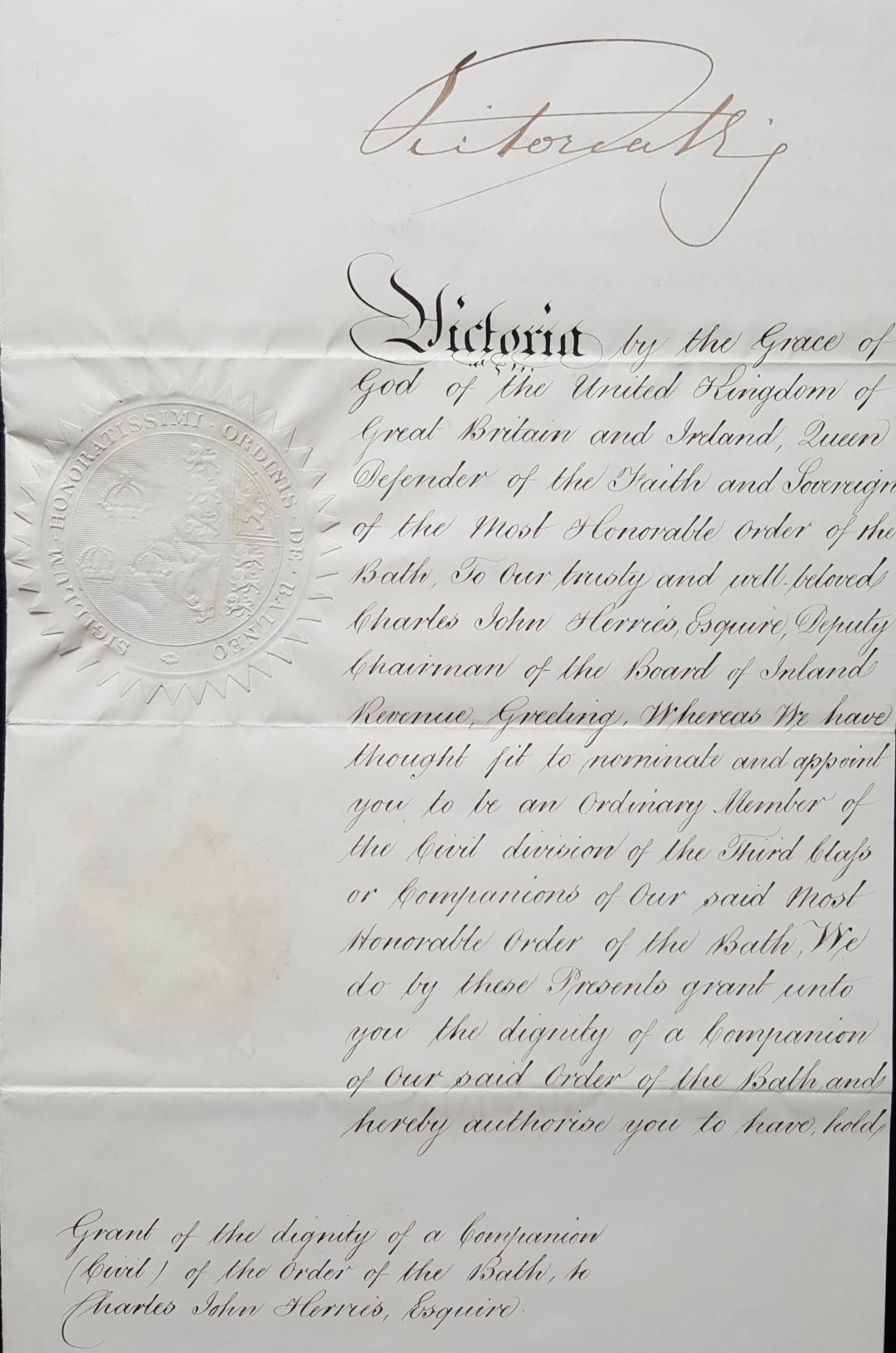
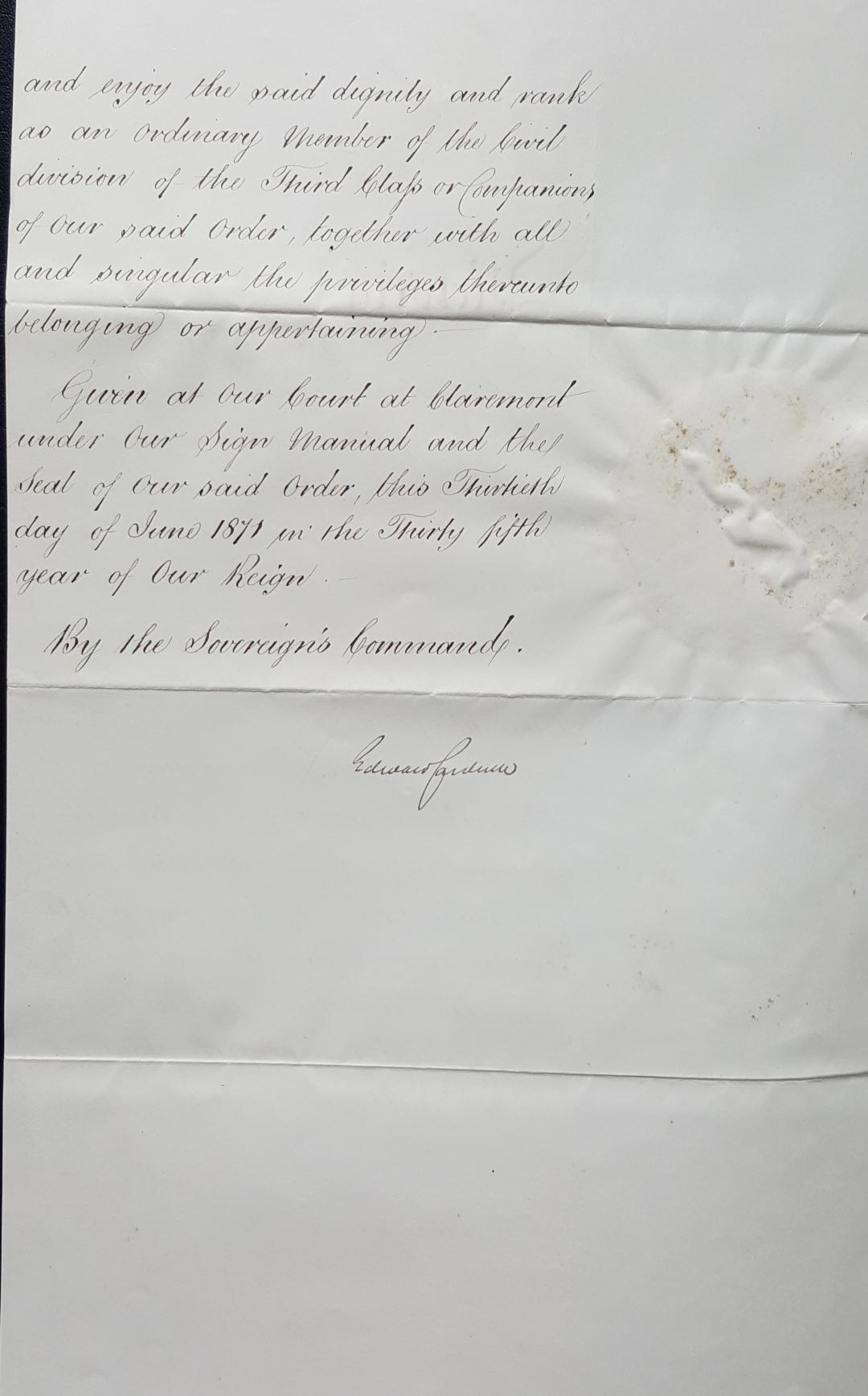
Sometime towards the end of Victoria’s reign, and certainly by the time of Edward VII’s reign, warrants ceased to be all hand written and instead were printed. The typeface used was similar to handwriting with blank spaces left for the manuscript insert of the recipient’s details and the grade of the Order being awarded. This was done in such a way as to suggest that the whole document may have been hand written. It was necessary to leave a large gap for the insertion of the recipient’s name and details. Often this would leave a large gap on the form, but occasionally, for highly decorated officers, it was a tight squeeze to fit everything in.
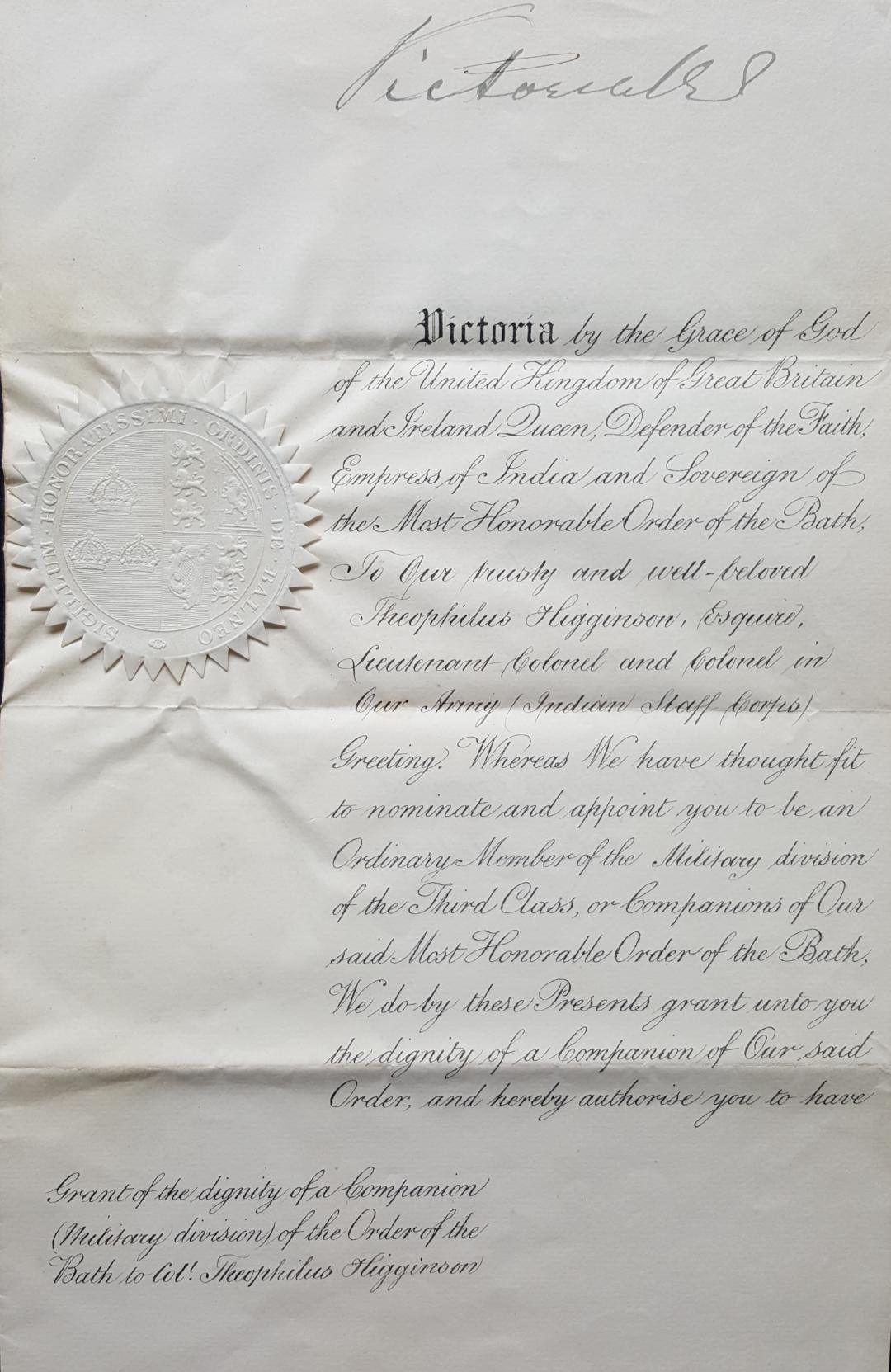
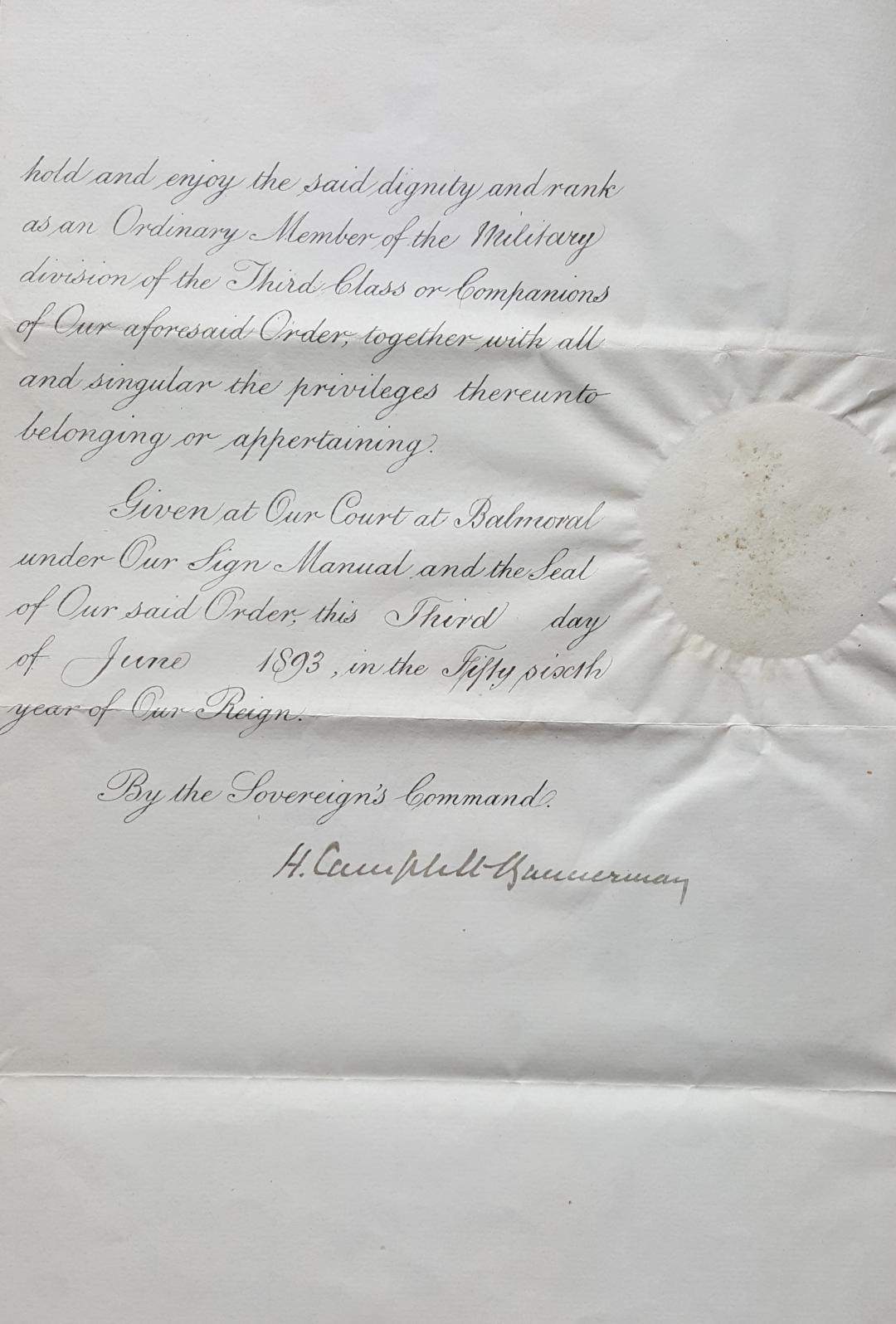
During the First World War, some warrants are printed in their entirety, with no manuscript inserts.
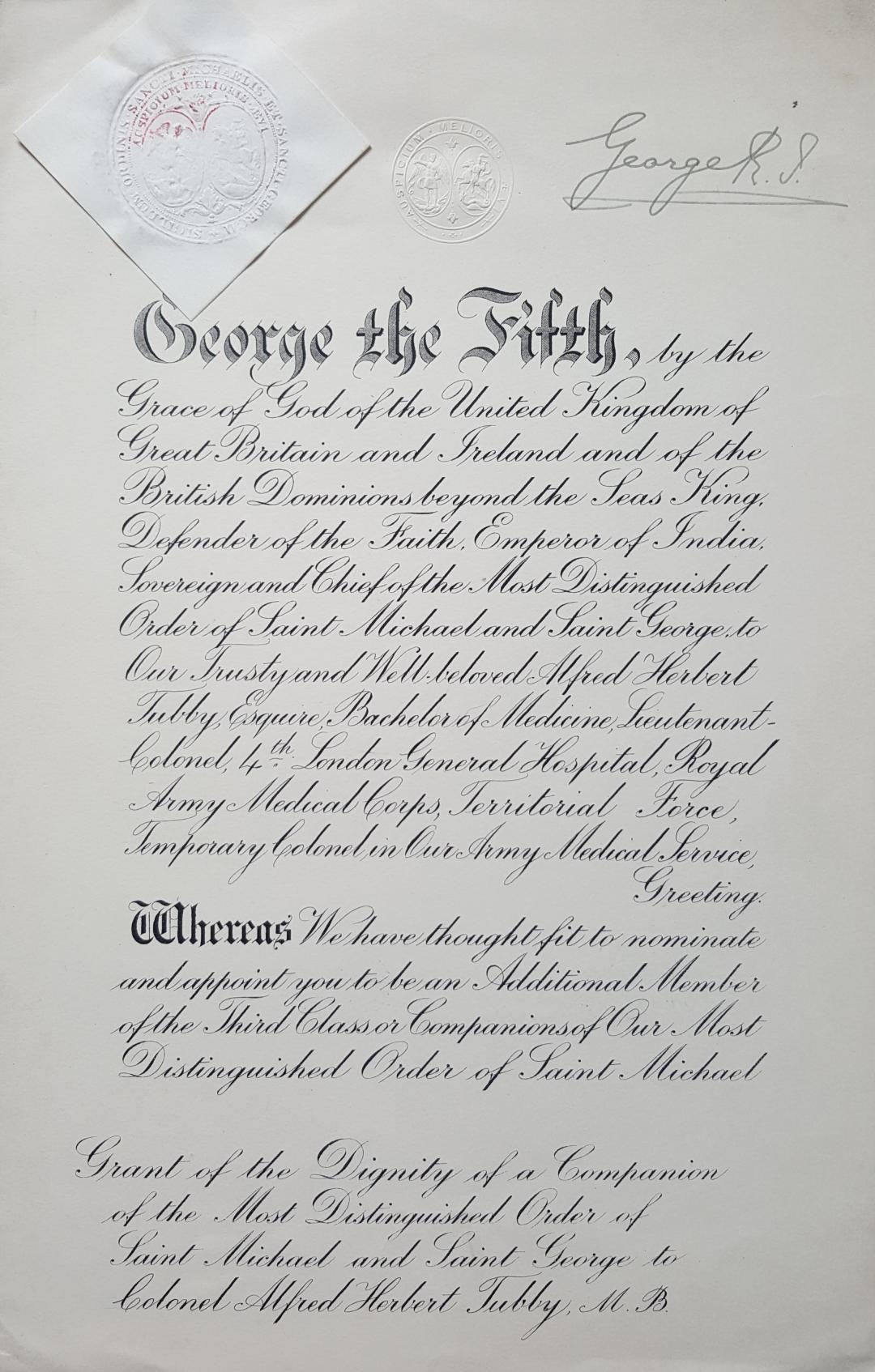
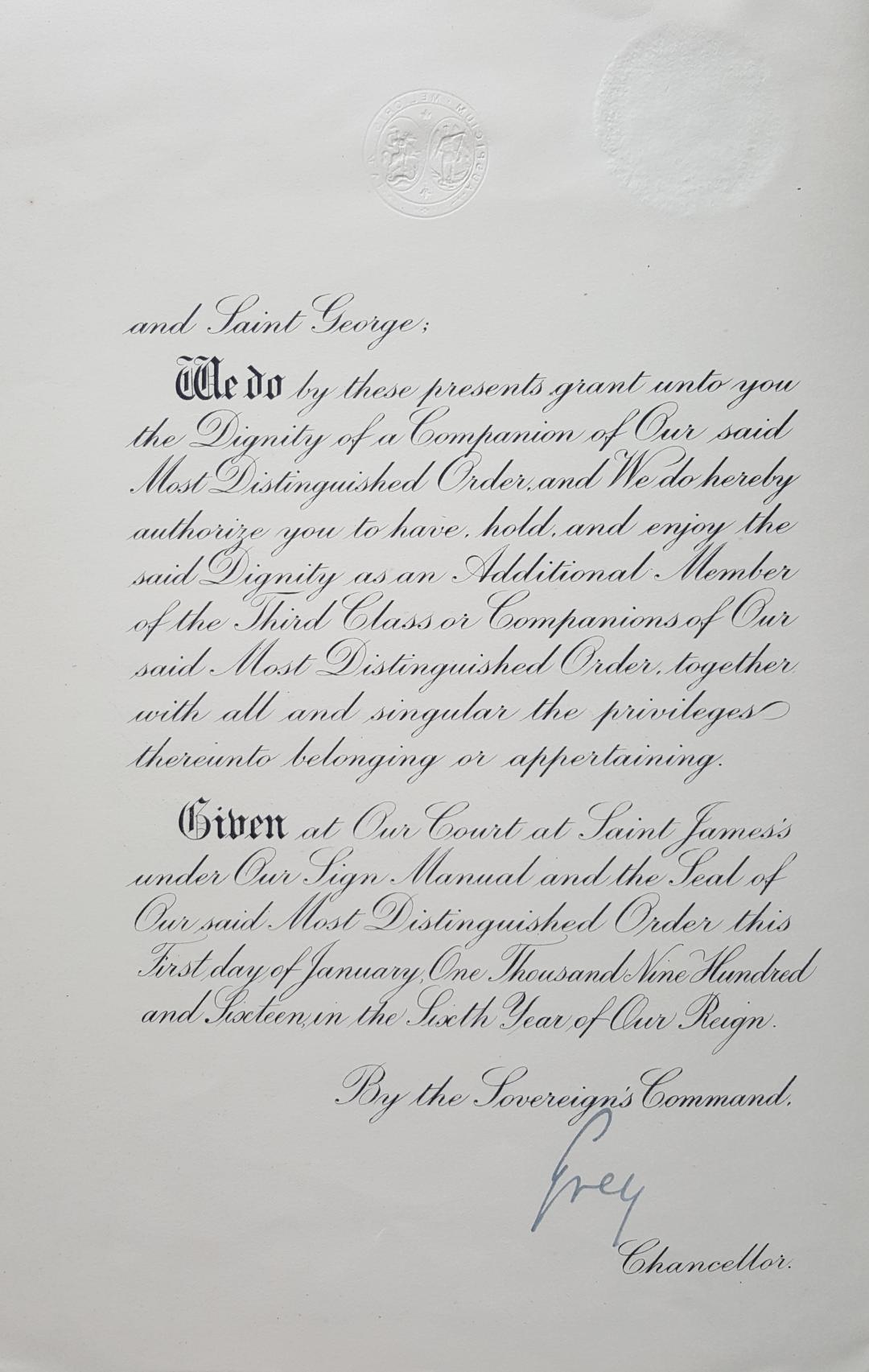
During the reign of George V, in the mid-1920s, foolscap was replaced by a single large sheet measuring 12.5 x 15.0 inches (a paper size known as pott). Being too large for the envelopes then in use, these warrants were sent out folded in half.
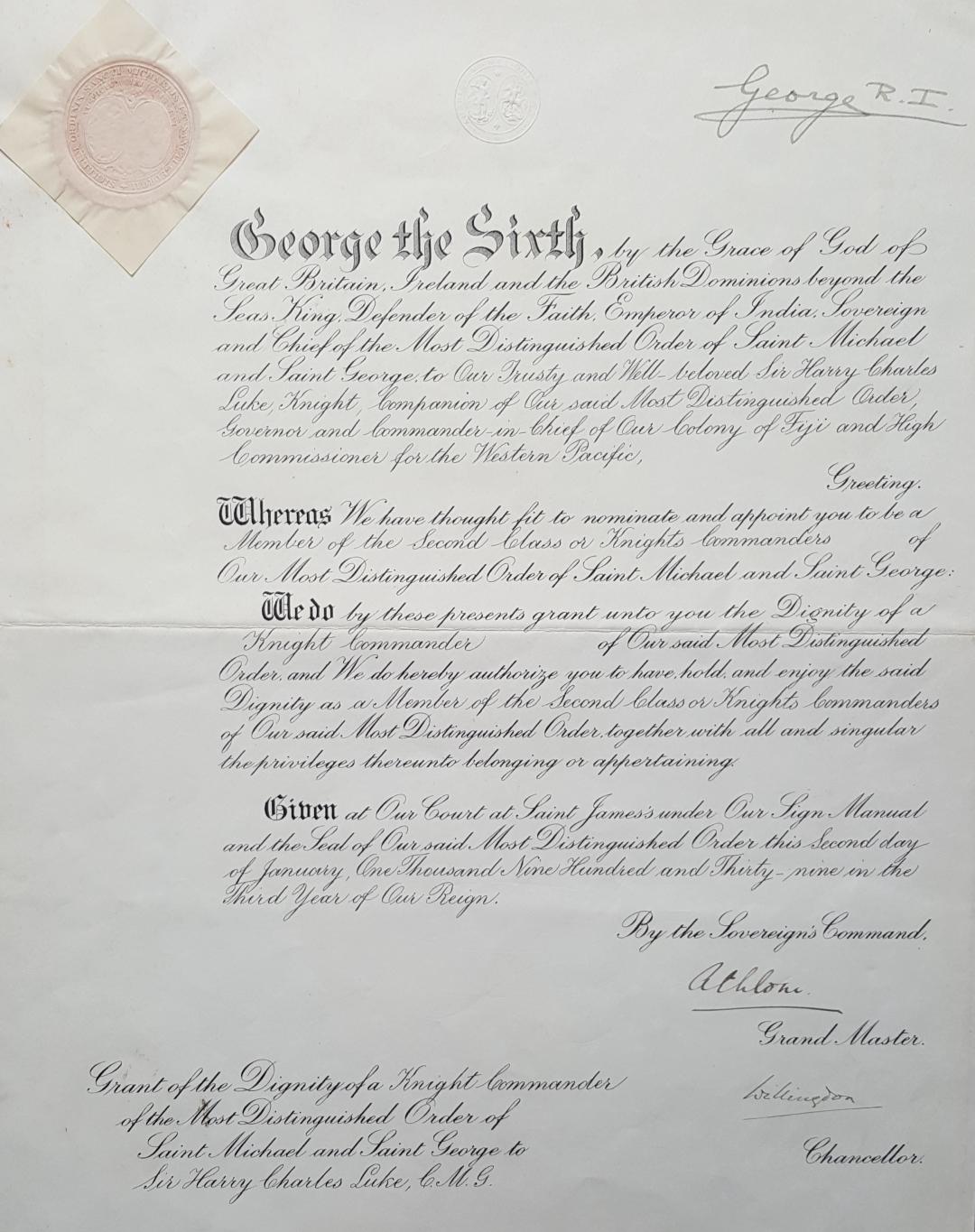
After about 1950, warrants were sent flat, held on a thick piece of card by the corners. It is unclear why this change took place, but folding warrants left them with an unsightly horizontal fold make across the centre. This was not pleasant to see when the warrant was framed.
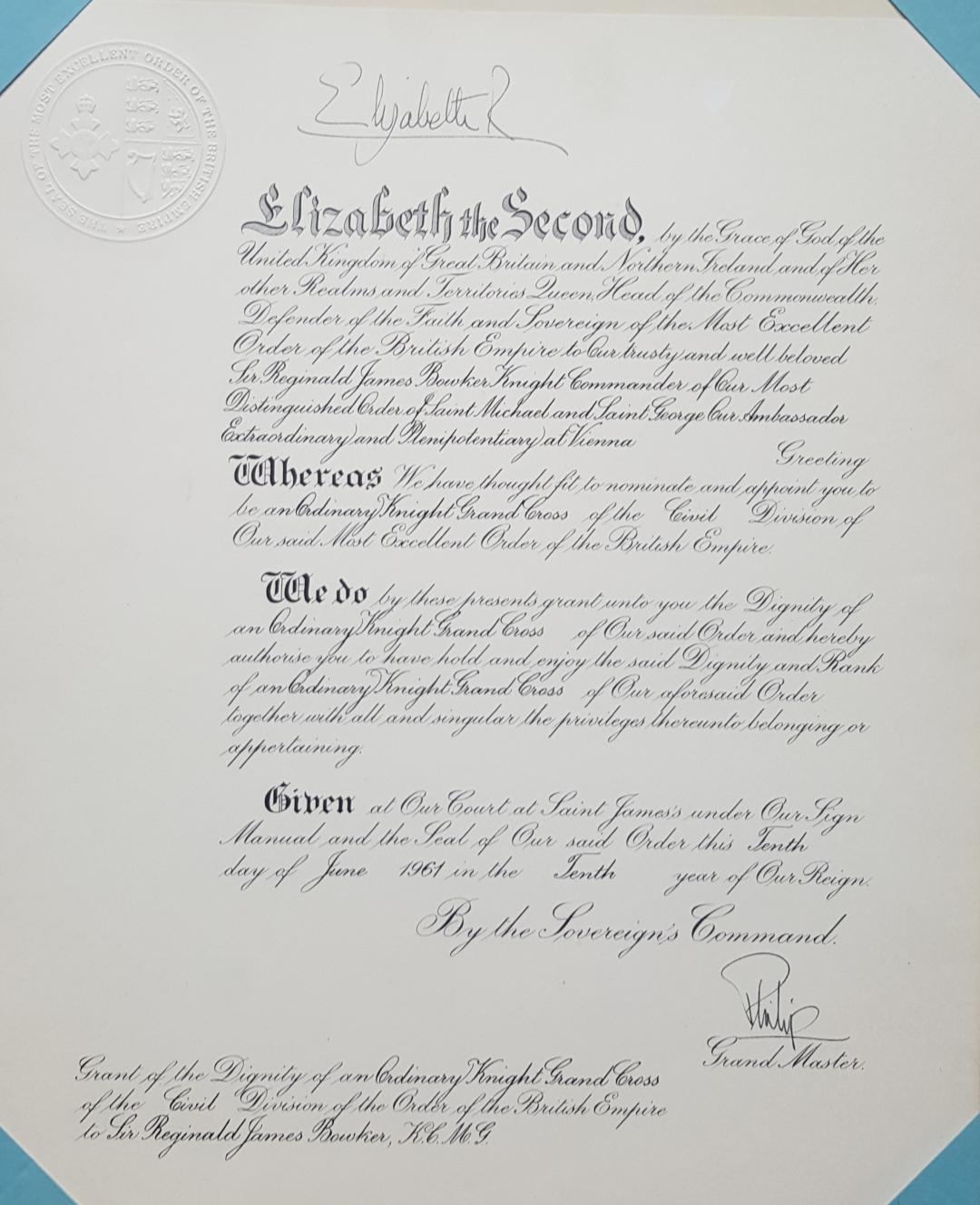
Beginning in 2020, warrants are being sent out rolled, in tubes.
Wording
The wording on warrants has remained fairly static. However there have been changes to reflect the circumstances of the time. Examples of which are:
- During George V’s illness in 1929-30 a Council of State discharged certain duties of the King including signing warrants of appointment to Orders on his behalf. For an example, see the Order of the Bath.
- Warrants of appointments for the 1936 New Year honours were signed by King Edward VIII as awards given by his late father. For an example, see the Order of the British Empire.
Royal Titles
In common with other official documents, warrants changed their wording to reflect the royal titles in use at the time. The monarch’s name and regnal number was followed by the following during the dates shown:
1837-1876: By the Grace of God, of the United Kingdom of Great Britain and Ireland Queen, Defender of the Faith
1876-1901: By the Grace of God, of the United Kingdom of Great Britain and Ireland Queen, Defender of the Faith, Empress of India
1901-1927: By the Grace of God, of the United Kingdom of Great Britain and Ireland and of the British Dominions beyond the Seas King, Defender of the Faith, Emperor of India
1927-1948: By the Grace of God, of Great Britain, Ireland and the British Dominions beyond the Seas King, Defender of the Faith, Emperor of India
1948-1952: By the Grace of God, of Great Britain, Ireland and the British Dominions beyond the Seas King, Defender of the Faith
1952-1953: By the Grace of God, of Great Britain, Ireland and the British Dominions beyond the Seas Queen, Defender of the Faith
1953-to date: By the Grace of God, of the United Kingdom of Great Britain and Northern Ireland and of Her other Realms and Territories Queen, Head of the Commonwealth, Defender of the Faith
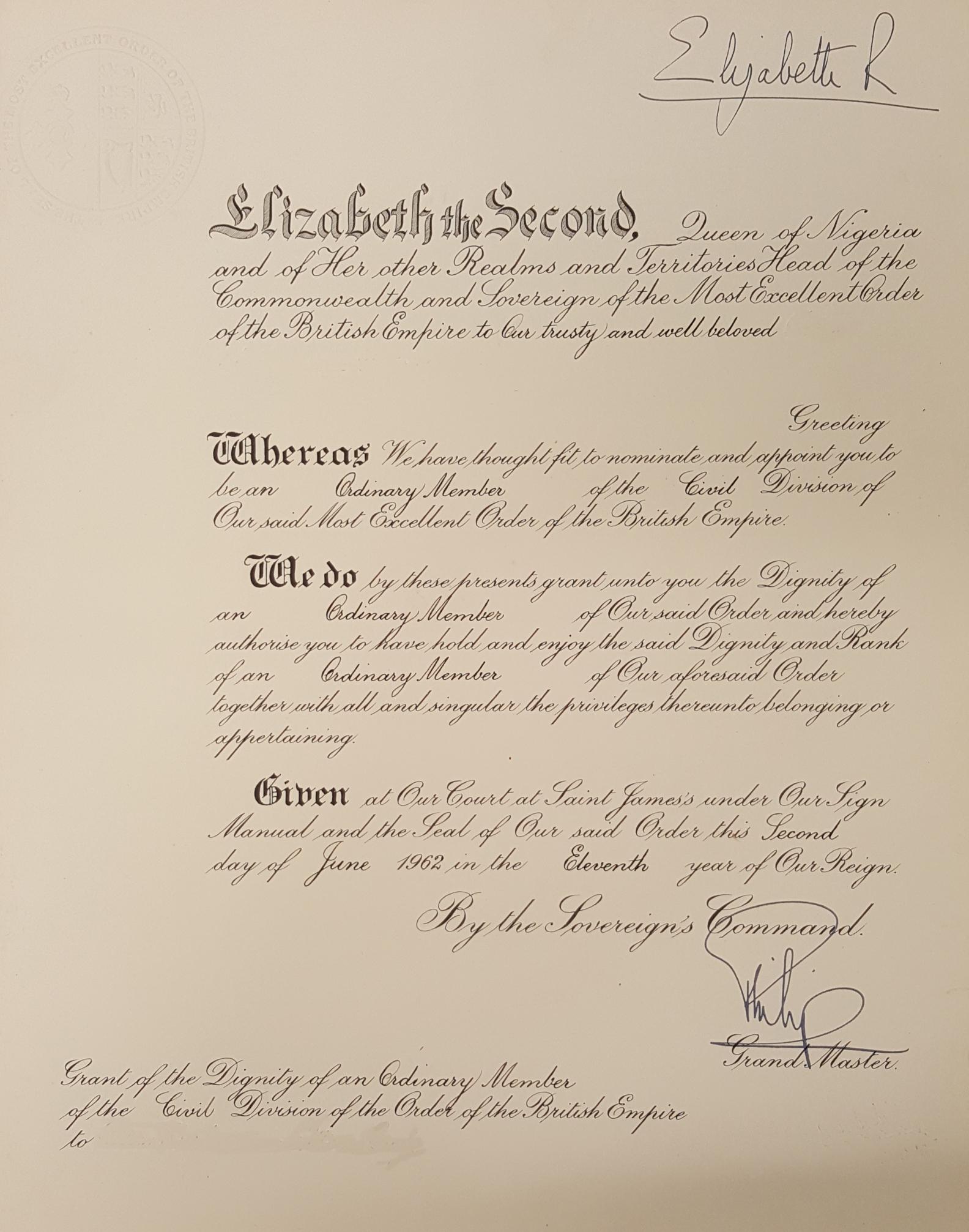
Upon gaining independence some countries retained Queen Elizabeth II as head of state and in some cases she reigned in those countries as Queen of that Country rather than as Queen of the United Kingdom. This is reflected in the Royal Titles at the start of each country’s warrant. An example of this is an MBE warrant for Elizabeth the Second, Queen of Nigeria, which was in use between 1960 and 1963.
Seals
Warrants contain in the upper left hand corner a blind stamped impression of the seal of the Order.
Signatures
All warrants for British Orders contain the sovereign’s signature together with one or more other signatures.
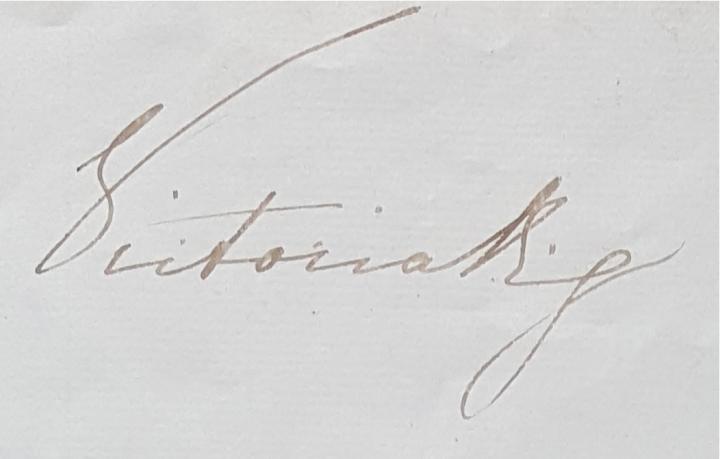
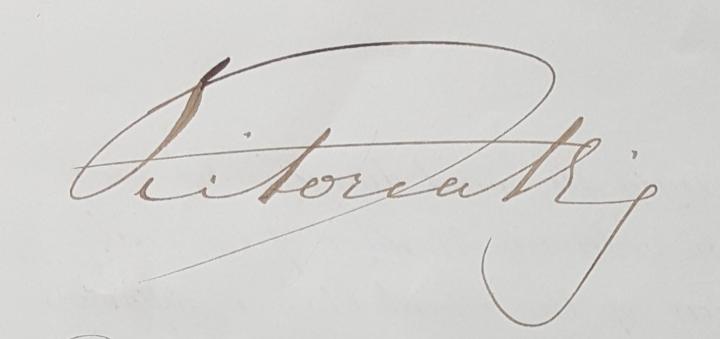
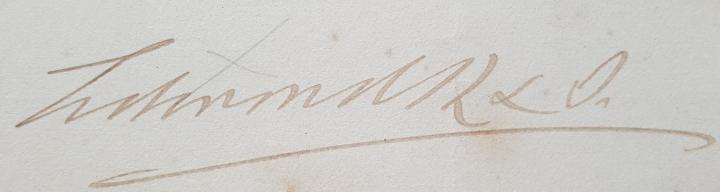
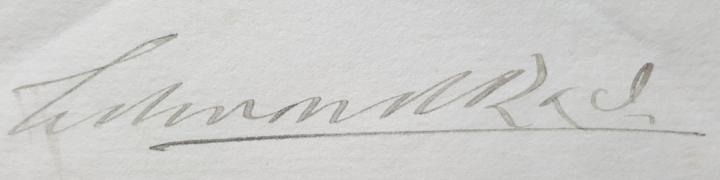
Prior to the introduction of the Order of the British Empire, the sovereign signed all warrants in person. This was made possible by the relatively small number of appointments each year – of the order of 300 – 400. Even at time of war of special events like a coronation when the figure was about 1,000, the sovereign still signed all of the warrants.
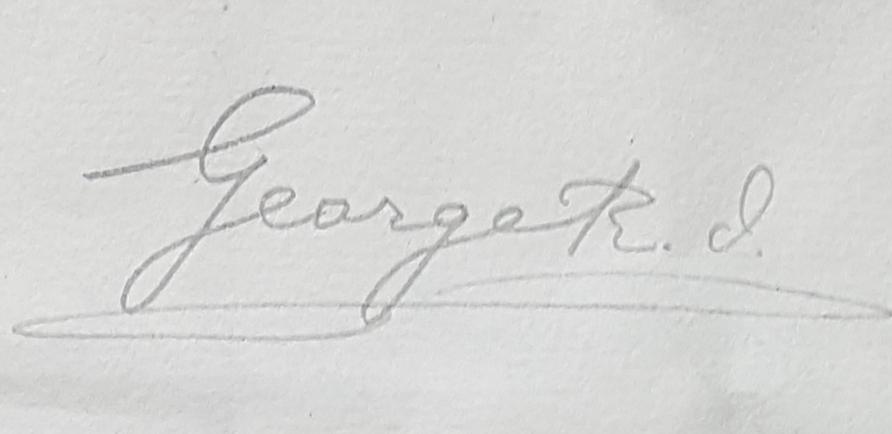
The advent of the First World War changed all that. A rubber stamped signature of George V was used on commission documents for the Army in late 1914 due to the large influx of new officers.
No change was made to the warrants for Orders until the introduction of the Order of the British Empire in 1917. By 1918 the number of appointments to Orders had shot up to over 10,000, the majority to the new Order. The rubber stamped signature of the King was then used on warrants for the Order of the British Empire. Other Orders appear to have been unaffected.
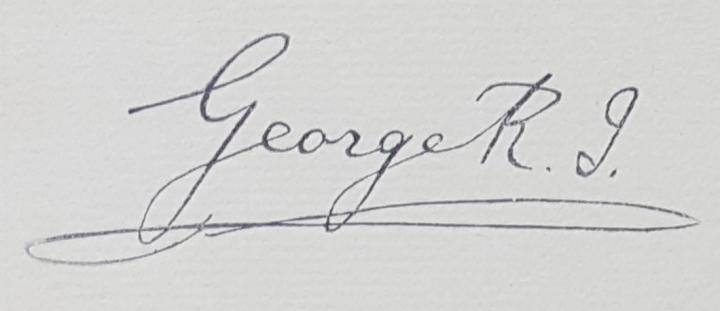
After the war the number of appointments to Orders fell to a level where the King was able to resume signing all warrants.
During Edward VIII’s short reign a rubber stamp of the King’s signature was used on OBE and MBE warrants. The only other warrant that I have seen from 1936 is for a CVO, which is signed by the King.
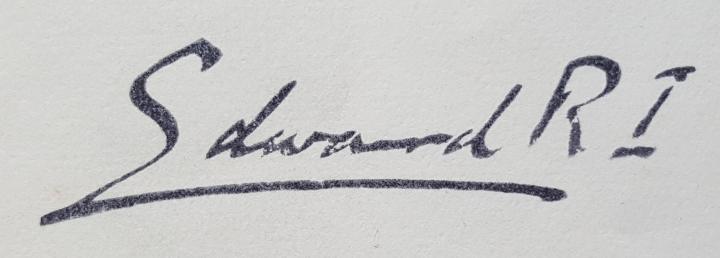
It is difficult to date exactly when it started, but it would seem that the sovereign only signed warrants in the first two grades of an Order (i.e. those which conferred knighthood) from about the time of Edward VIII. The main exception to this was the Royal Victorian Order, where, generally, the monarch continued to sign all warrants.
The reign of George VI sees a rubber stamped used to sign lower grade warrants.
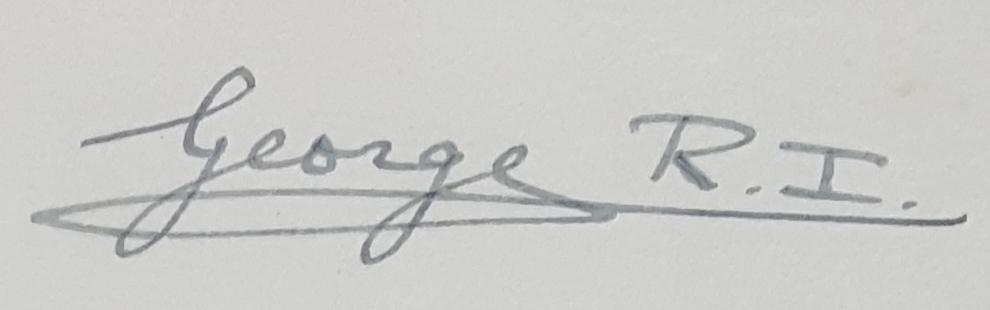
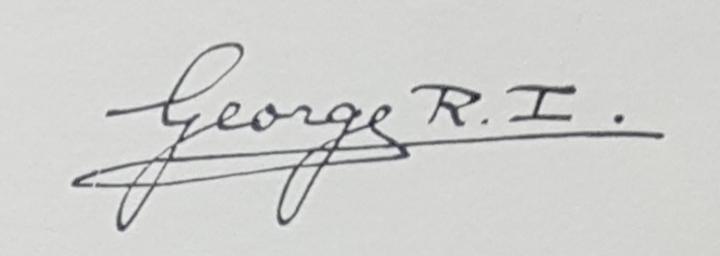
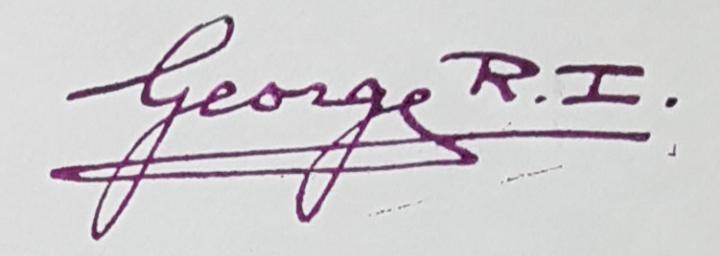
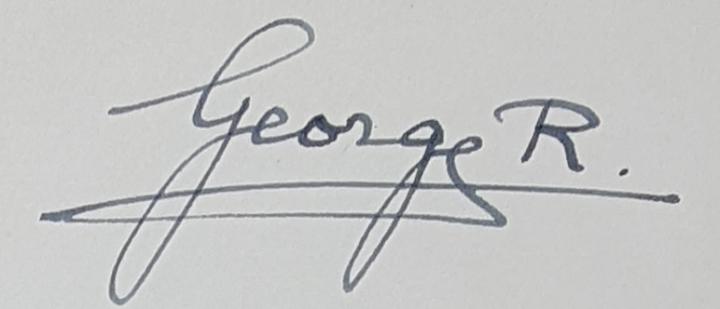
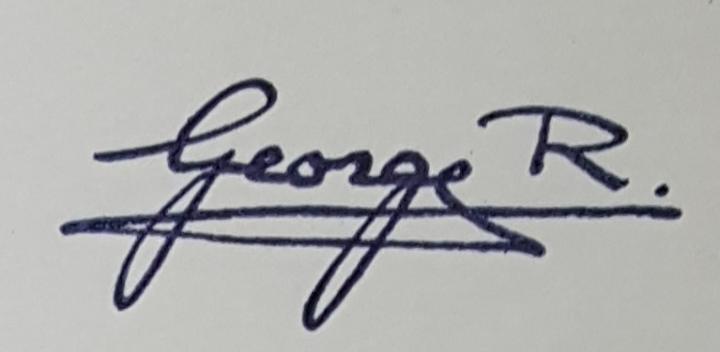
When Queen Elizabeth II came to the throne the rubber stamp was replaced with an auto-pen machine which is a form of pantograph. This reproduced a signature perfectly and is difficult to detect from the real thing, except that they are all exactly the same. When signing, the Queen has a tendency to sign on the left of the warrant, whereas an autopen signature normally appears on the right.
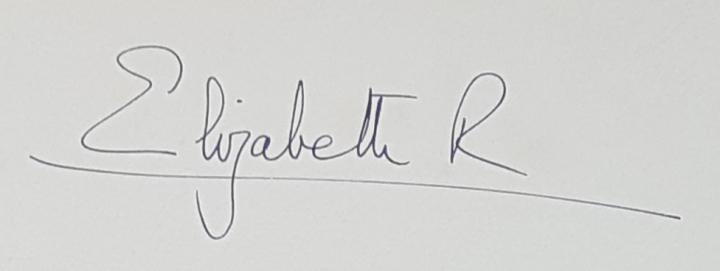
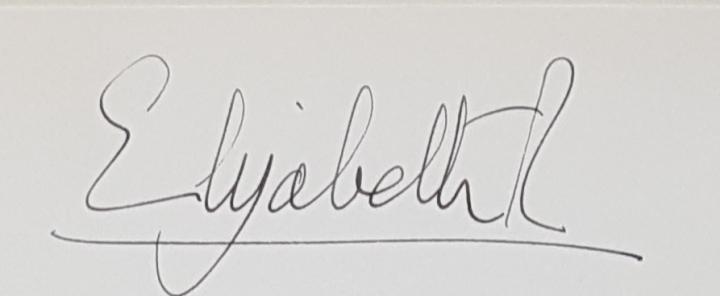
There have been three autopen versions of the Queen’s during her reign. The first seems to have been in use in 1952-1953, the next from 1954-57 and the final, and current version from 1958.
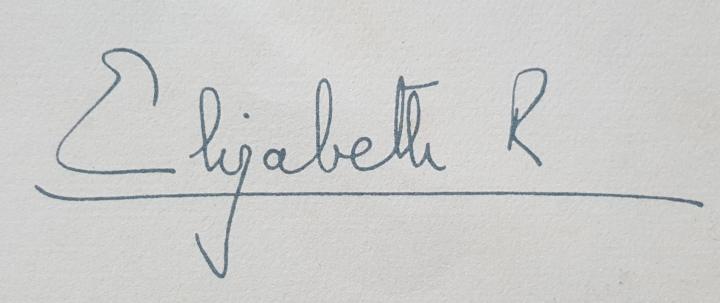
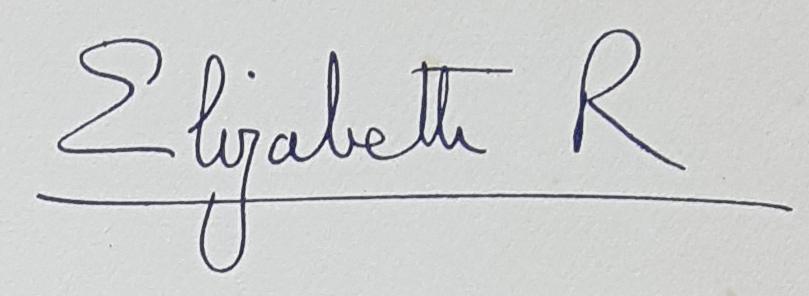
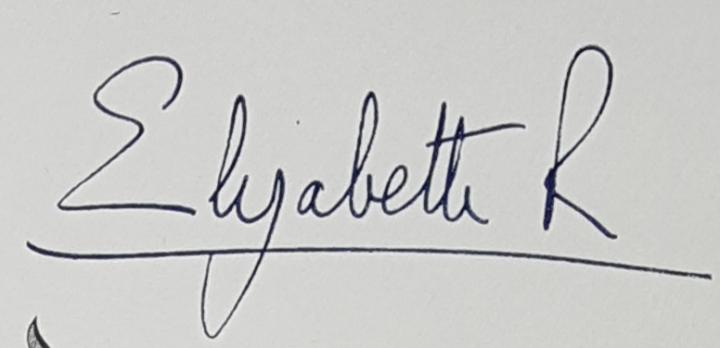
In more recent years, if the monarch does not sign in person, then her signature is printed on the warrant.
Warrants are also signed by other individuals – often officers of the Order. In the main these signatures are real because the annual number of appointments to an Order is low. The main exception to this is the Order of the British Empire where, due to the high number of appointments the Grand Master only signs when the sovereign signs.
Dispensation Warrants
Where a recipient cannot attend an investiture, a warrant of dispensation is issued removing the need for an investiture and allowing the recipient to wear his insignia from that time. These were used mainly for recipients living abroad who, in the days before the jet engine, could not easily return to the UK to be presented with insignia by the monarch.
In the case of a Knight Bachelor, if it is not possible for the monarch to administer the accolade, then letters patent are issued under the Great Seal. Interestingly, a Knight Bachelor only receives a certificate acknowledging his award if he is not dubbed by the monarch.
Our Court at…and Date
The final paragraph of a warrant is generally in the following format:
Given at Our Court at xxx under Our Sign Manual and the Seal of Our said Order, this dd day of mm yyyy, in the zzth year of Our Reign
Until sometime in the 1870s the date on the warrant was different to the date of the announcement of the award in the London Gazette. The date used was probably the date on which the monarch signed the warrant. After this time the warrant date tended to coincide with the London Gazette date.
The Court location is thought to be where the monarch was when the document was signed. Thus warrants have been seen signed at Kew, Claremont, Balmoral, Buckingham Palace, Windsor and Saint James’s. From 1911 onwards Saint James’s is used exclusively and it was pre-printed on most warrants.
Brilliant!
Nathan
I might even vote for this.
Excellent – a cracking piece of research – well done.
Great to see some of the documents relating to John Tamplin, an OMRS stalwart!