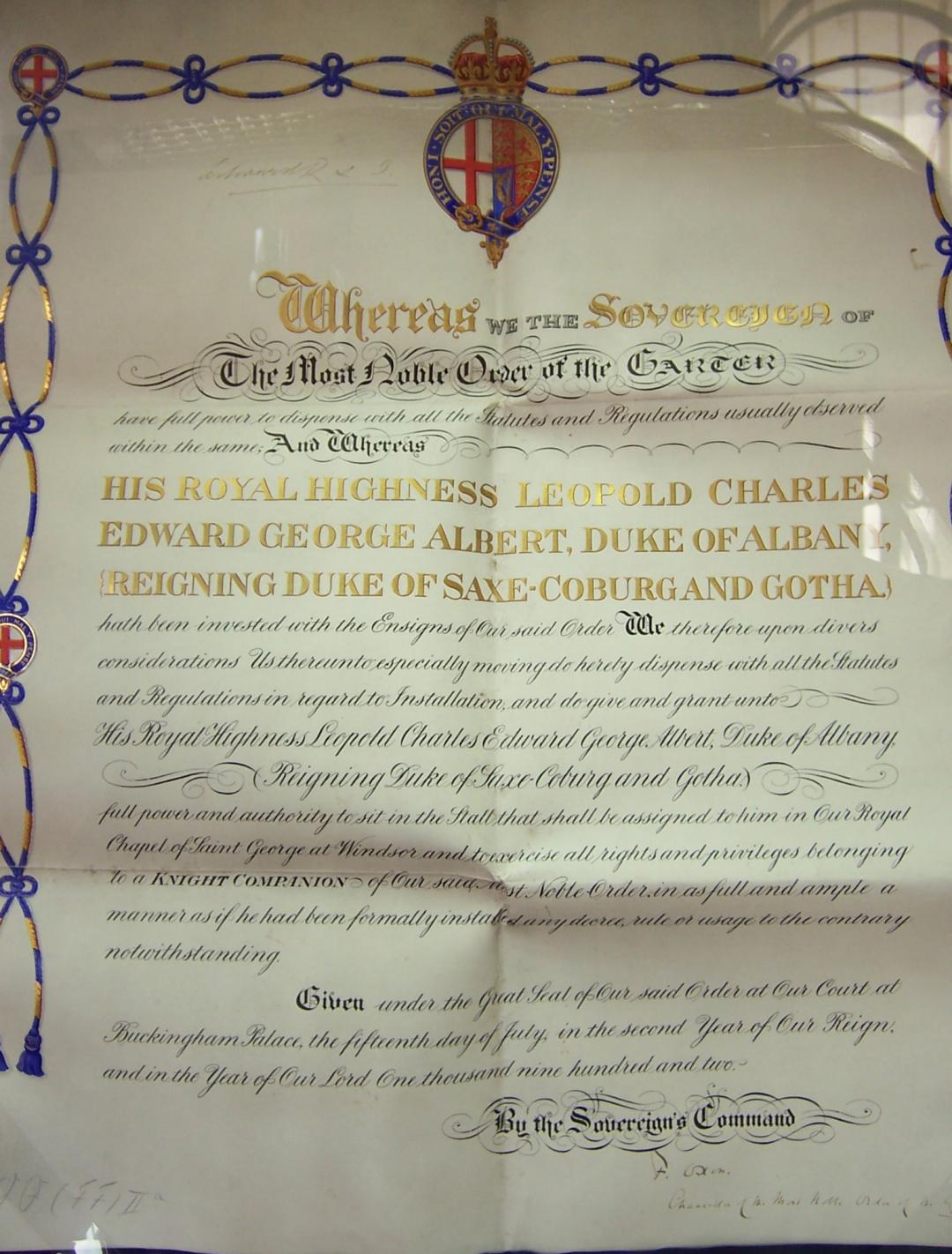
The Order was founded in 1348 and is the highest order of knighthood in the kingdom. It is limited to 25 knights.
Presumably over such a long period of time there may have been several variants in the warrants issued, but the earliest I have seen is from 1801.
Seal
There have been several seals of the Order but the design of the current seal dates from 1716. The obverse depicts a mounted St George slaying a dragon with a sword, surrounded by the legend Sigillum Magnum Nobilissimi Ordinis Garterii. The reverse has a shield with the arms of St George impaled with the Royal Arms in use in 1716, encircled by a Garter, with the motto of the Order, ensigned by an arched crown.
Other Signatures
Warrants are countersigned by the Chancellor of the Order. Until 1837 this alternated between the Bishops of Oxford and Salisbury. Between 1837 and 1937 the post was filled by the Bishop of Oxford, since when Chancellors have been knights of the Order. When signing, the bishops use just their first initial and the name of their See.
Other Paperwork
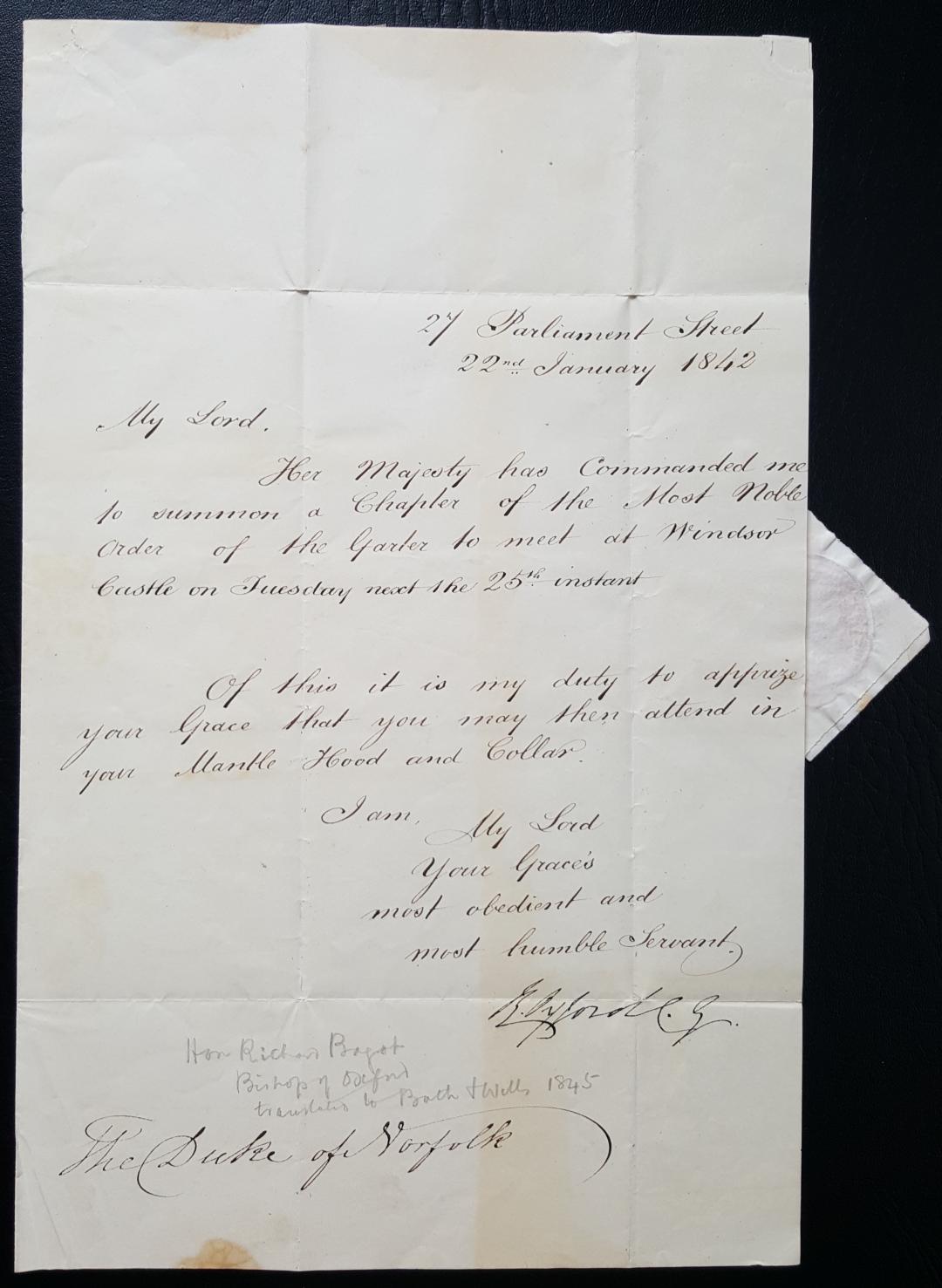
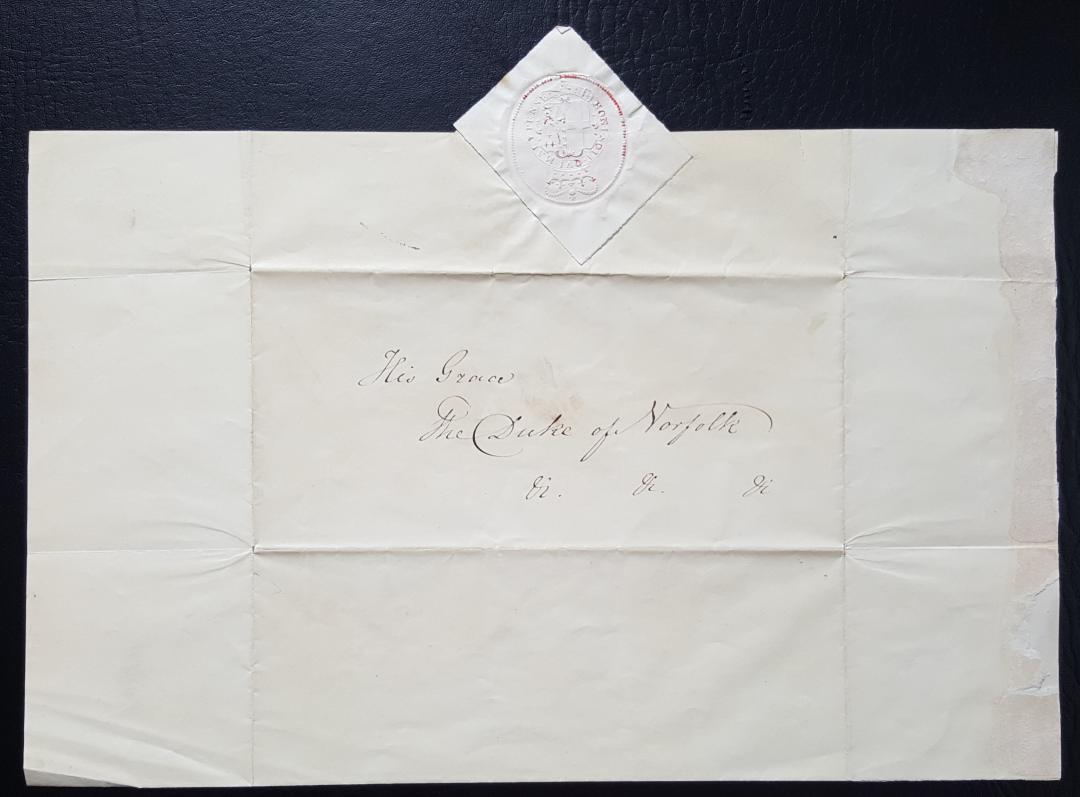
This is a letter from the Bishop of Oxford to the Duke of Norfolk, requesting his attendance at a Chapter of the Order to be held on 25 January 1842. Note the use of a signet seal of the Order.
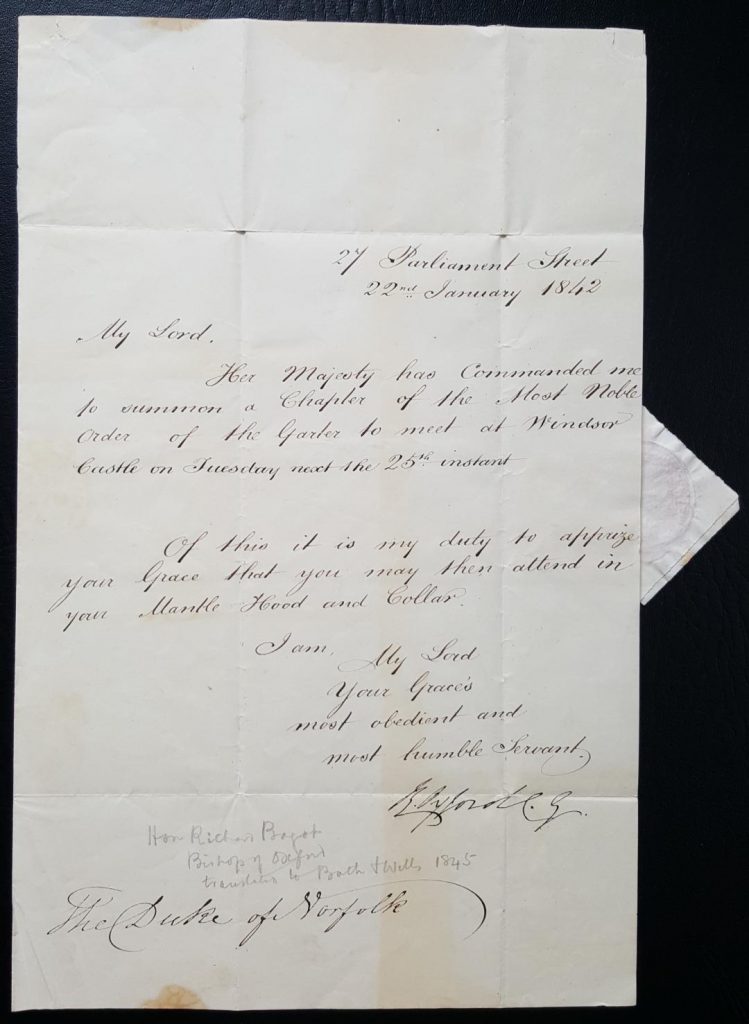
Letter 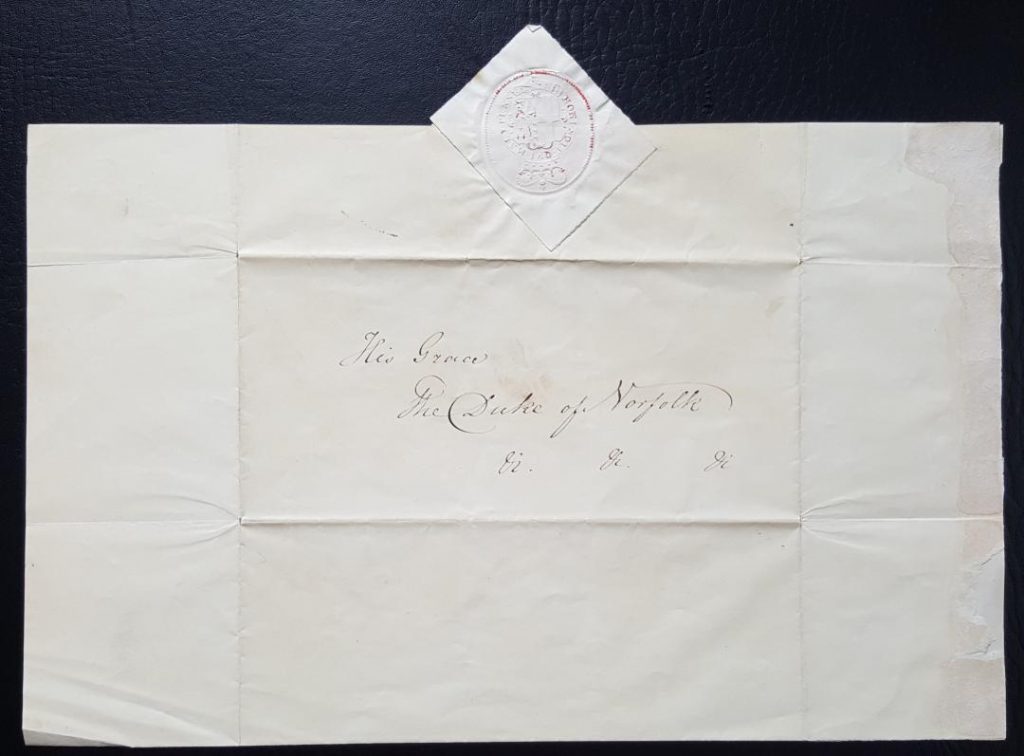
Address 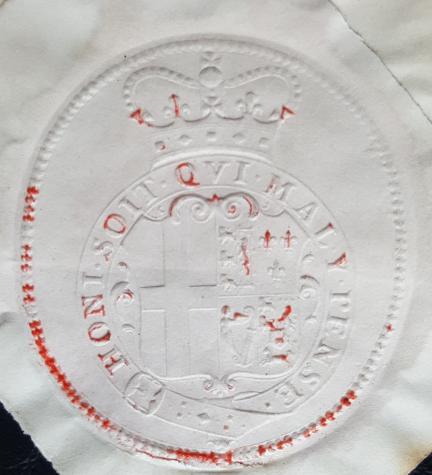
Signet seal
Case Study – John, Earl of Chatham
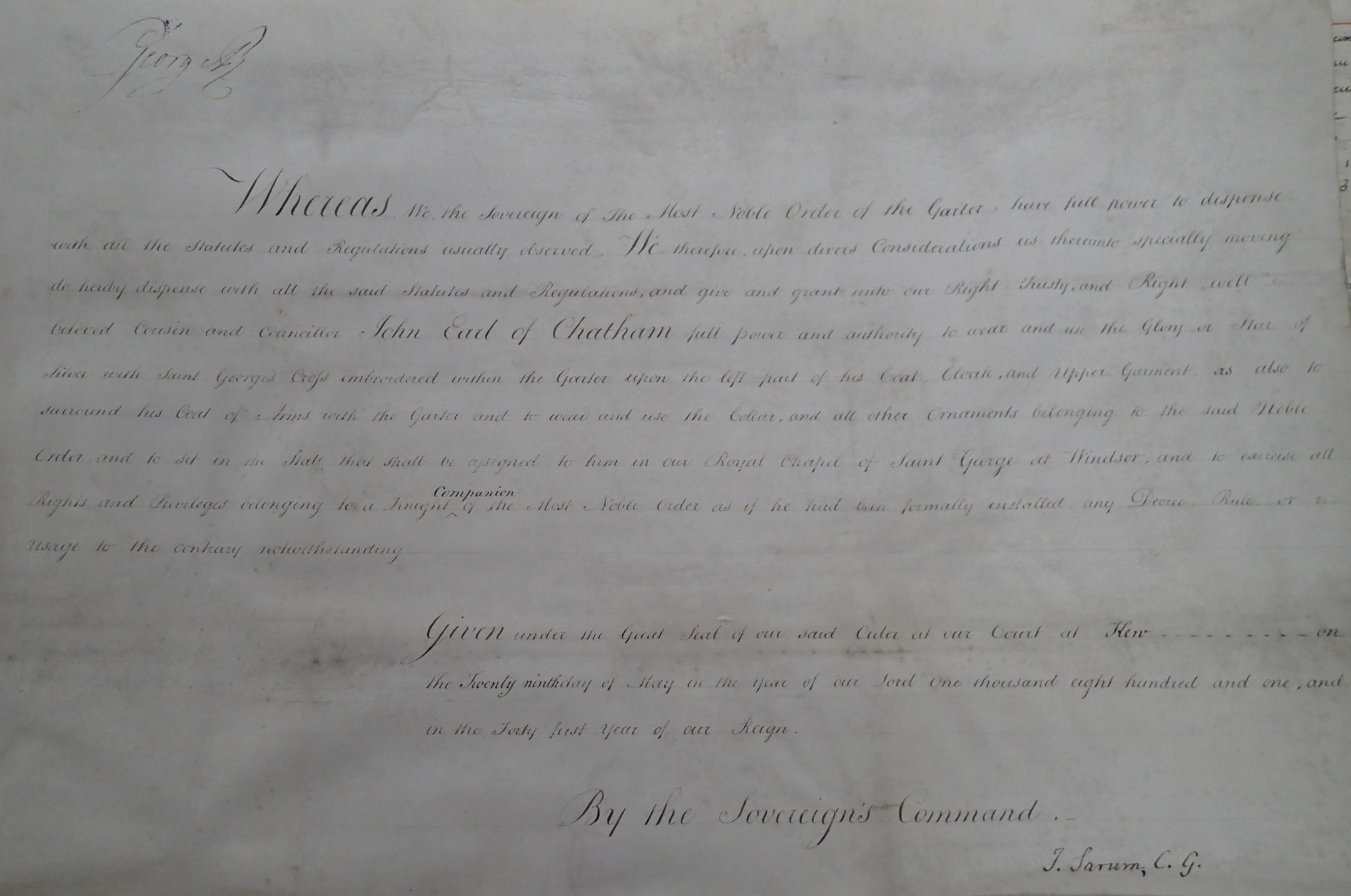
Chatham was admitted to the Order in 1790. This document is his dispensation from investiture, dated 1801 (TNA PRO 30/8/371). It is countersigned by John Douglas, Bishop of Salisbury.
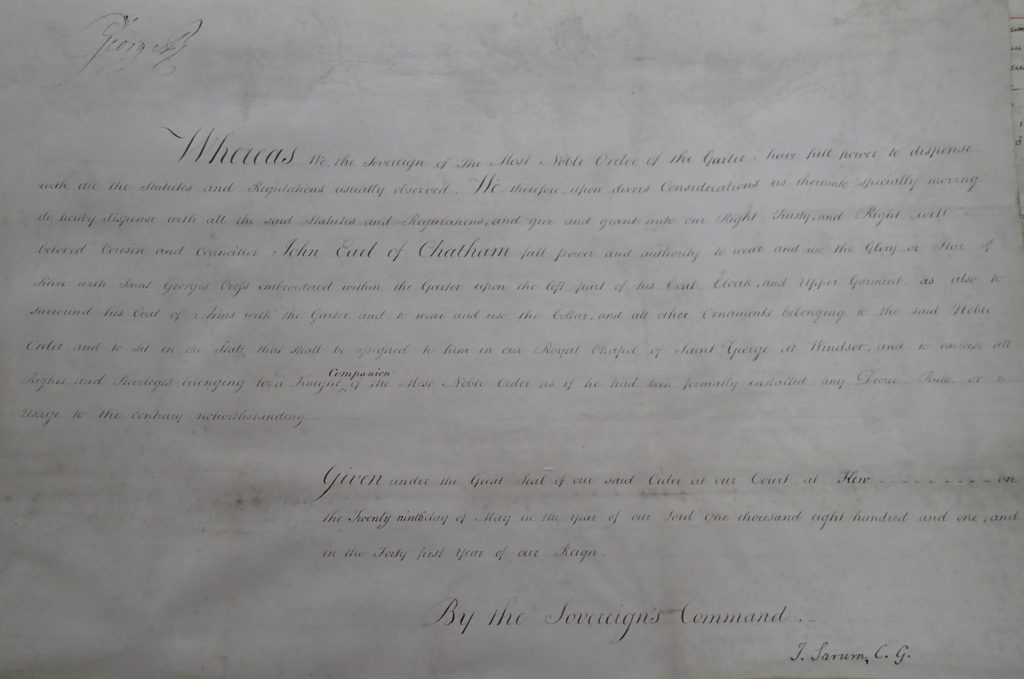
Warrant 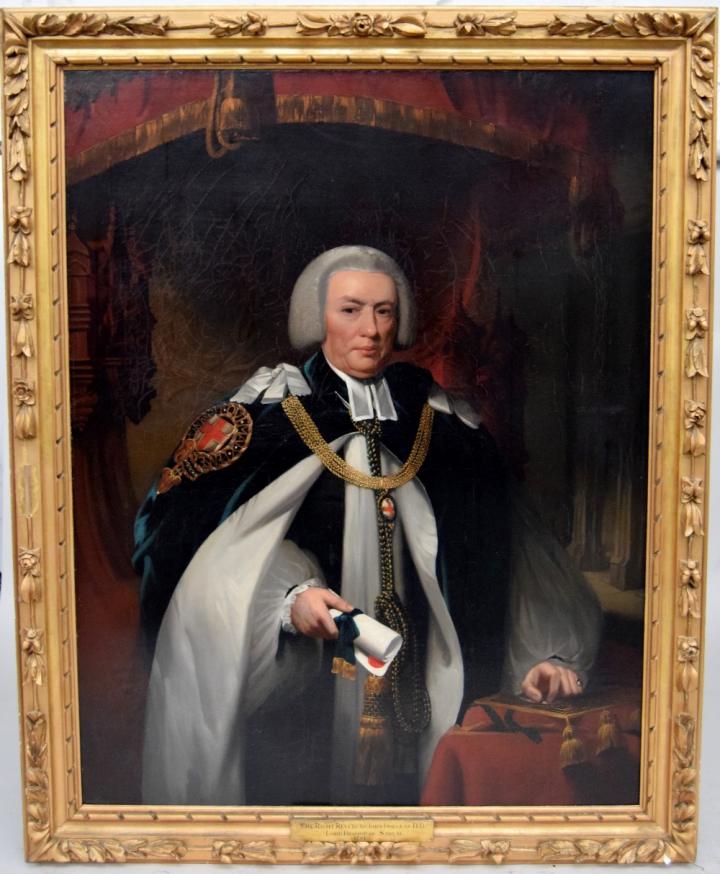
John Douglas
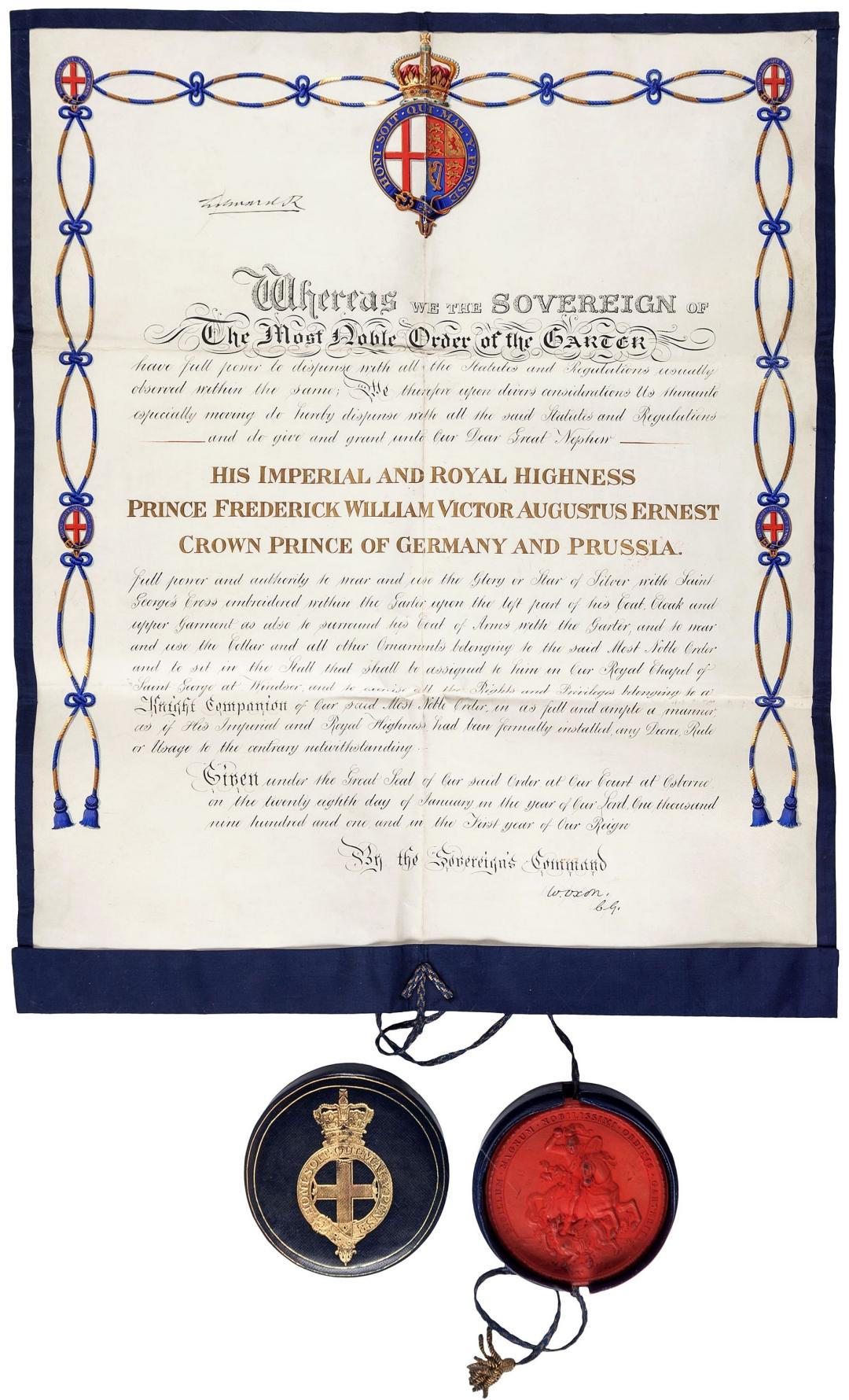
Case Study – HI & RH Prince Frederick William Victor Augustus Ernest, Crown Prince of Germany and Prussia
The Prince became a Stranger Knight of the Order in 1901. It is thought that this more attractive version of the warrant was introduced sometime between 1801 and 1816.
Case Study – HRH Leopold Charles Edward George Albert, Duke of Albany reigning Duke of Saxe-Coburg and Gotha
The Duke became a Stranger Knight of the Order in 1902.