The Imperial Service Medal was created at the same time as the Imperial Service Order in 1902. It was awarded for long service in the junior grades of the Civil Service to people who were not eligible for the Order. One of the main differences is the medal can only be awarded on retirement whereas the Order can be awarded after the qualifying time period.
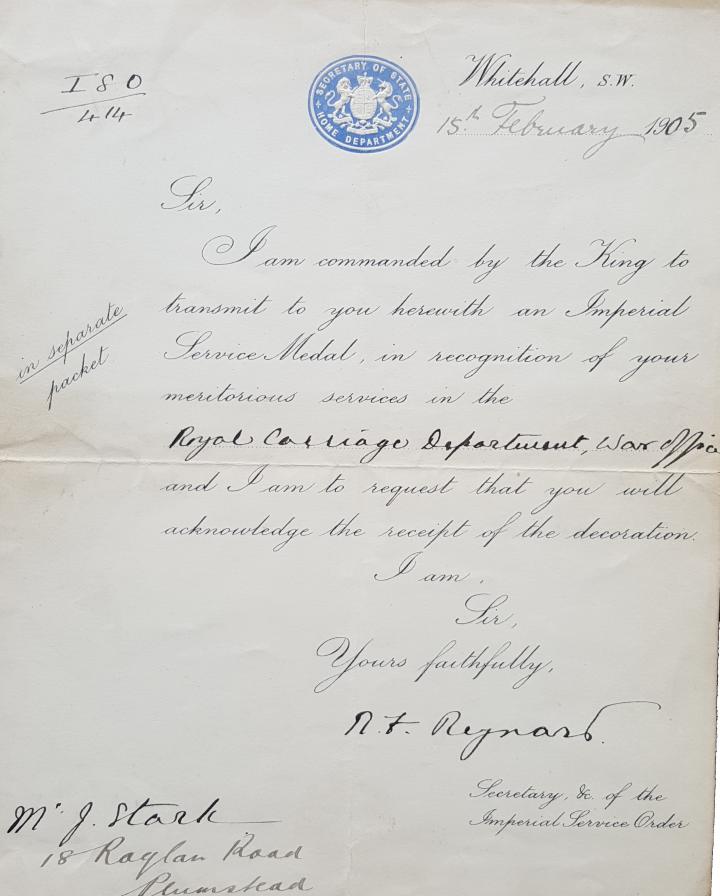
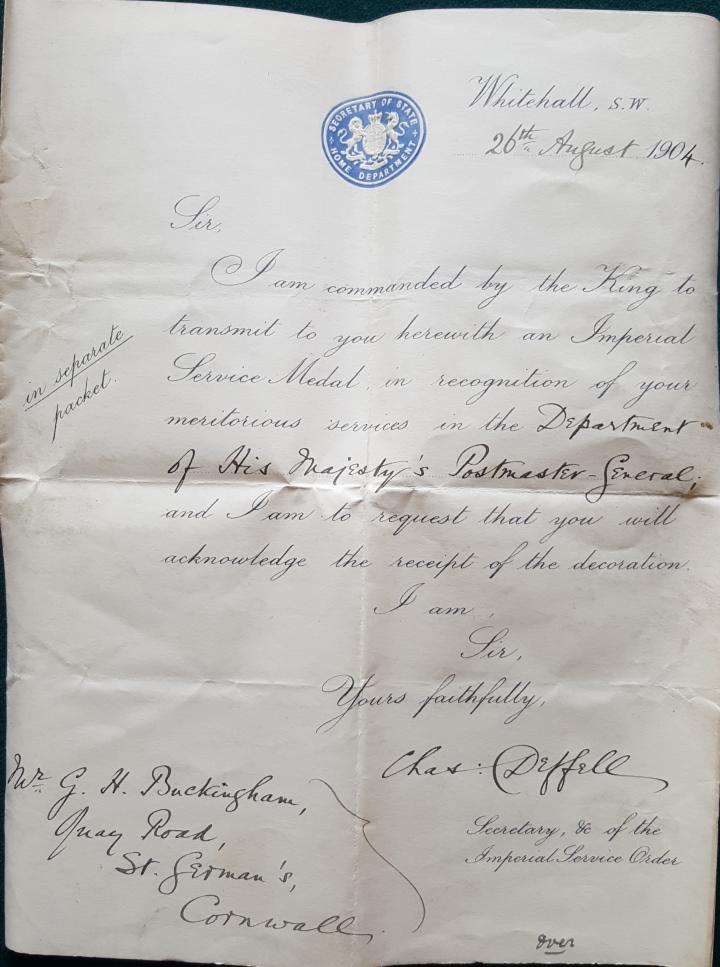
The award of the medal did not come with a warrant, but was accompanied by a transmission letter.
Seal
The ISM did not have its own seal, but since 1938 when the ISO was granted a seal, the transmission letters for the ISM have included a blind stamped seal of the ISO. Please see the ISO page for further information about this seal.
Other Signatures
The sovereign does not sign the ISM transmission letters. In the early days the letters were signed by Charles Deffell as “Secretary &c. of the ISO.” Deffell was both Secretary and Registrar. After 1904 RF Reynard filled these two roles and he personally signed letters until about 1906, thereafter a rubber stamp of his signature was used. Reynard died in 1926 and his signing duties were taken over by John Anderson who initially signed “for Secretary &c. of the ISO”, but later as Under Secretary of State. RR Scott was appointed to replace Reynard in 1932 and his printed signature appears on the letters from that time. Following on from the 1938 revisions in the statutes of the ISO when the position of Secretary and Registrar were separated, it is the Registrar whose printed signature has appeared on the letters since then.
Examples of the Letters
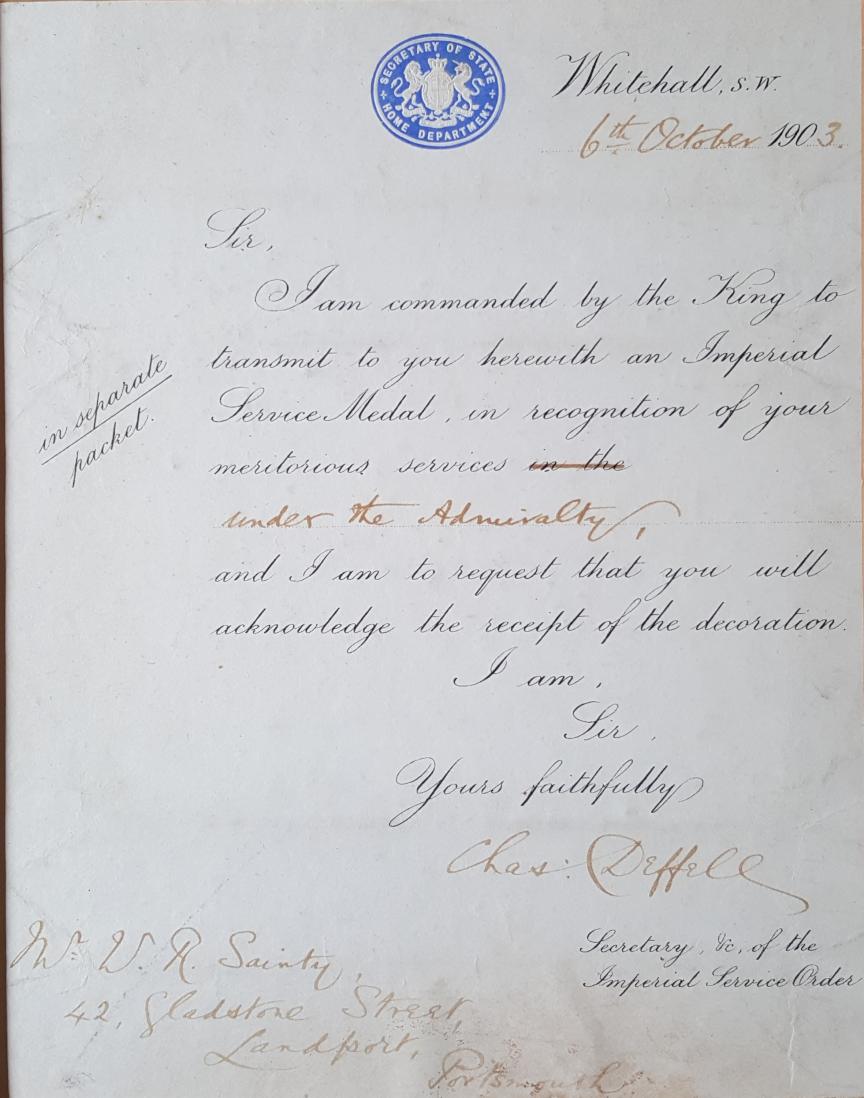
1903 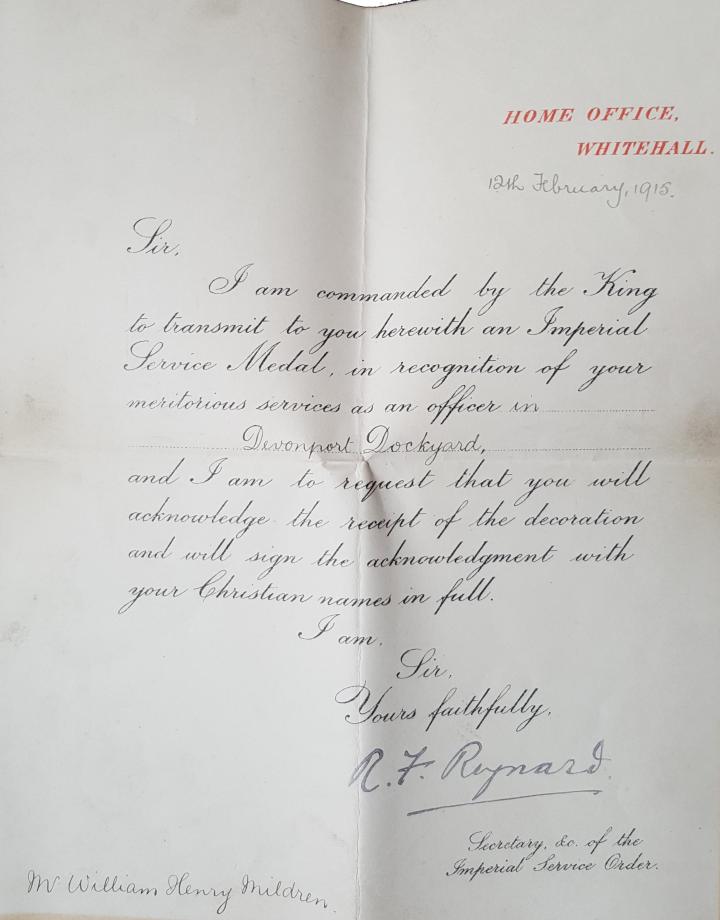
1915 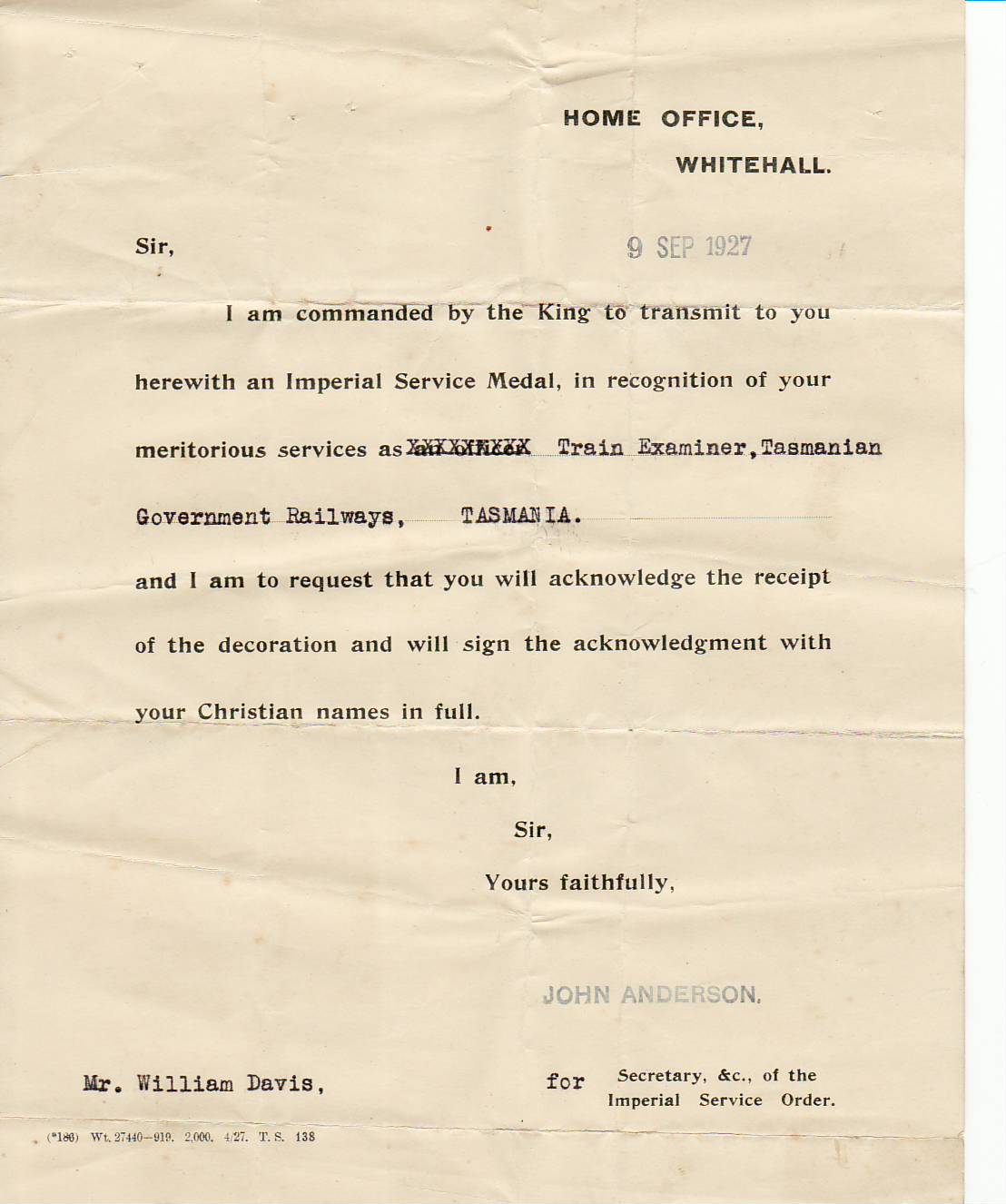
1927 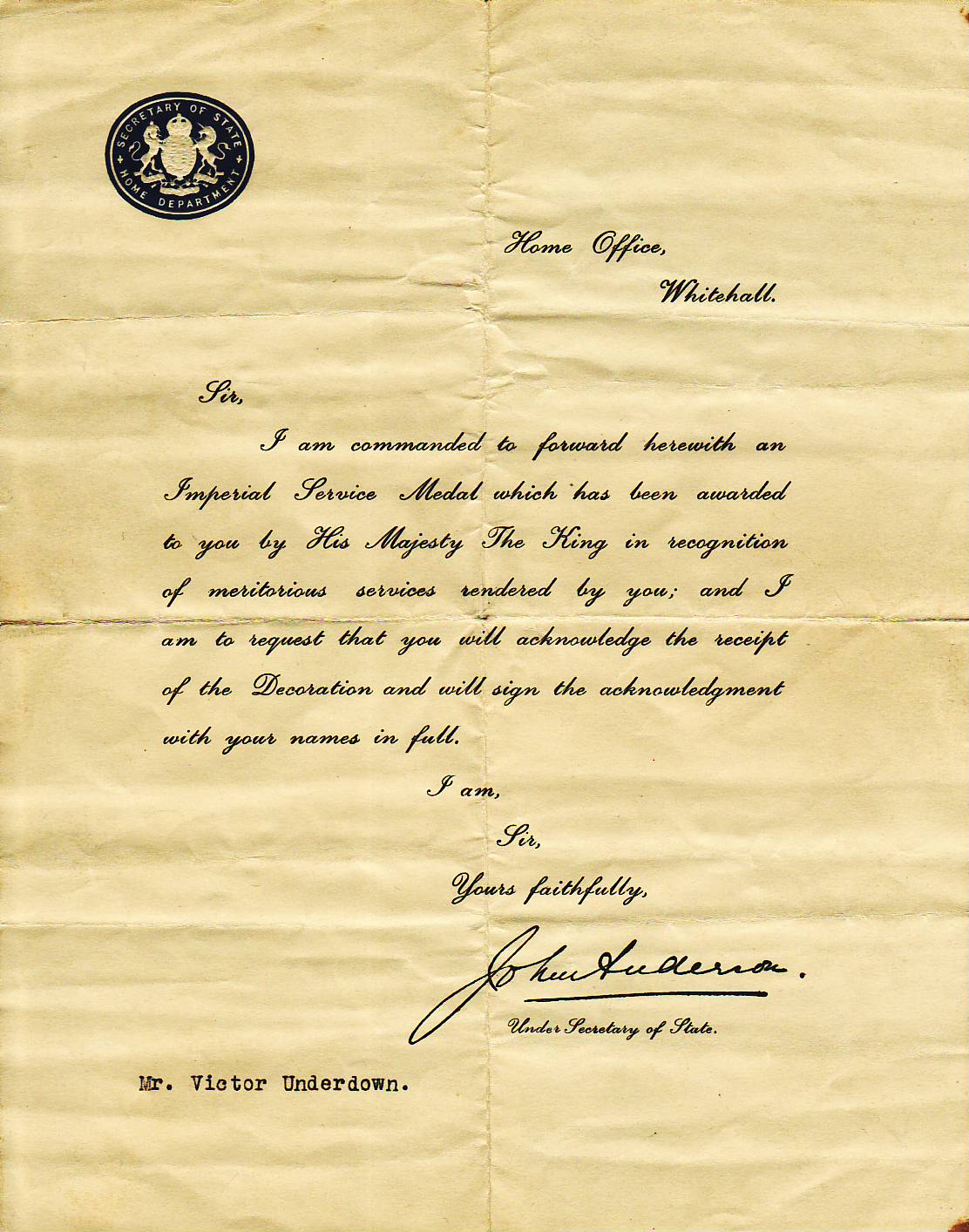
1930 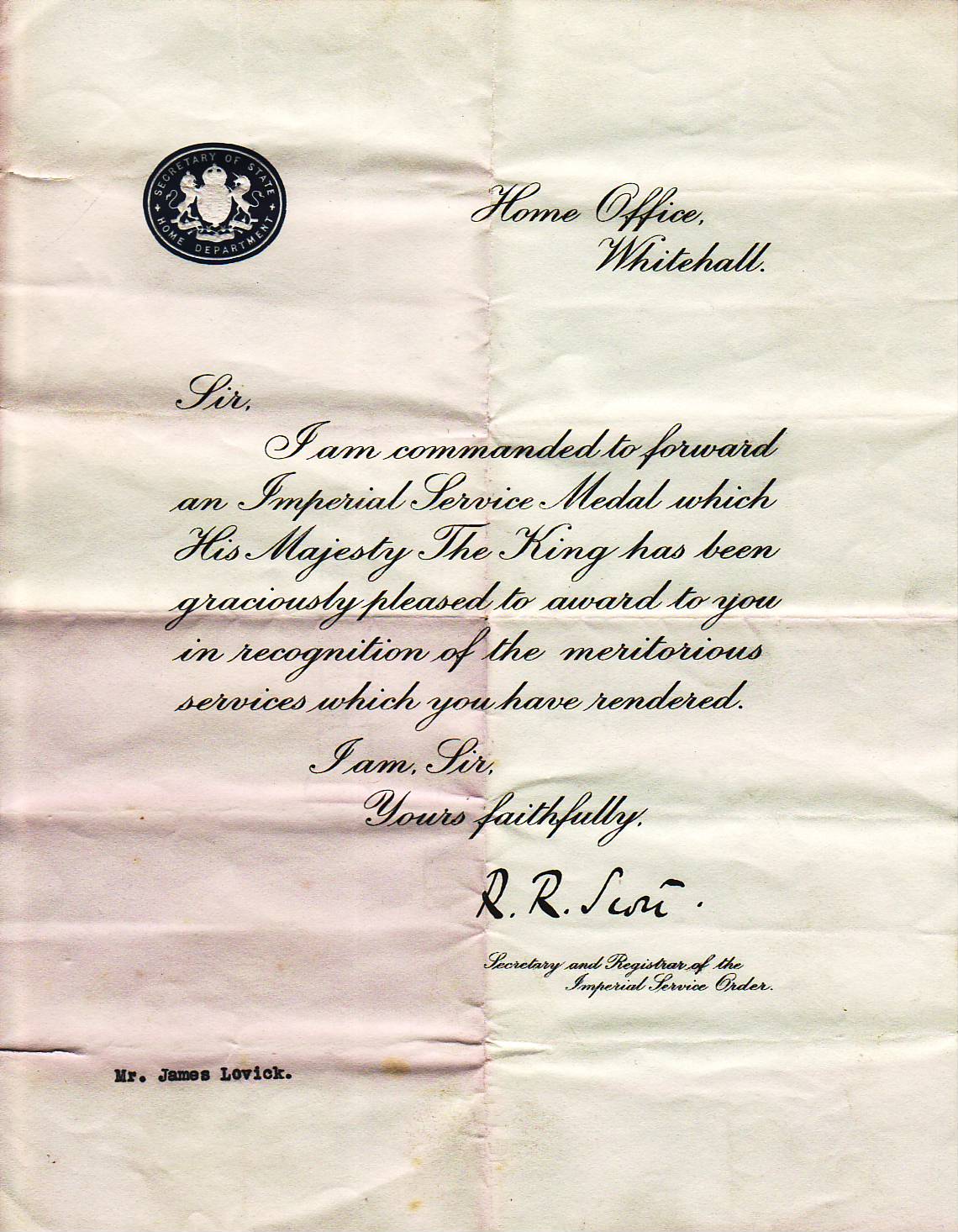
1934 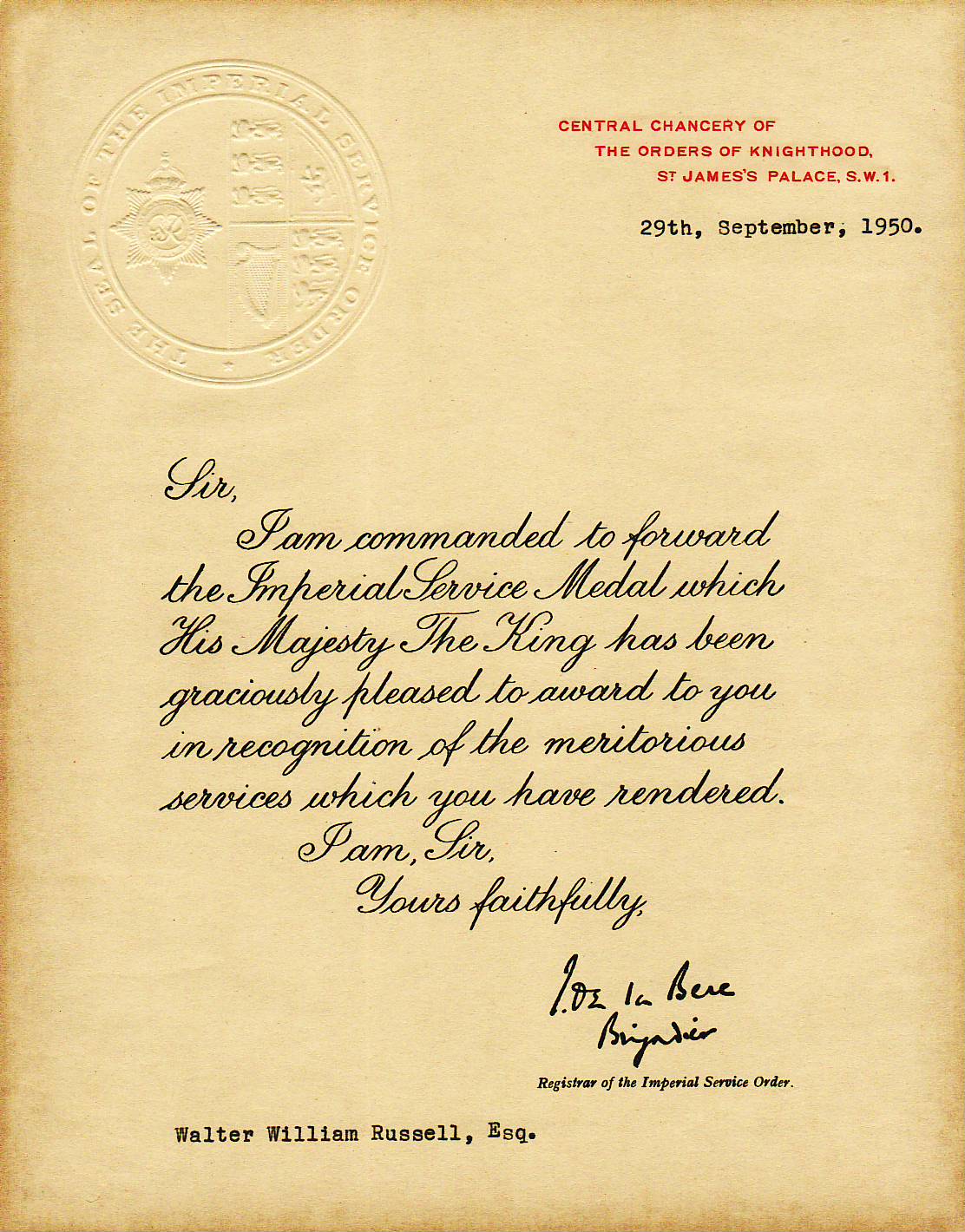
1950 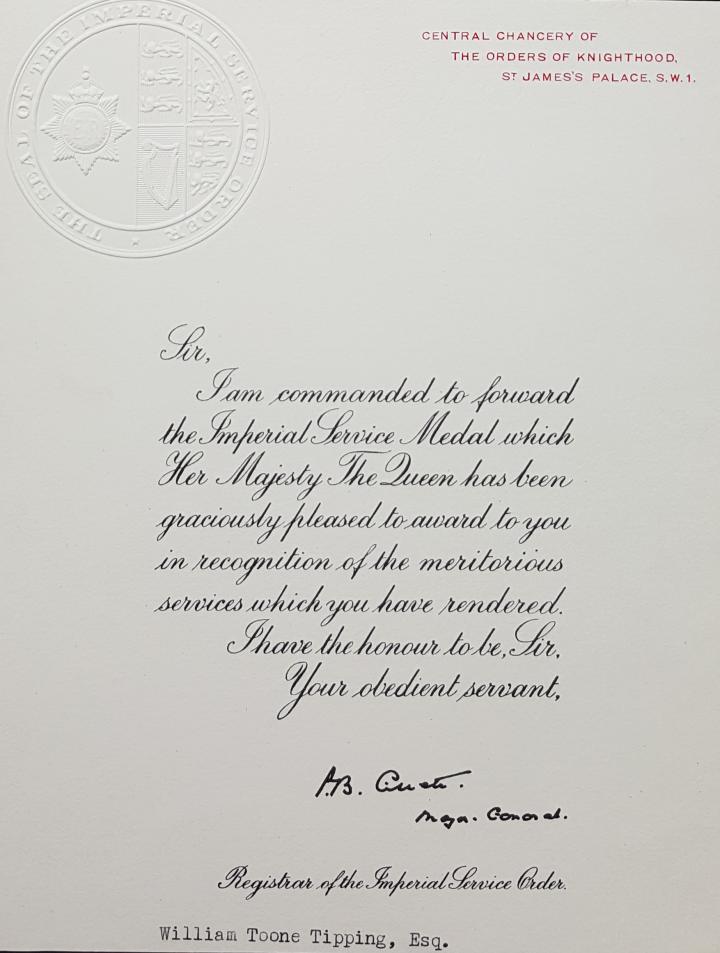
1970
Case Study – George H Buckingham
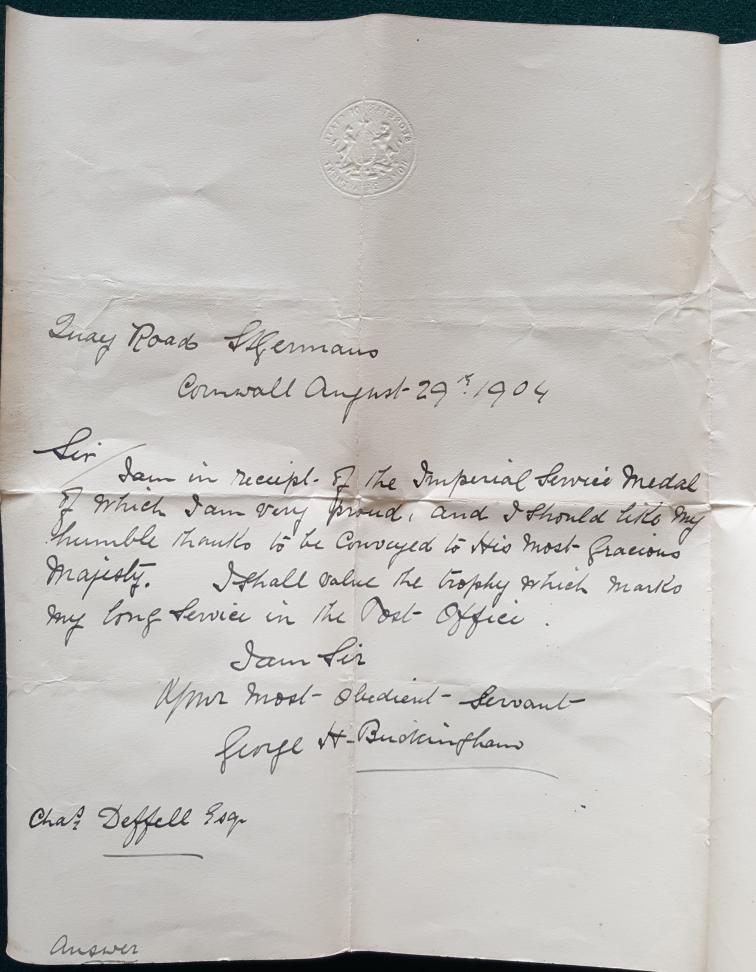
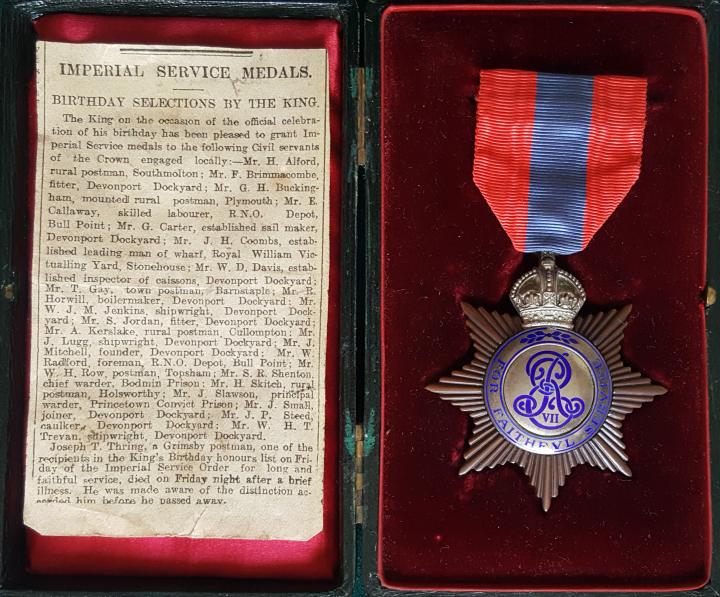
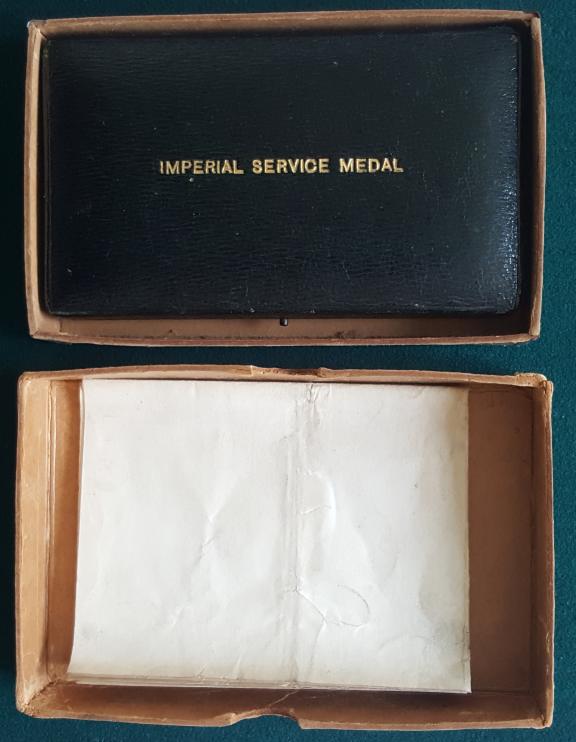
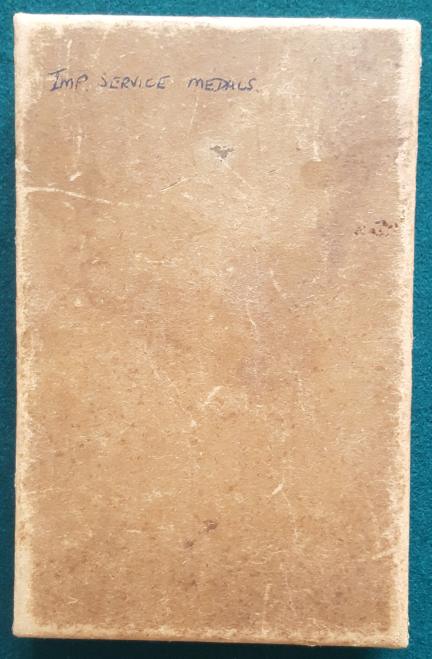
Buckingham is described in census records as a boot and shoemaker and mounted rural postman. His letter is signed Chas Deffell. Buckingham has copied his response to the letter on the reverse, which shows that there was no simple acknowledgement form to be completed. The letter shows that he worked “…in the Department of His Majesty’s Postmaster General” whereas the London Gazette entry shows him as Mounted Rural Postman, Plymouth. Letters from this period appear to have been folded to send with the medal in its card box of issue. Please note that the writing on the card box is of a later date.
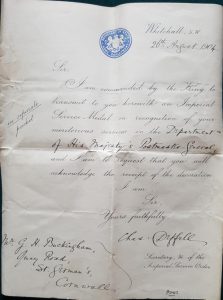
Letter 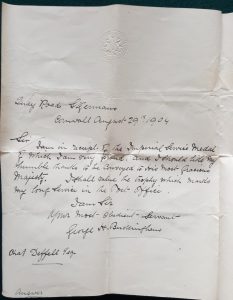
Response 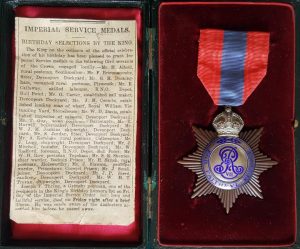
ISM 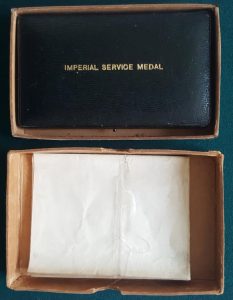
Case and letter in box 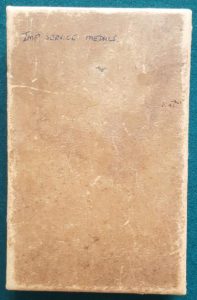
Box
Case Study – John Stark
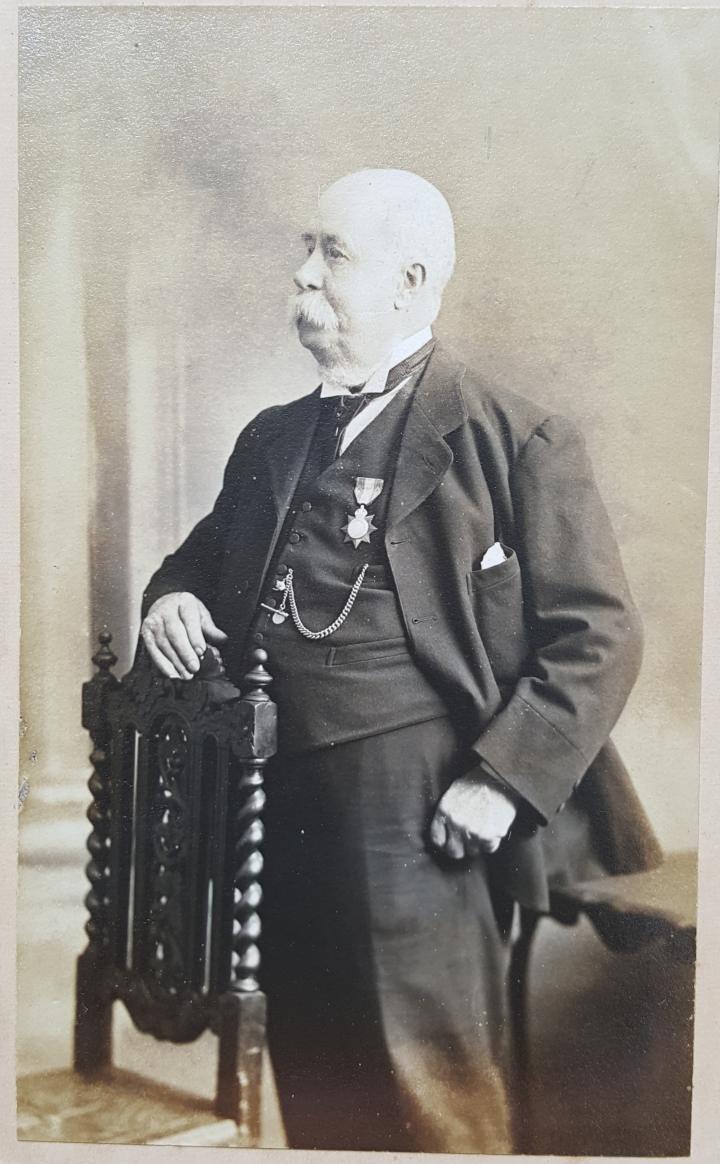
Stark was employed in the Royal Carriage Works at Woolwich. This was staffed by civilians who manufactured gun carriages. Census records record him as an engine driver, but at the time of his award he was a Leading Stoker. He must have been proud of his award to be shown wearing it in his photograph.
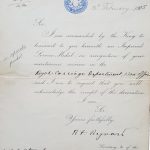
Letter 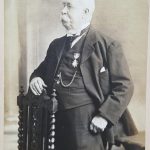
John Stark