Edward Roberts, ISO (1907)
The ISO was created by Edward VII in 1902 to reward those long serving, middle ranking civil servants who were not in a position to qualify for the Orders of the Bath or St Michael and St George.
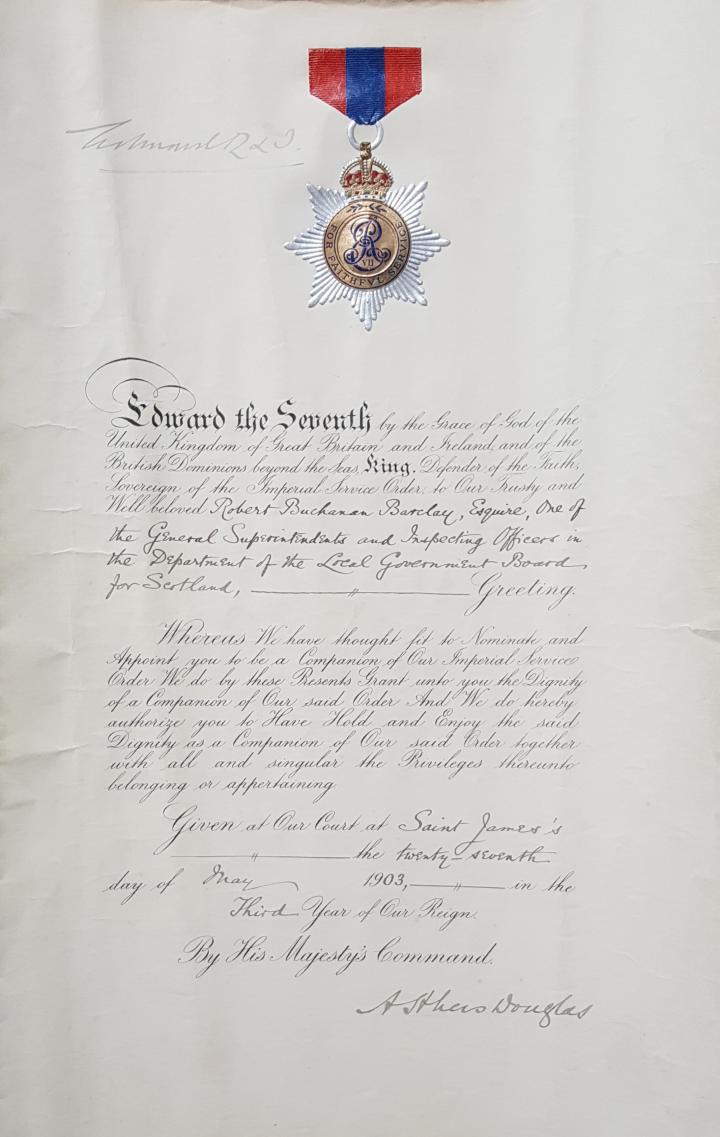
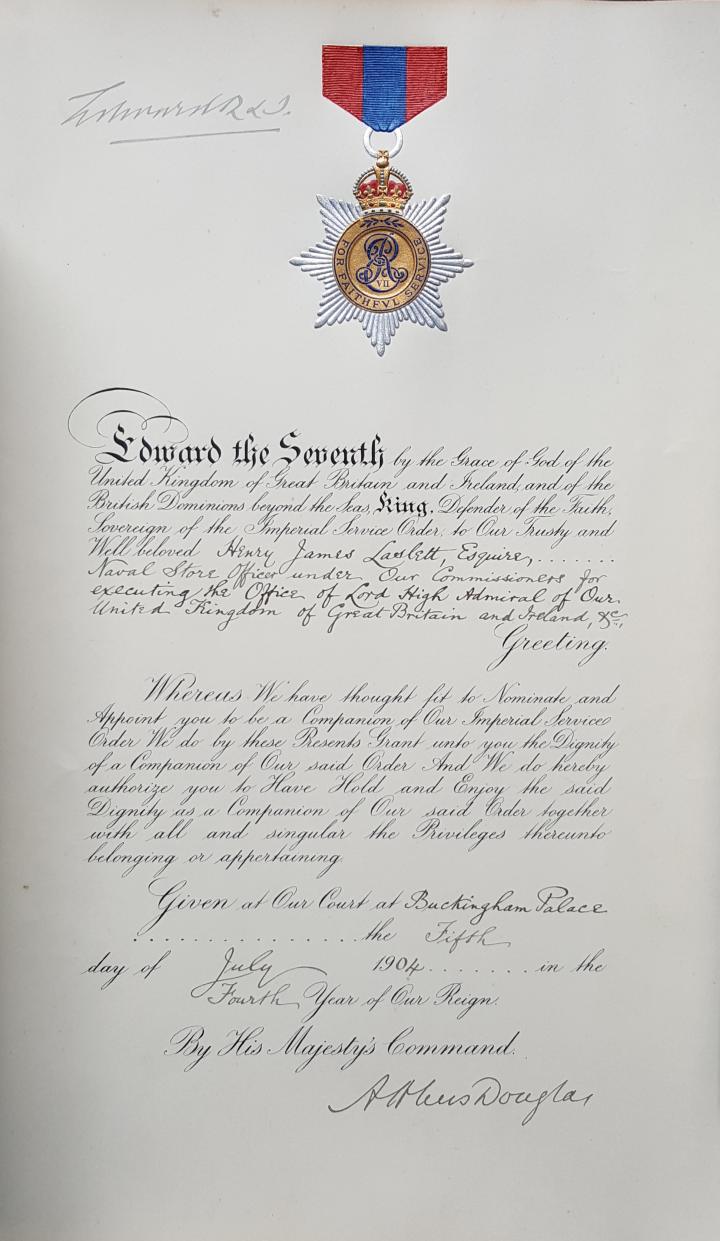
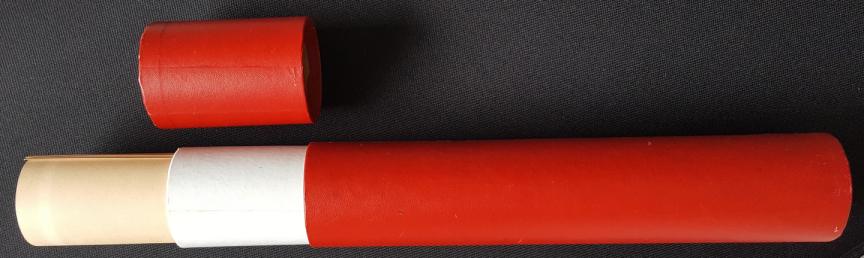
Some real thought seems to have been put into the design of the warrants of appointment. At the time, warrants for the other Orders were printed on two sides of a folded piece of foolscap paper. The ISO retained the four sided warrant, but it was much larger than foolscap and was printed on the first side only. Rather than the simple black and white design of the other Orders, the ISO followed the Order of St Michael and St George and included a coloured image at the head of the warrant. However, instead of the small image of the saints, the ISO used an embossed, bold image of the badge of the Order, in full colour and gilt. The warrant was sent out rolled in a tube, so perhaps it is not unreasonable to suppose that it was thought that recipients might be proud enough frame their warrants for all to see, which was not easily done for other warrants.
The first Secretary and Registrar of the Order was Charles Defell, who retired in 1904 to be replaced by Robert Froding Reynard, a Clerk in the Home Office. Reynard administered the Order for 22 years until his death in 1926, so he was not able to advise when the warrant was reviewed pursuant to the change of Royal Titles in 1927. The reviewer concluded that: “There can be little doubt that the inclusion of this coloured representation in the Imperial Service Order Warrant adds greatly to the cost of printing the form and it is questionable whether it adds anything to the appearance or importance of the document.” (TNA: HO 144/22300 refers). So the badge was removed and replaced by the blind stamped seal of the Home Secretary. At the same time the warrant was printed on a single (rather than folded) sheet. The reviewer failed to notice that other warrants had the Court location, St James’s, printed on them so the revised ISO warrants continued to require the “Court at” to be completed manually.
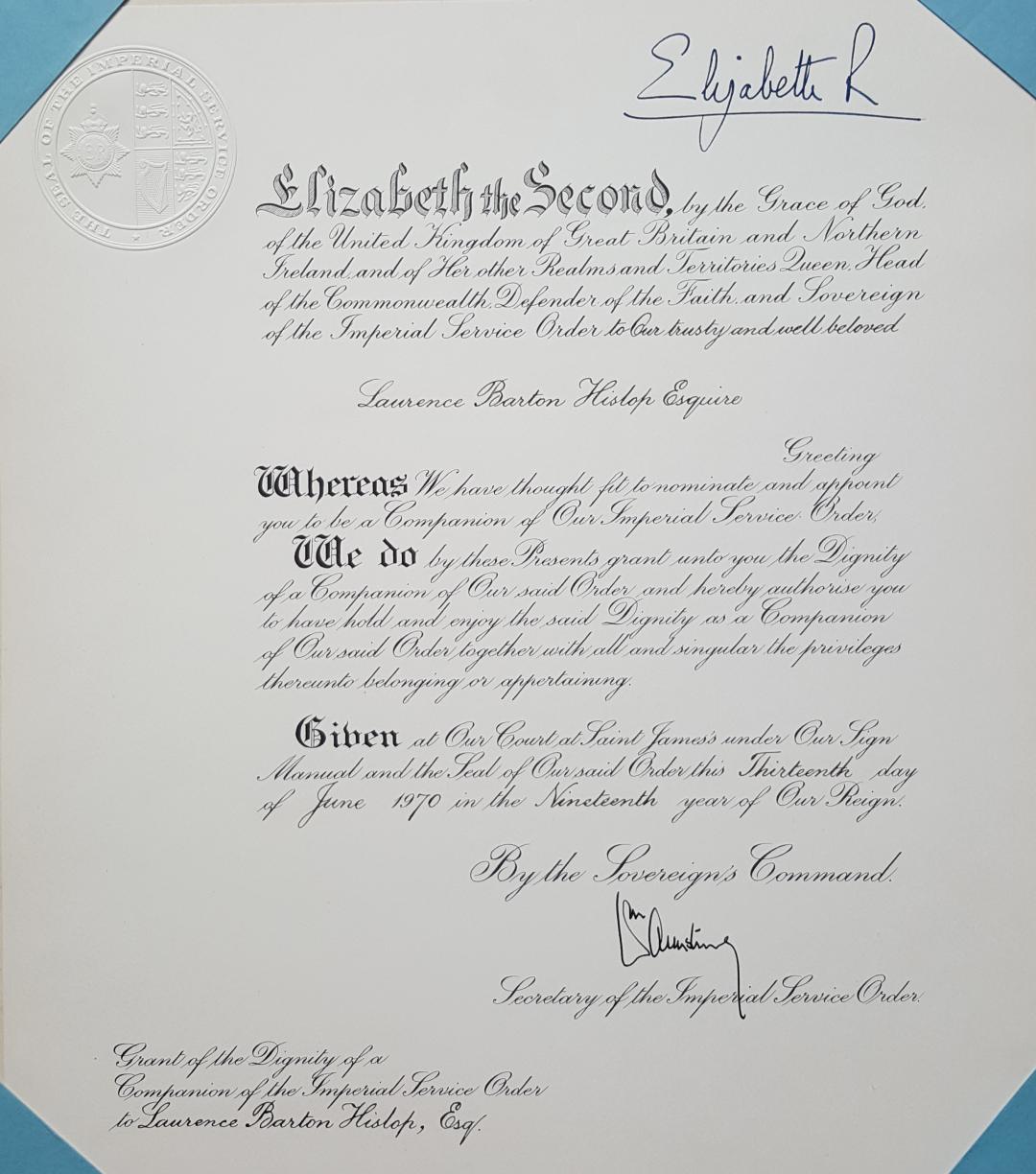
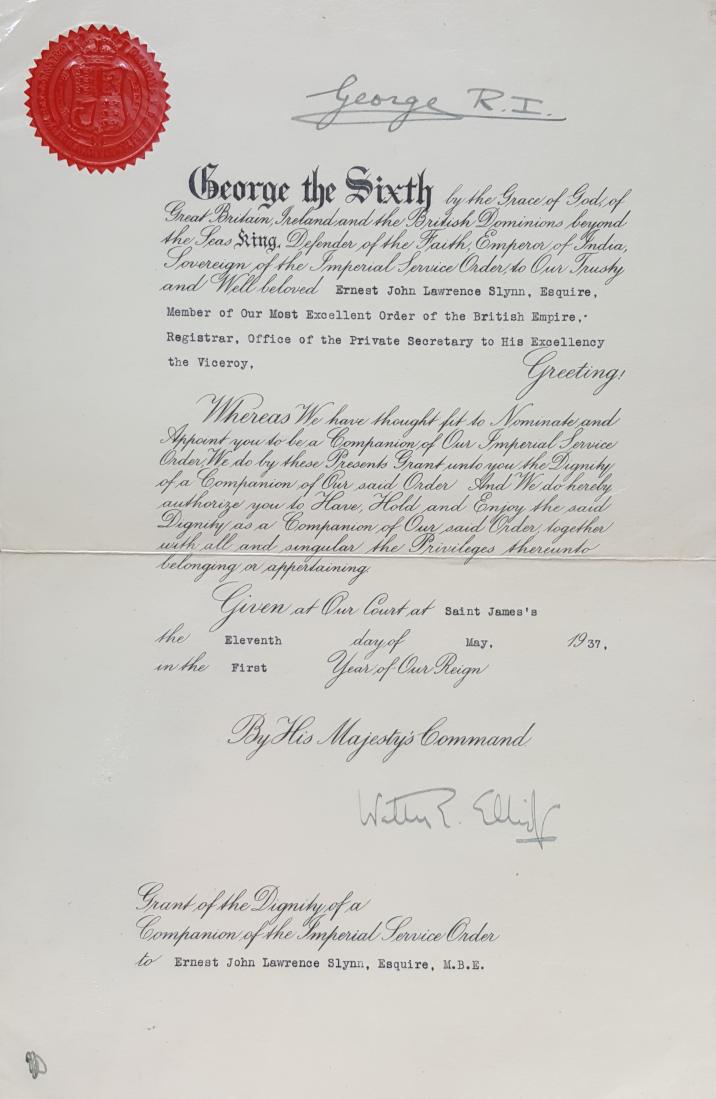
The last example of the type of warrant described above, that I have seen is dated 1937 (see EJL Slynn, below). The next warrant that I have seen is dated 1948 and this is in the current style (for an example see LB Hislop, below), so at some stage between these dates the warrant changed. It is tempting to think that this might have occurred pursuant to the 1938 revision of statues and the Central Chancery taking over the administration of the Order in October of the same year, but I have no proof for this.
Seal
As stated above, the Order did not have a seal initially. It used a depiction of the badge until 1927 when it then used a blind stamped seal of the Home Secretary.

Edward VII 
George V 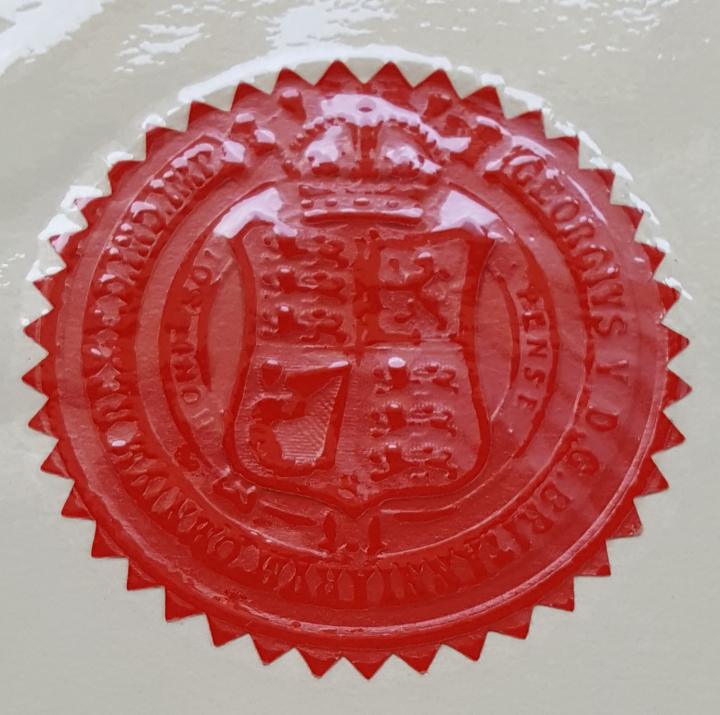
Secretary of State
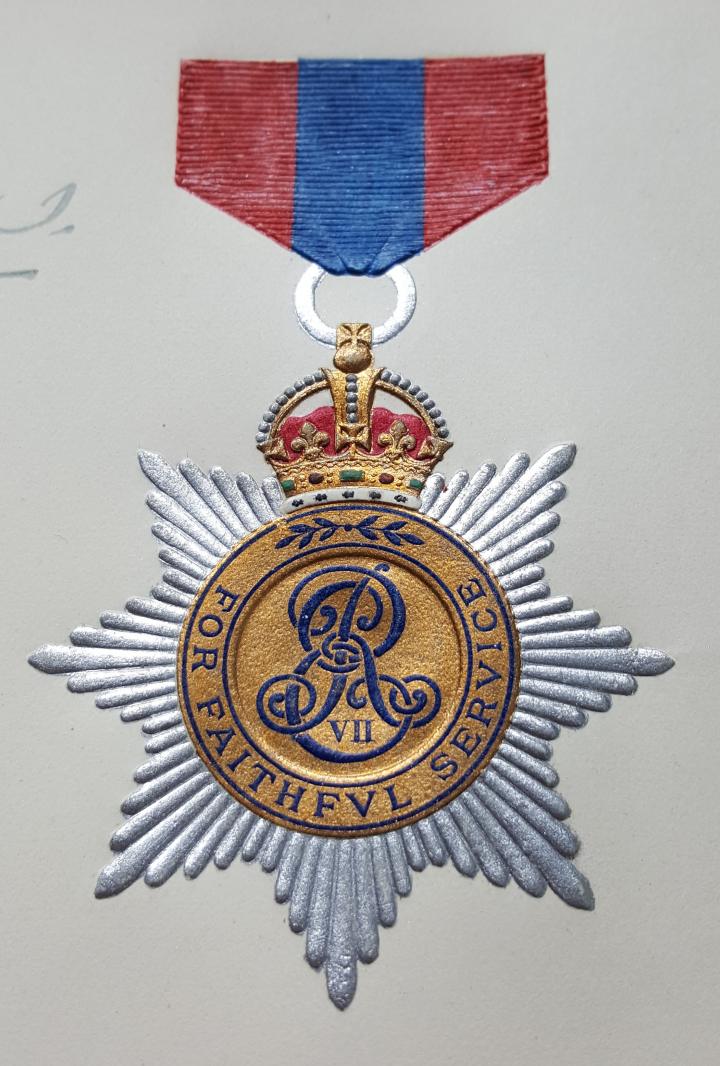
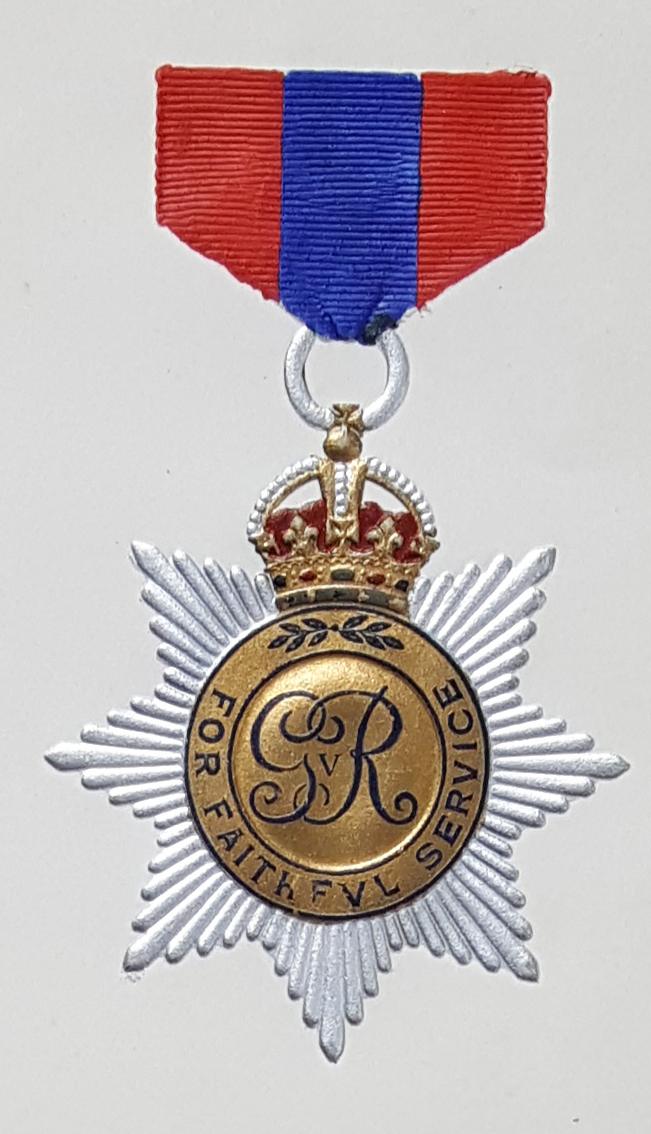
In the 1938 revision of the statutes, the Order was brought into line with other Orders by getting its own seal. The statutes describe the seal in heraldic terms as: Gules, a representation of the Badge of the Order impaling Our Royal Arms, with the following inscription “The Seal of the Imperial Service Order.” The ISO is unusual in that it is the only Order which includes the current sovereign’s cypher on the obverse of the insignia. This means that when the cypher changes, it is necessary to change the seal as well. Thus there have been three different seals which the cyphers GRI (1938-47), GVIR (1948-52) and EIIR (1952 to date). Historically St Edward’s Crown has been used during the reign of a Queen Regnant and the Tudor Crown for Kings Regnant, so shortly after becoming Queen, Her Majesty directed that St Edward’s Crown should replace the Tudor Crown in all future designs embodying a representation of the Crown. The change was not effected on the design of the ISO badge until about the 1990s. Despite this, the seal of the Order continues to use the badge with the Tudor Crown.
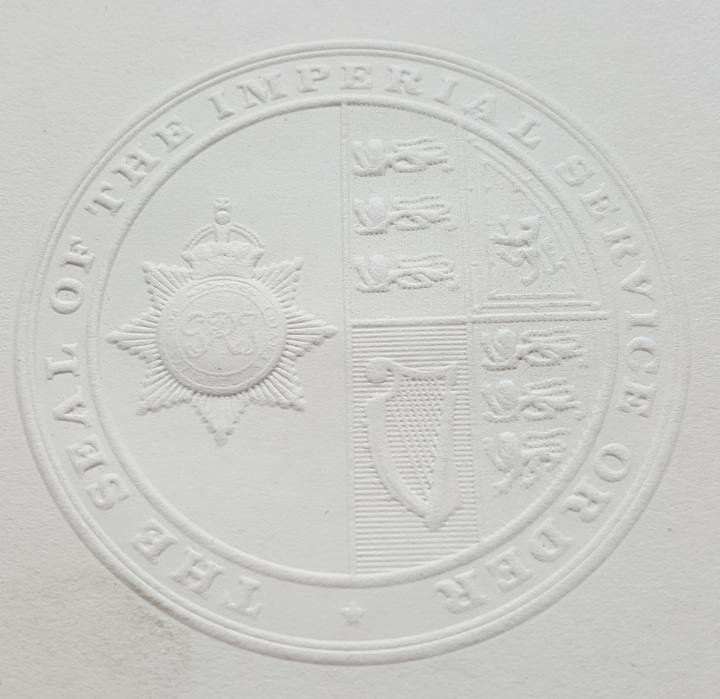
GRI (1938-47) 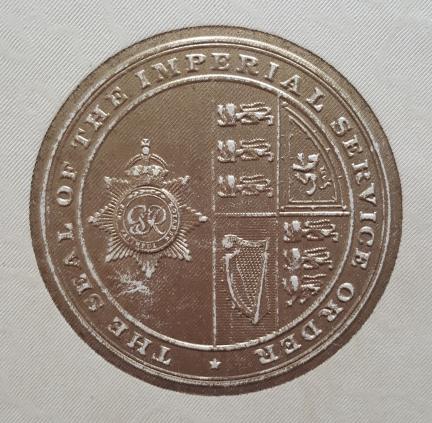
GVIR (1948-52) from the cover of the statutes 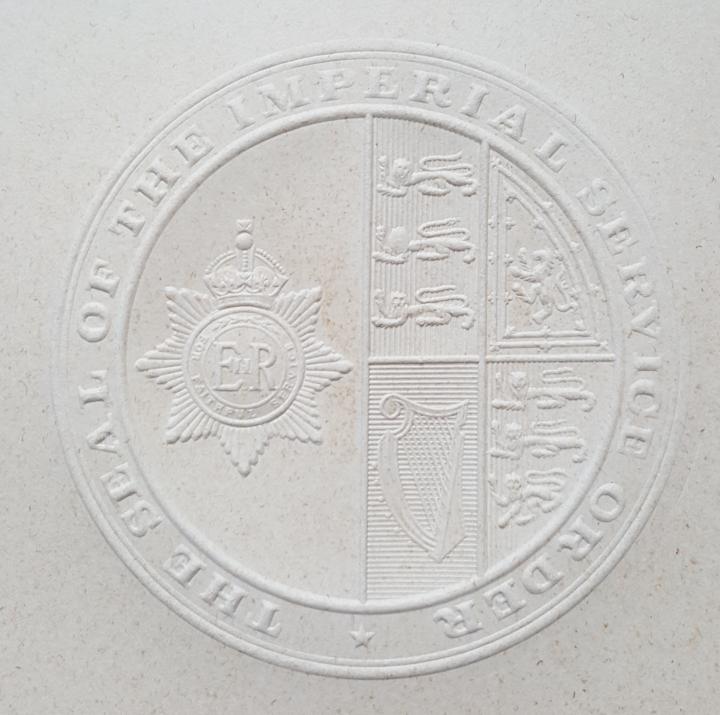
EIIR (1952 to date)
Other Signatures
In the original 1902 statutes the warrants were required to be countersigned by “…one of Our Principal Secretaries of State.” In 1938 this changed to “… one of the Officers of the Order.” There are only two officers. The Permanent Secretary to the Treasury is ex officio Secretary of the Order and the Secretary of the Central Chancery of the Orders of Knighthood is similarly the Registrar. The post 1938 warrants that I have seen have all been signed by the Secretary.
Case Study – Henry James Laslett. ISO
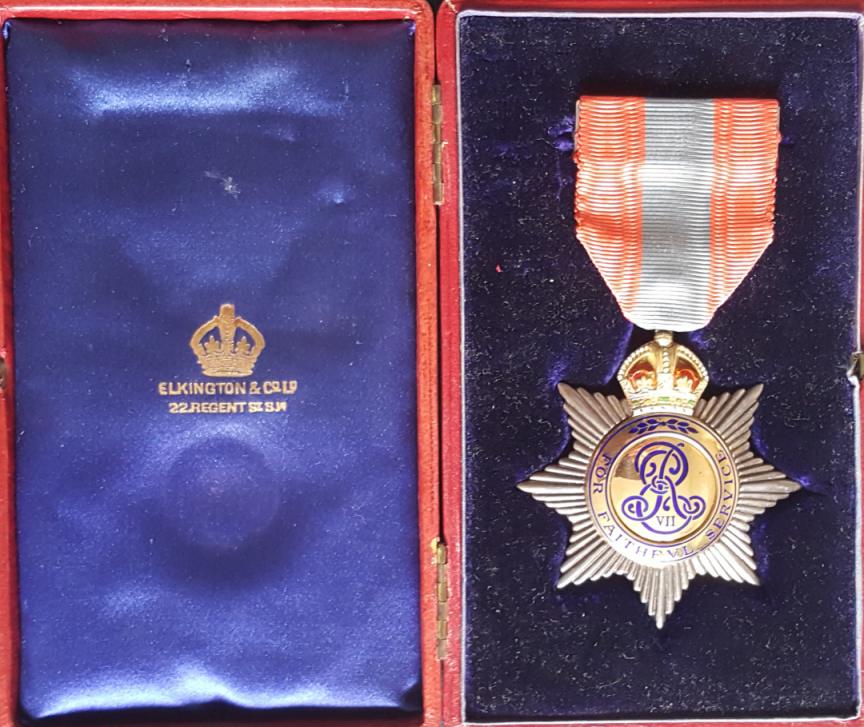
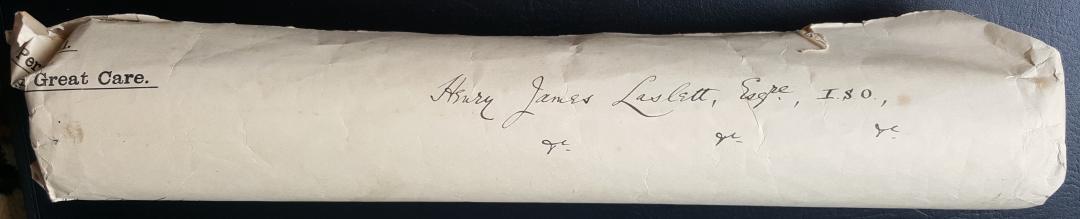
Laslett’s warrant gives a florid description of his role as, “Naval Store Officer under Our Commissioners for executing the Office of Lord High Admiral of Our United Kingdom of Great Britain, Ireland &c.” whereas the London Gazette merely states that he is,” Naval Store Officer at Chatham.” He was awarded the ISO in 1904.
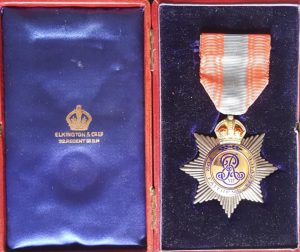
Edward VII ISO 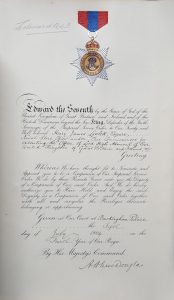
Warrant 
Postal tube 
Postal envelope
Case Study – John Trump, ISO
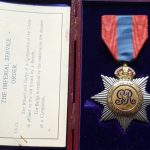
Trump was a member of the Institute of Civil Engineers who entered the Public Works Department in Ceylon in 1878, eventually retiring as the Director of Public Works, Federated Malay States in 1914. He was awarded the ISO in 1914.
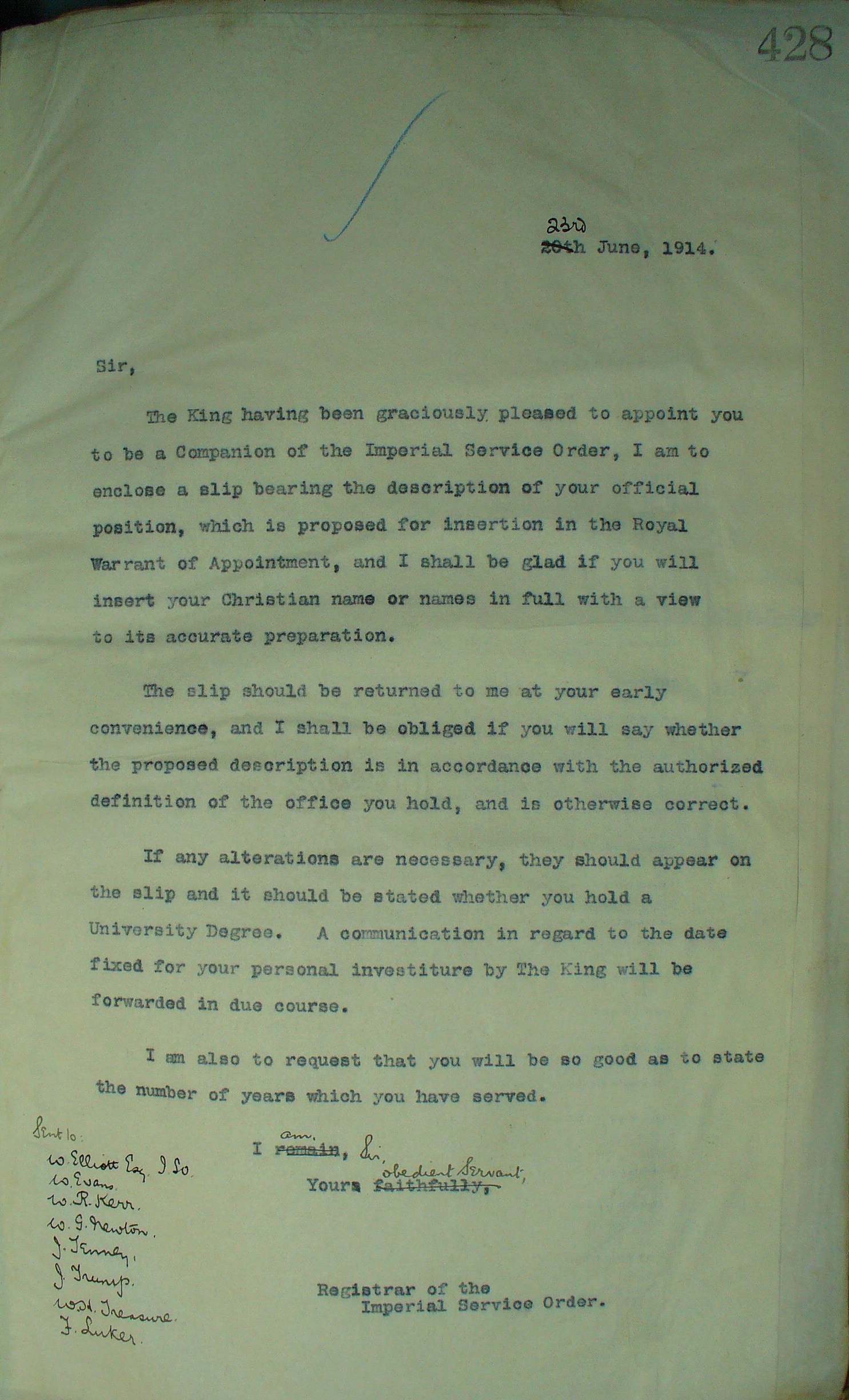
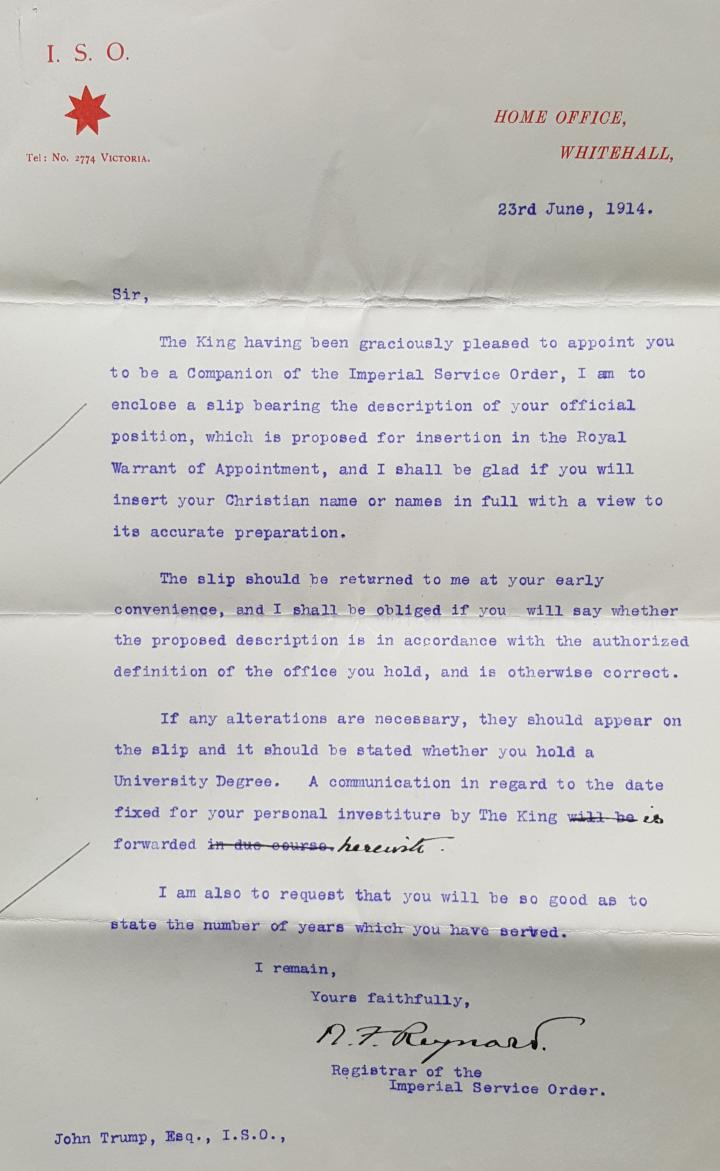
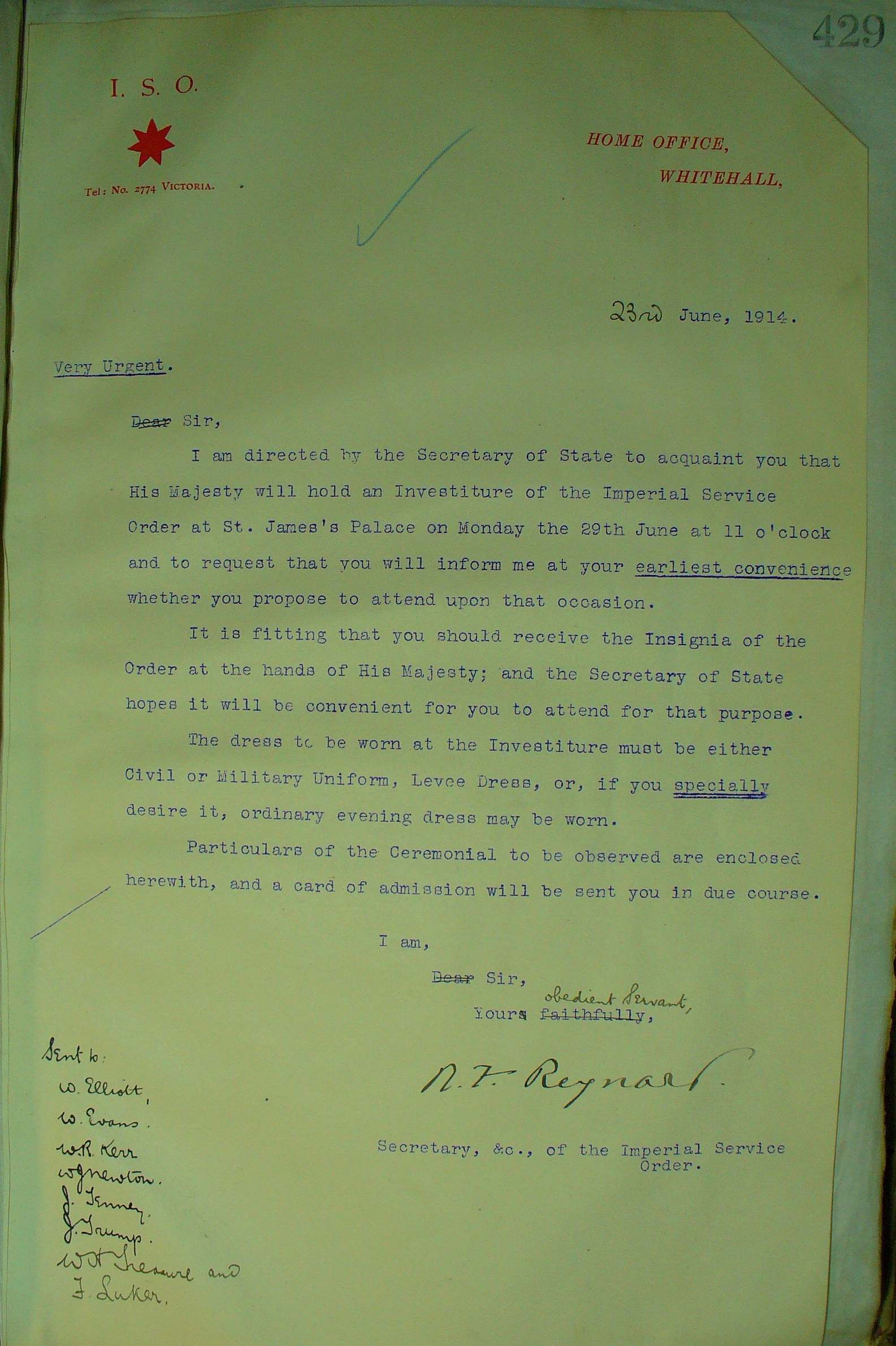
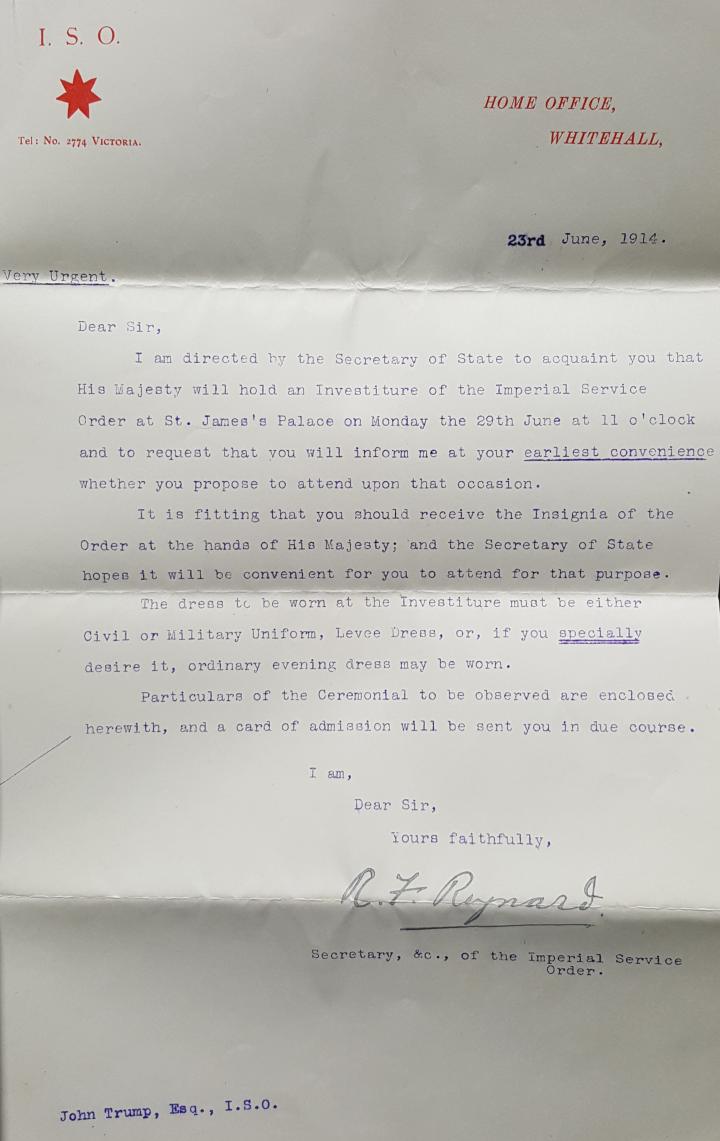
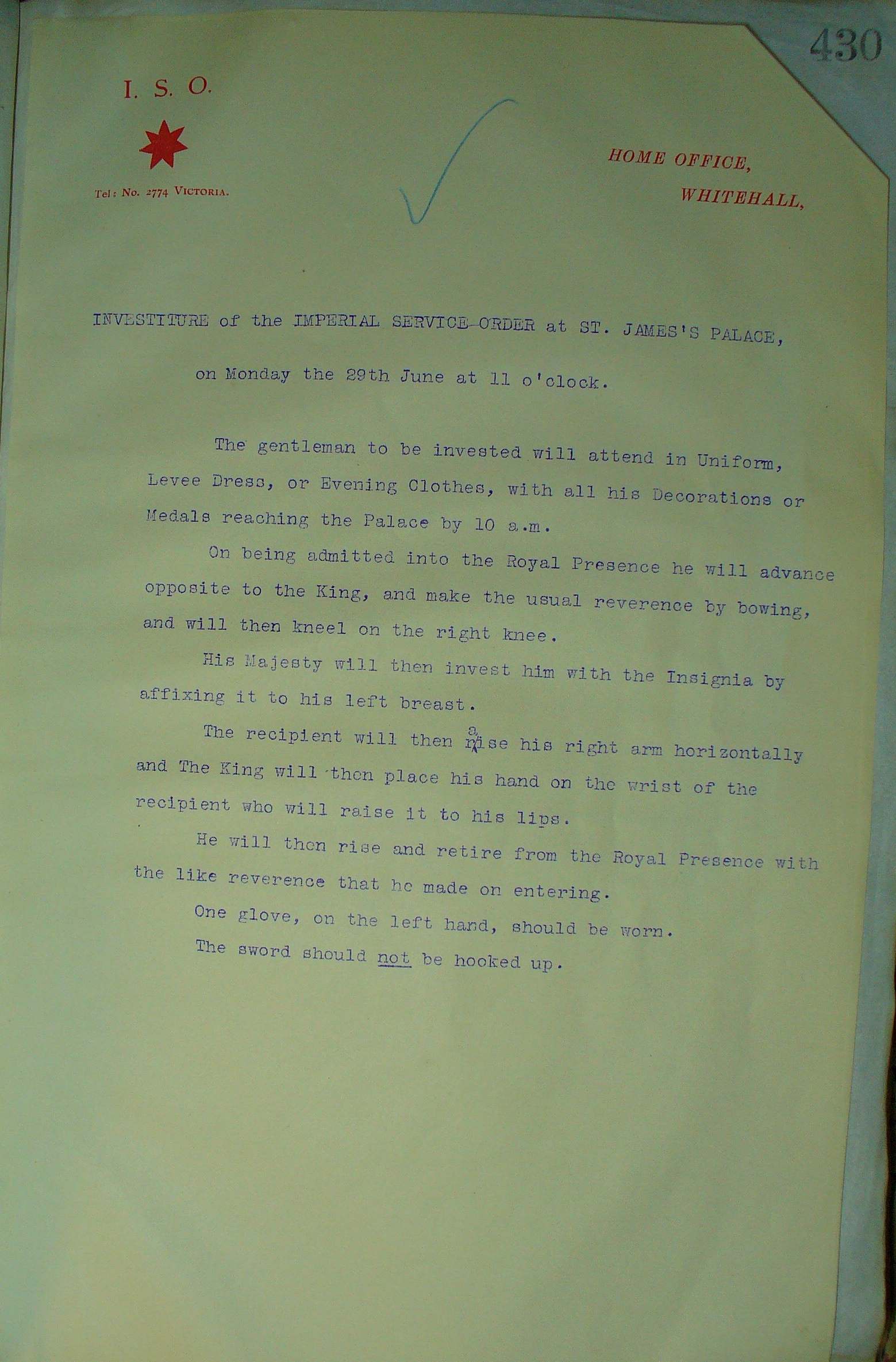
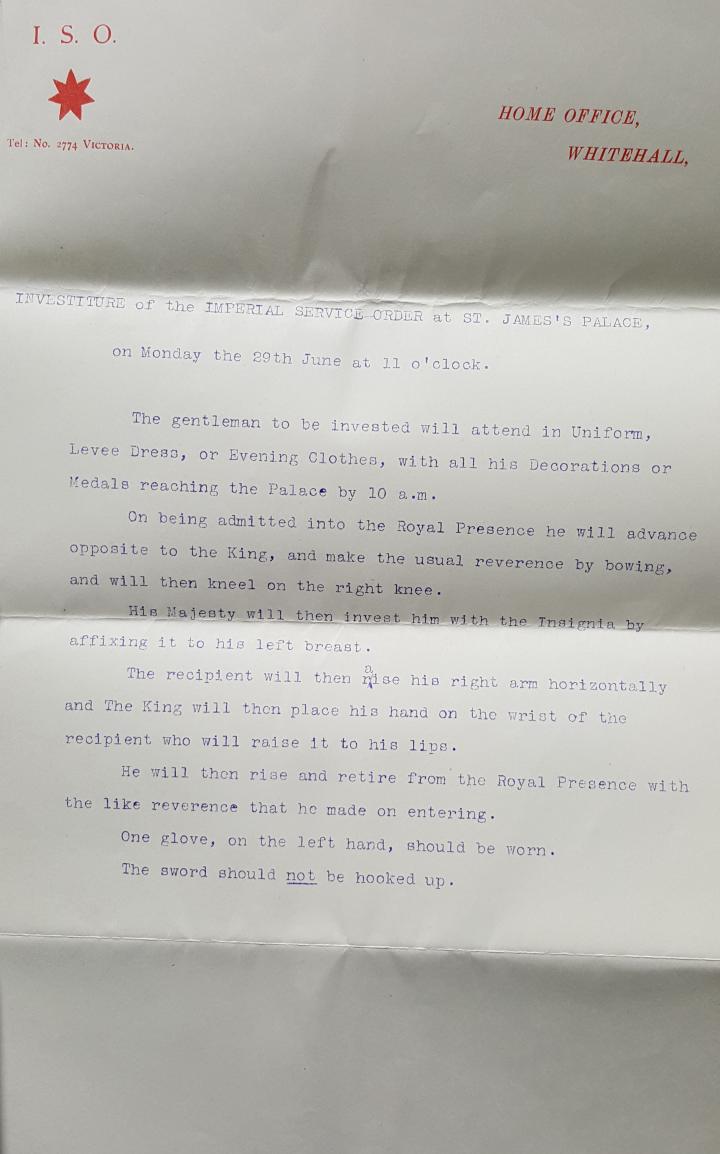
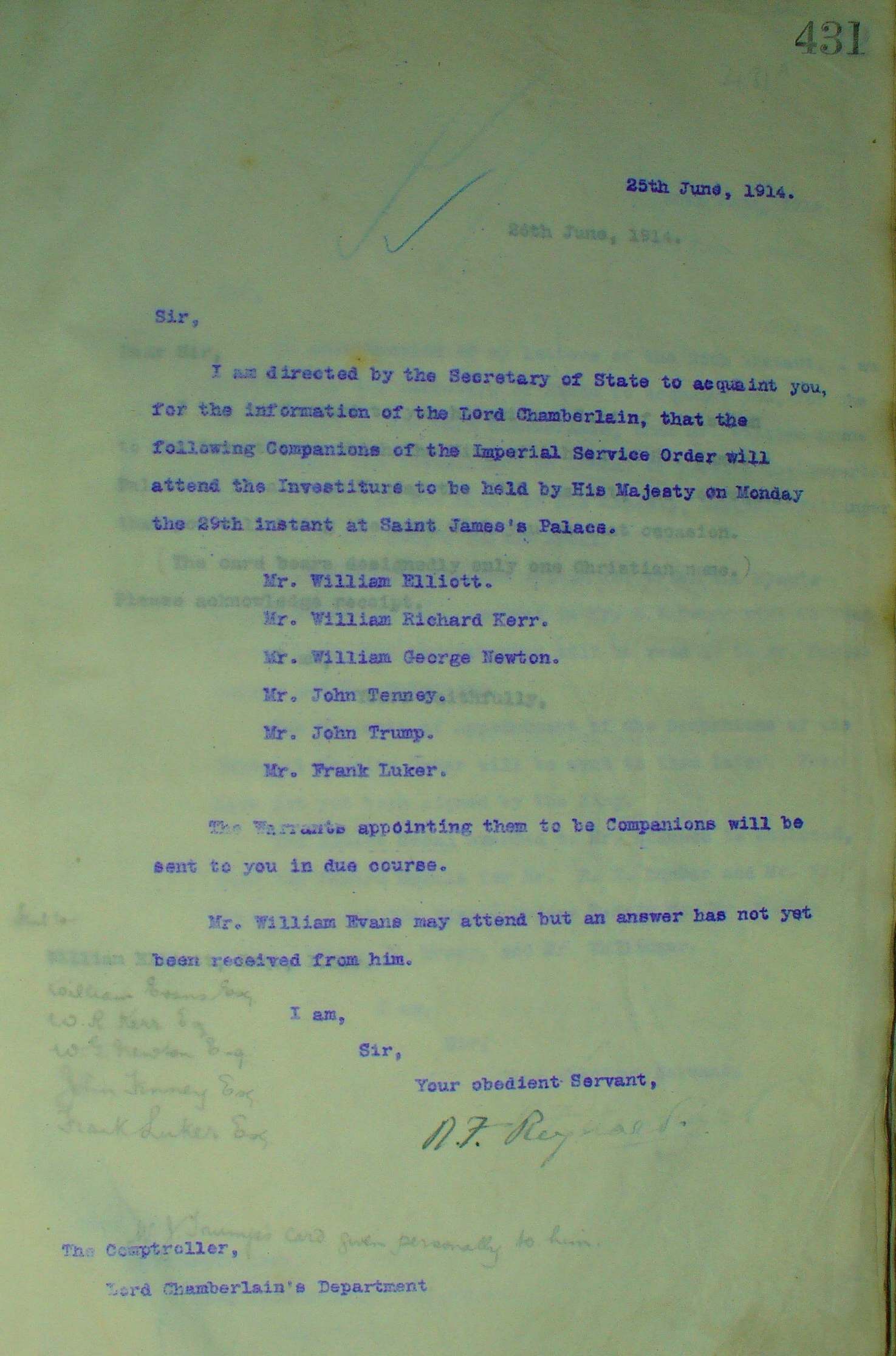
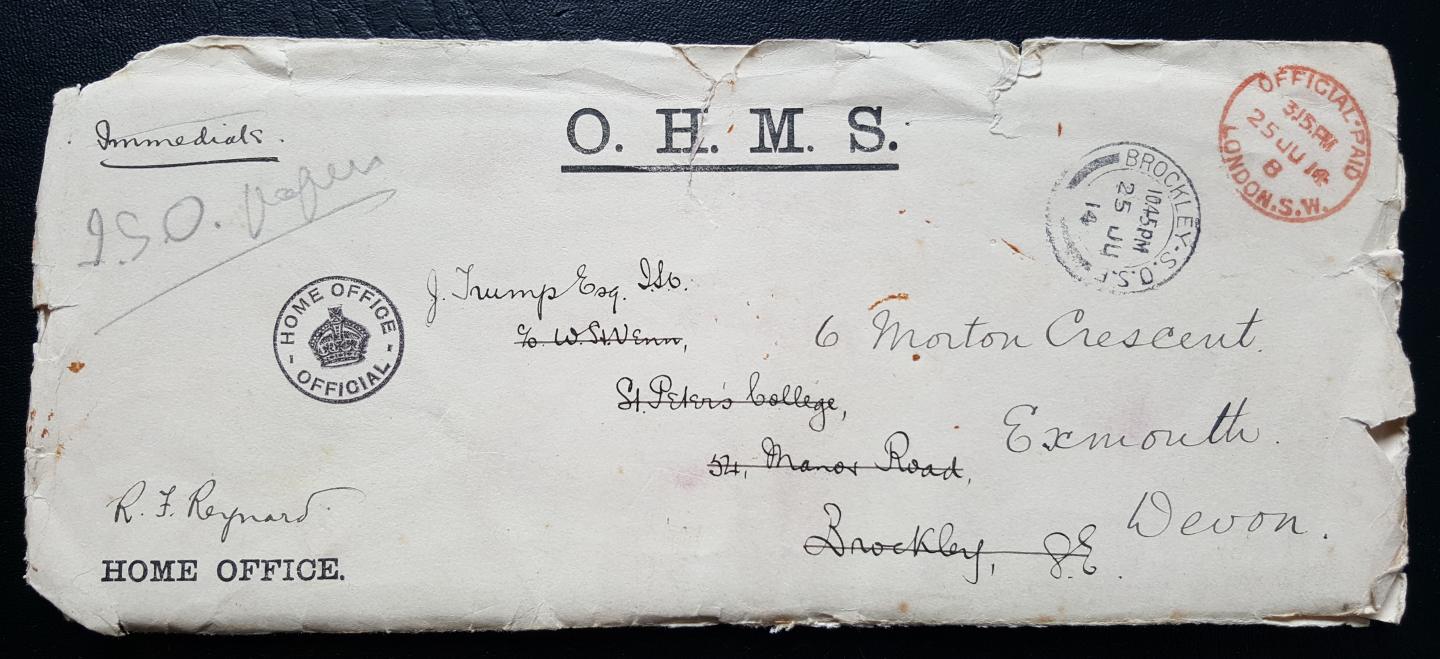
HO 180/3 at TNA includes the file copies of correspondence relating to the investiture of ISO recipients. TNA records shown below have a darker hue, whereas the letters received by Trump are whiter.
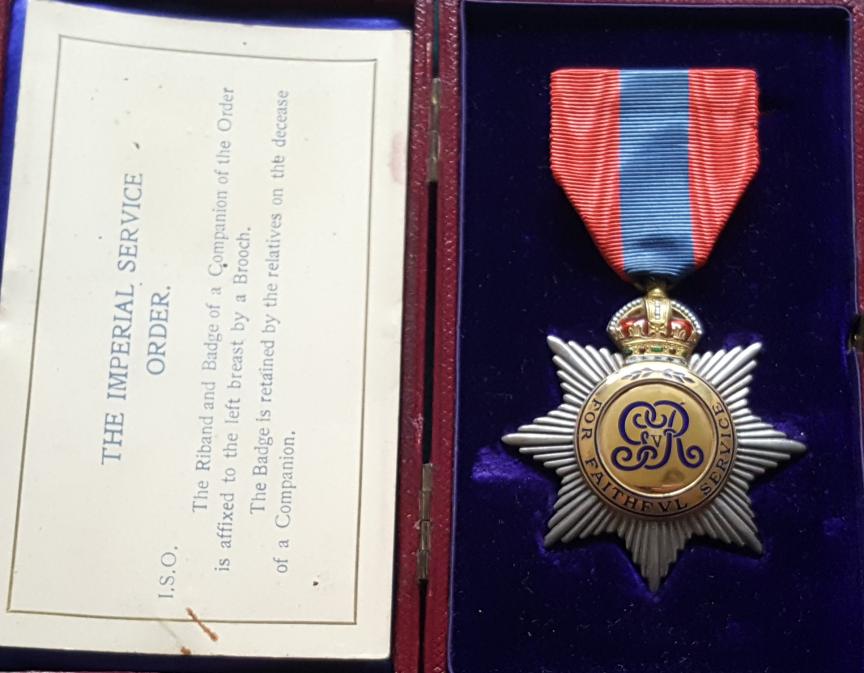
George V ISO 
Award letter 
Award letter 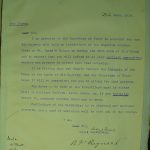
Investiture letter 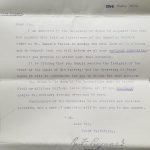
Investiture letter 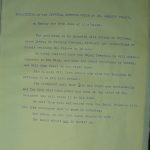
Investiture instructions 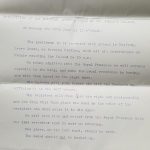
Investiture instructions 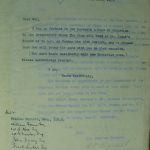
Investiture ticket letter 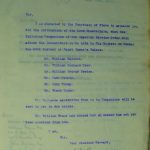
Investiture attendance 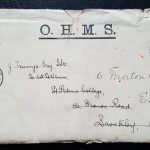
Envelope

Case Study – Ernest John Lawrence Slynn, ISO, MBE
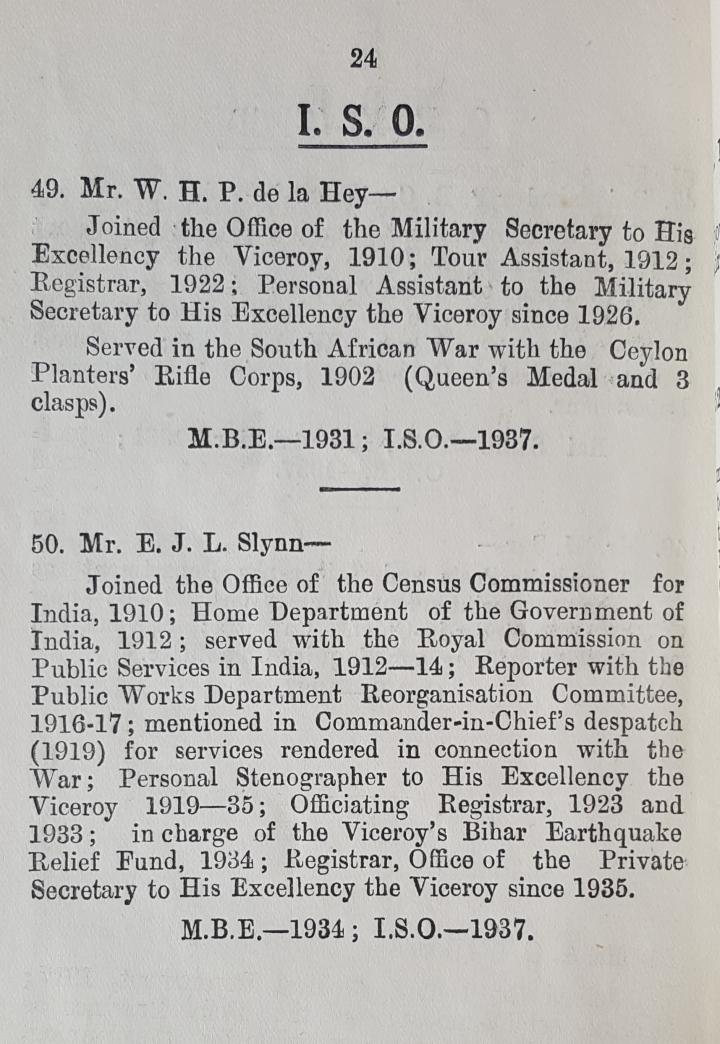
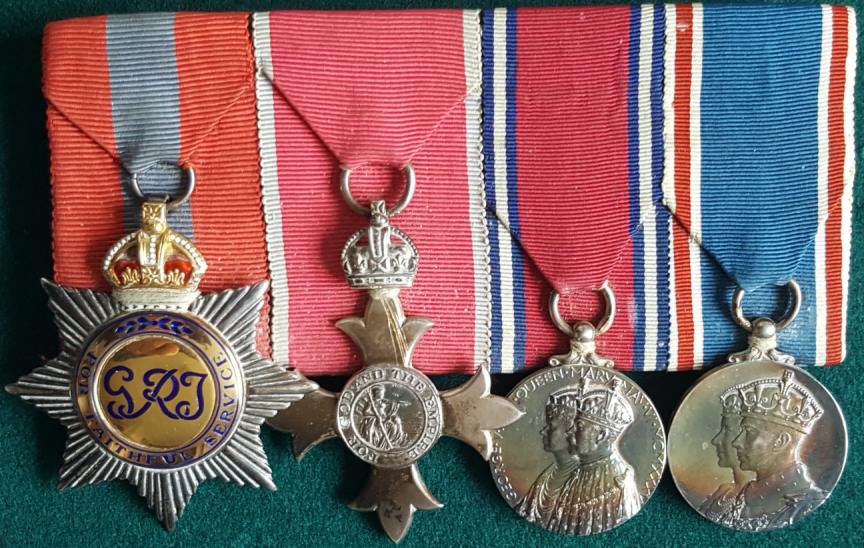
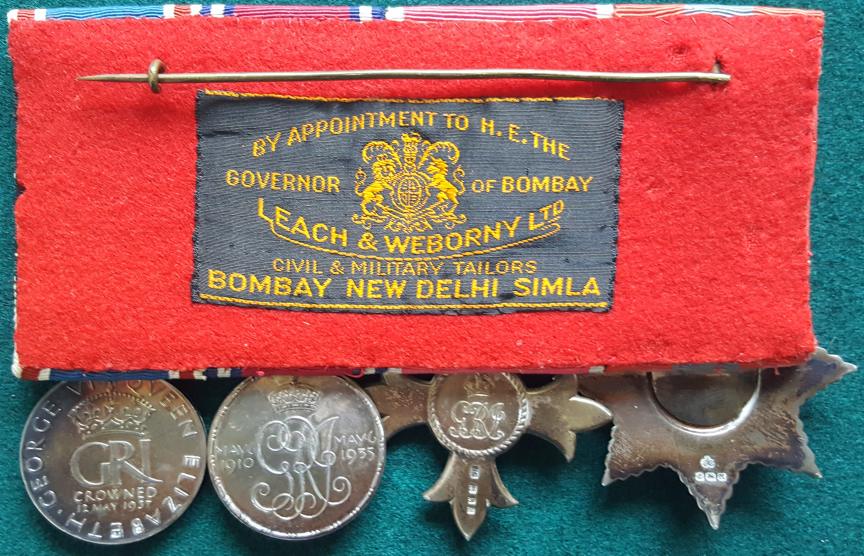
Slynn went out to India in 1910 serving in various government departments before becoming personal stenographer to the Viceroy in 1919, a post he held until 1935 when he became the Viceroy’s private secretary. He was appointed MBE in 1934 and ISO in 1937.
The warrant is countersigned by WE Elliot, who was Secretary of State for Scotland. All other warrants that I have seen have been countersigned by the then Home Secretary.
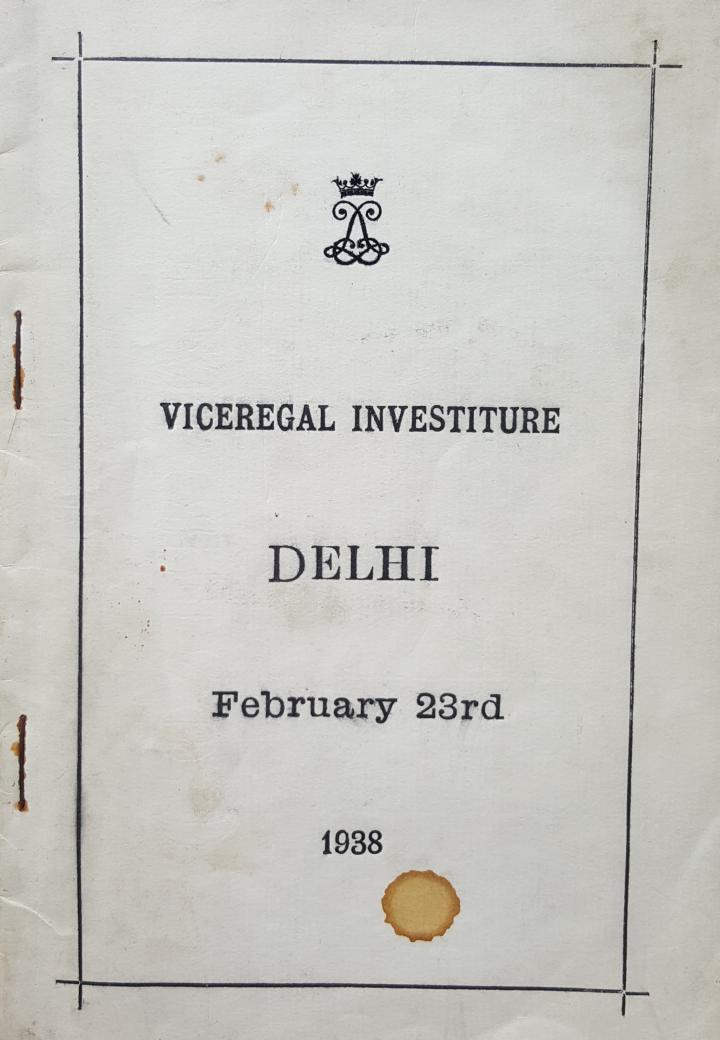
Slynn was invested with his ISO by the Viceroy in 1938. Investitures held in India at this time were accompanied by a small booklet with biographical details of those being invested.
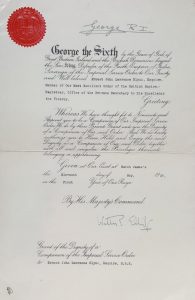
Warrant 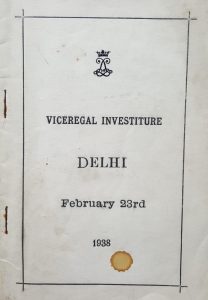
Investiture cover 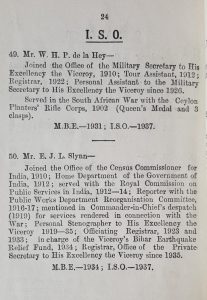
Investiture biography 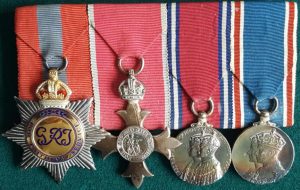
Medals obverse 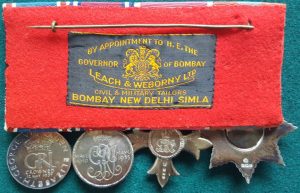
Medals reverse
Case Study – Laurence Barton Hislop, ISO
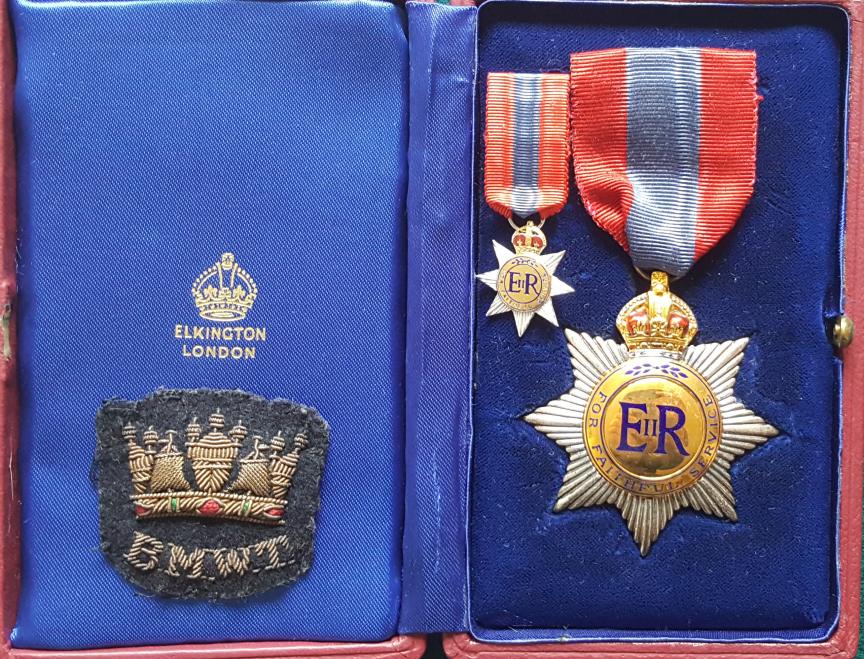
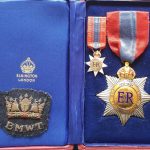
Hislop was a member of the Royal Institution of Naval Architects. He was awarded the ISO in 1970. Note that, unlike the other examples above, the warrant does not give any indication of his role. This seems to have started with the current reign. The London Gazette is a little more forthcoming giving his role as Principal Sea Transport Surveyor, Board of Trade.
His insignia came with a cloth cap (?) badge with the initials BMWT beneath a naval crown. If anyone knows what the initials mean, I should be pleased to hear from them.
Elizabeth II ISO 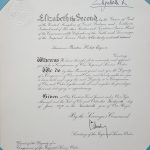
Warrant 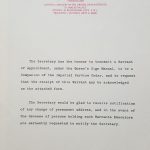
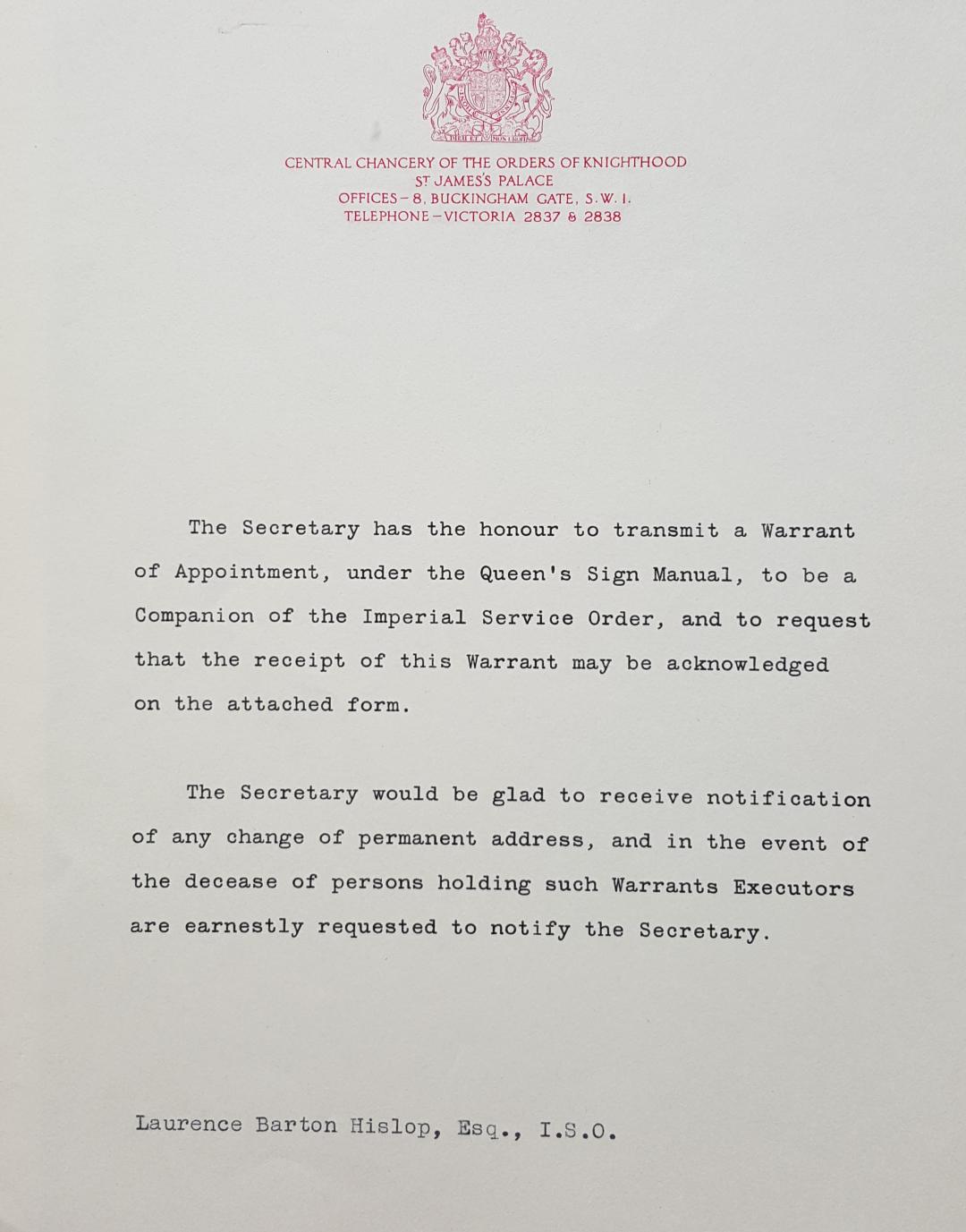
Accompanying letter