The Order was granted a Royal Charter in 1888. The Order is used to reward valuable service to the Order.
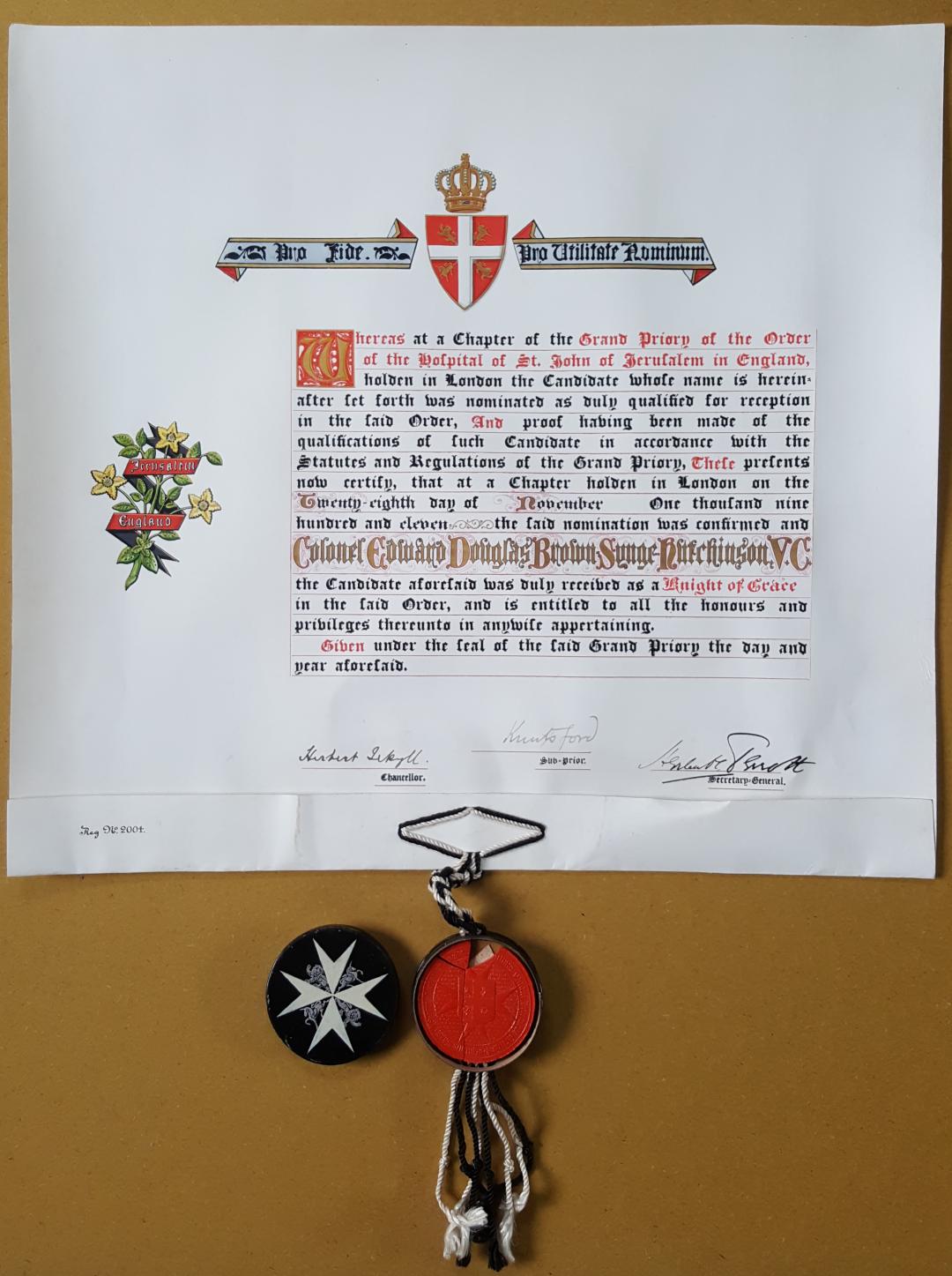
The documents produced for recipients are called diplomas. As the Order is semi-official, diplomas are not subject to official sanction in their design. Consequently they are the most varied of any British order. This makes it difficult to be definitive as there may be other designs I have not seen.
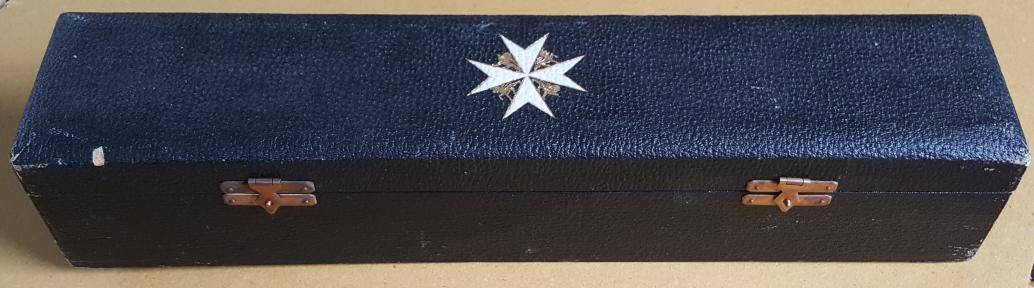
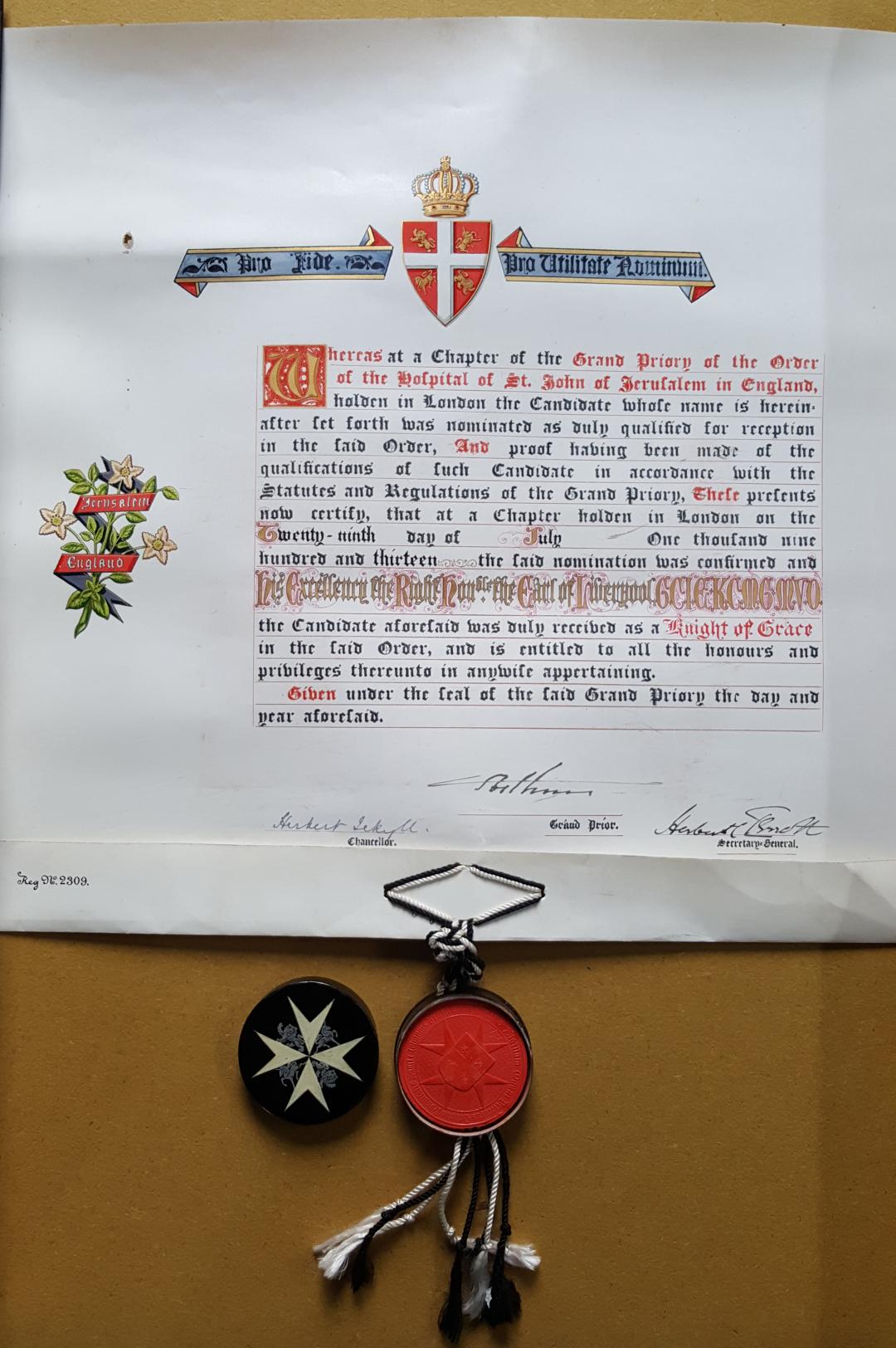
Warrants of the higher grades were housed on japanned tin tubes until at least 1918. By 1926 this was replaced with a wooden box.
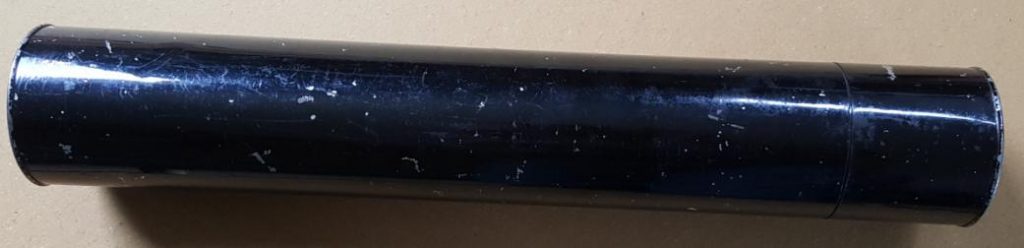
Tin tube 1913 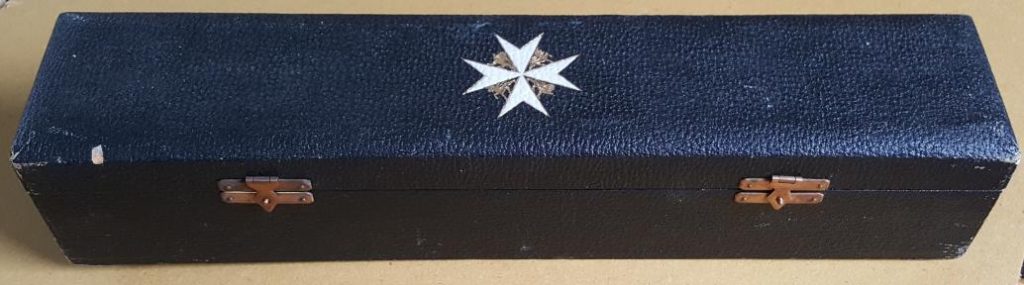
Wooden box 1926

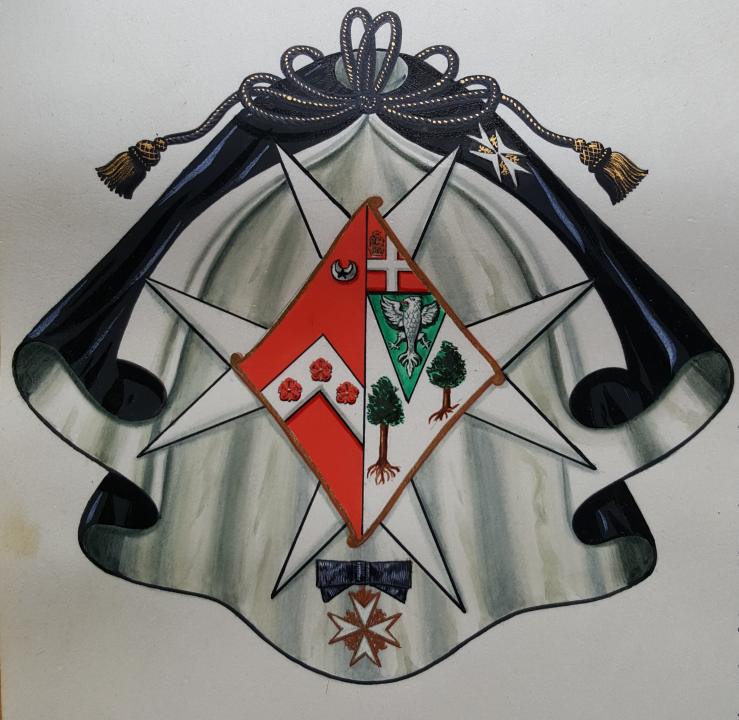
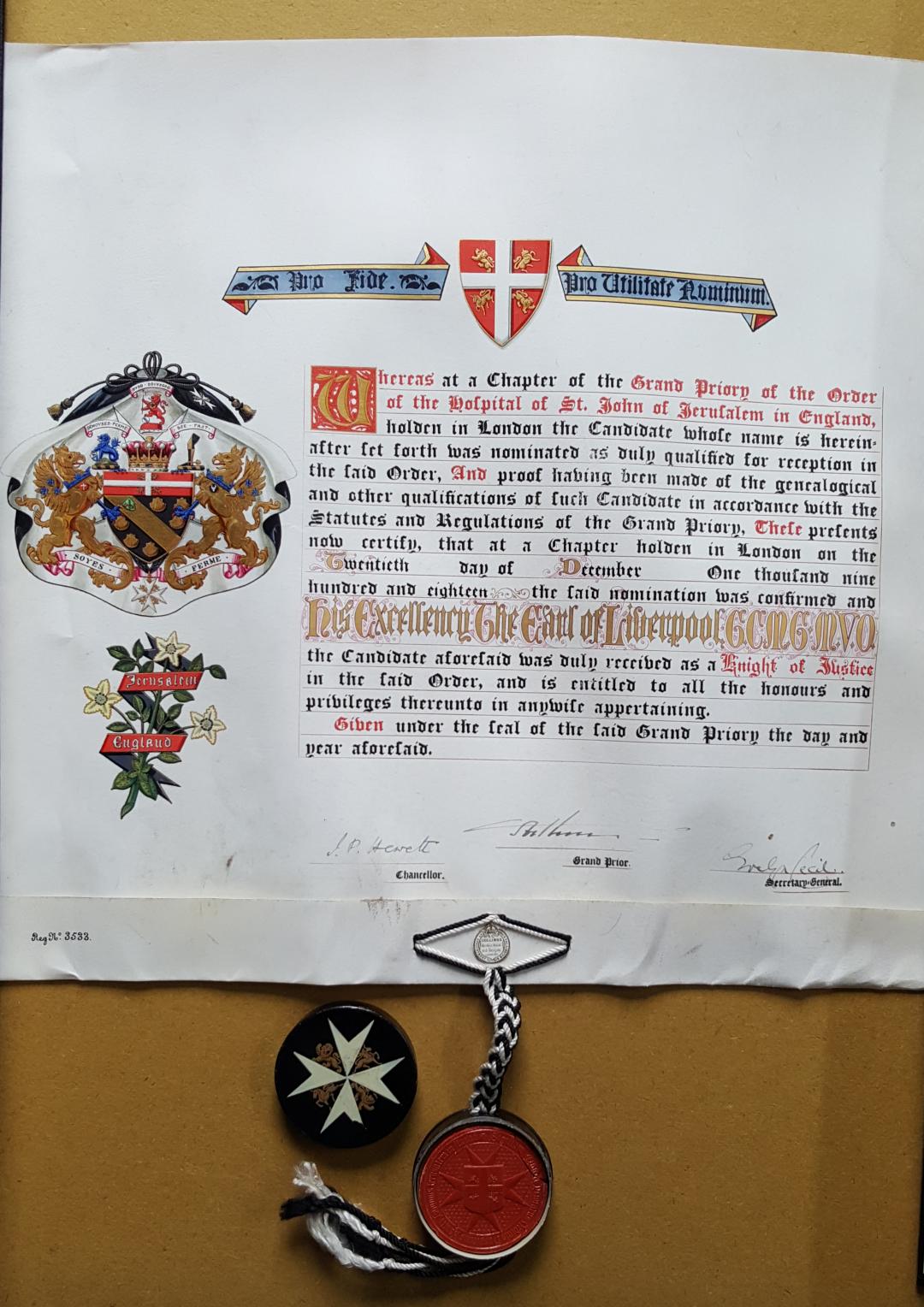
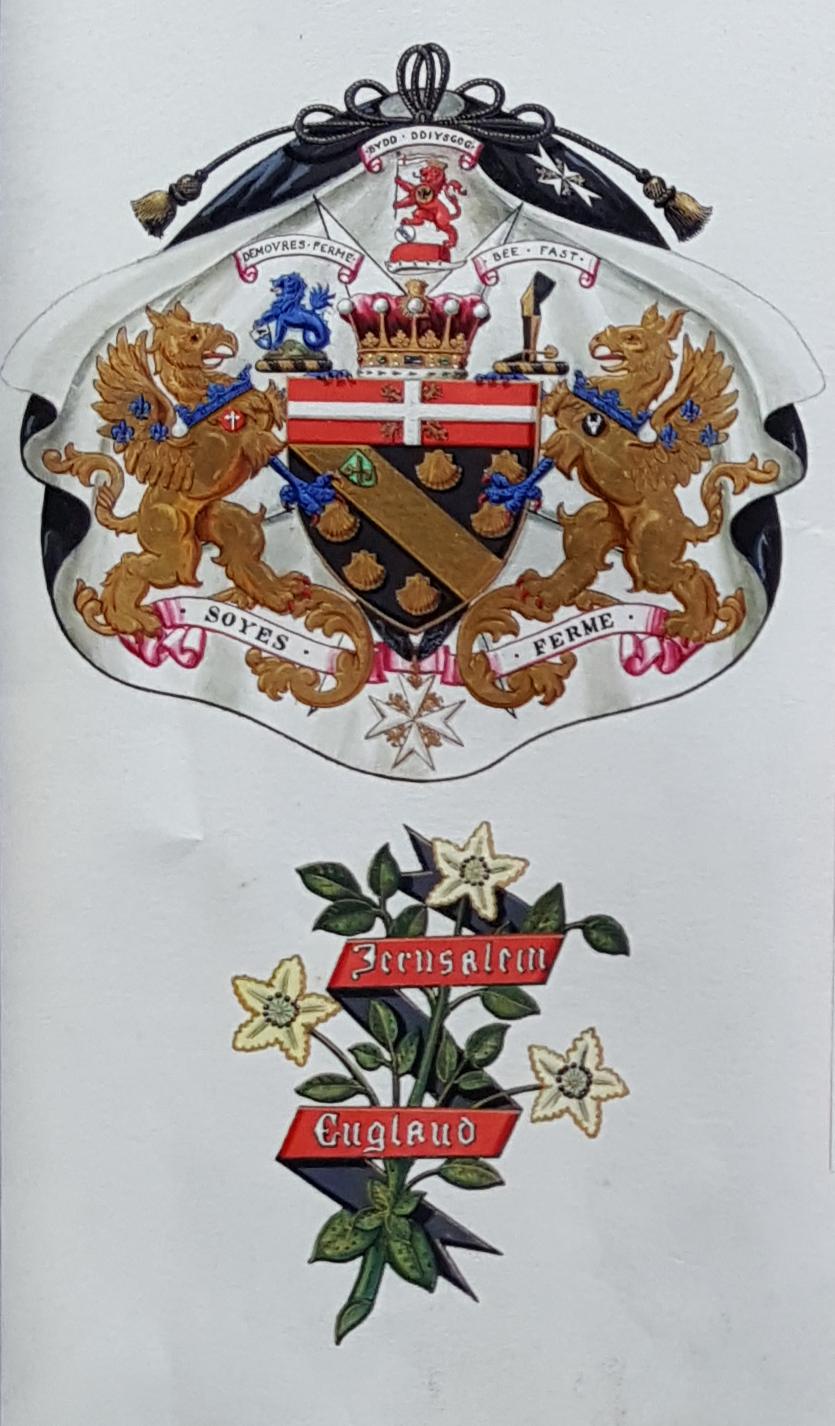
Until at least 1926 for Knights of Justice of the Order, if the recipient had a coat of arms, their diploma included a painting of their coat of arms combined with that of the Order of St John.
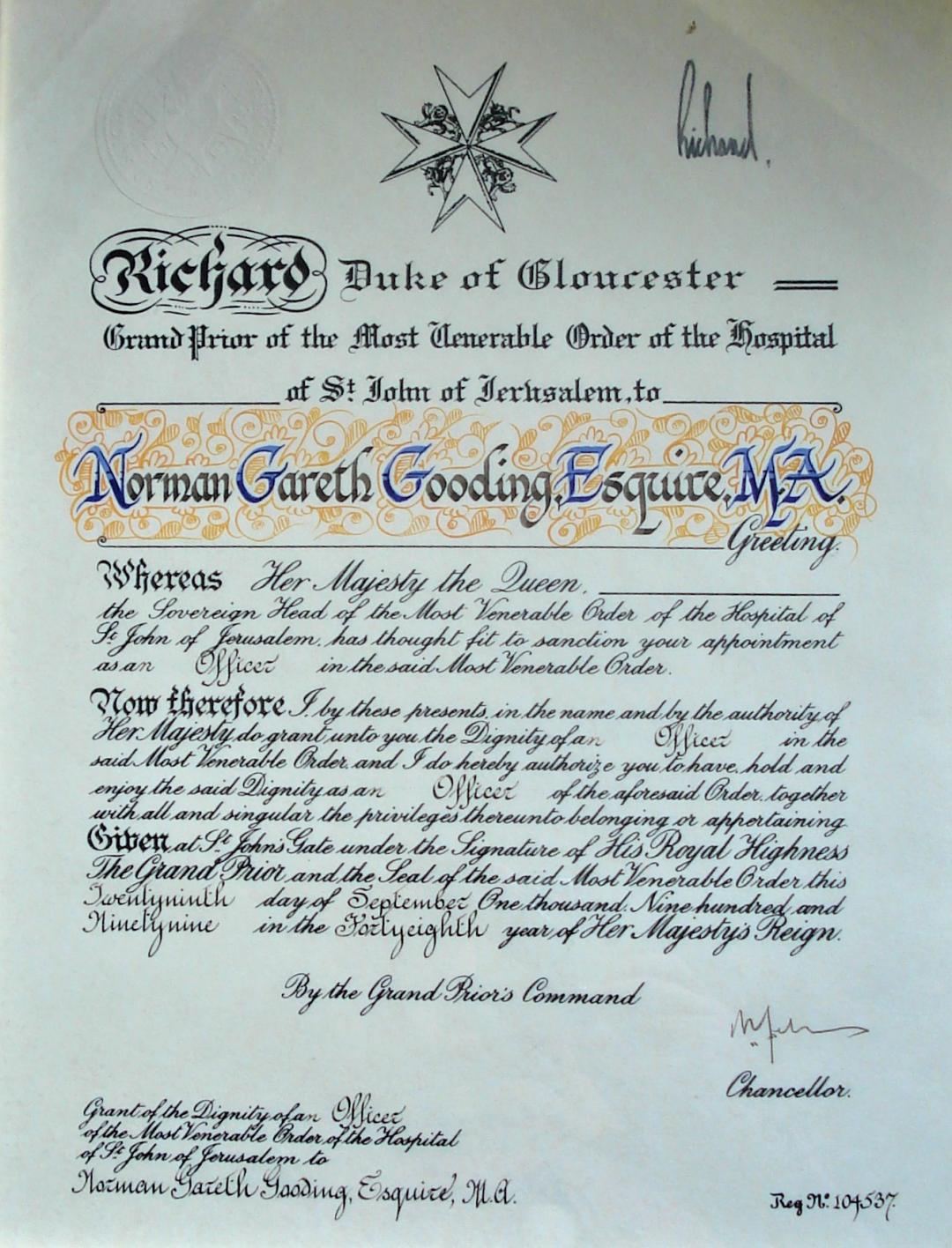
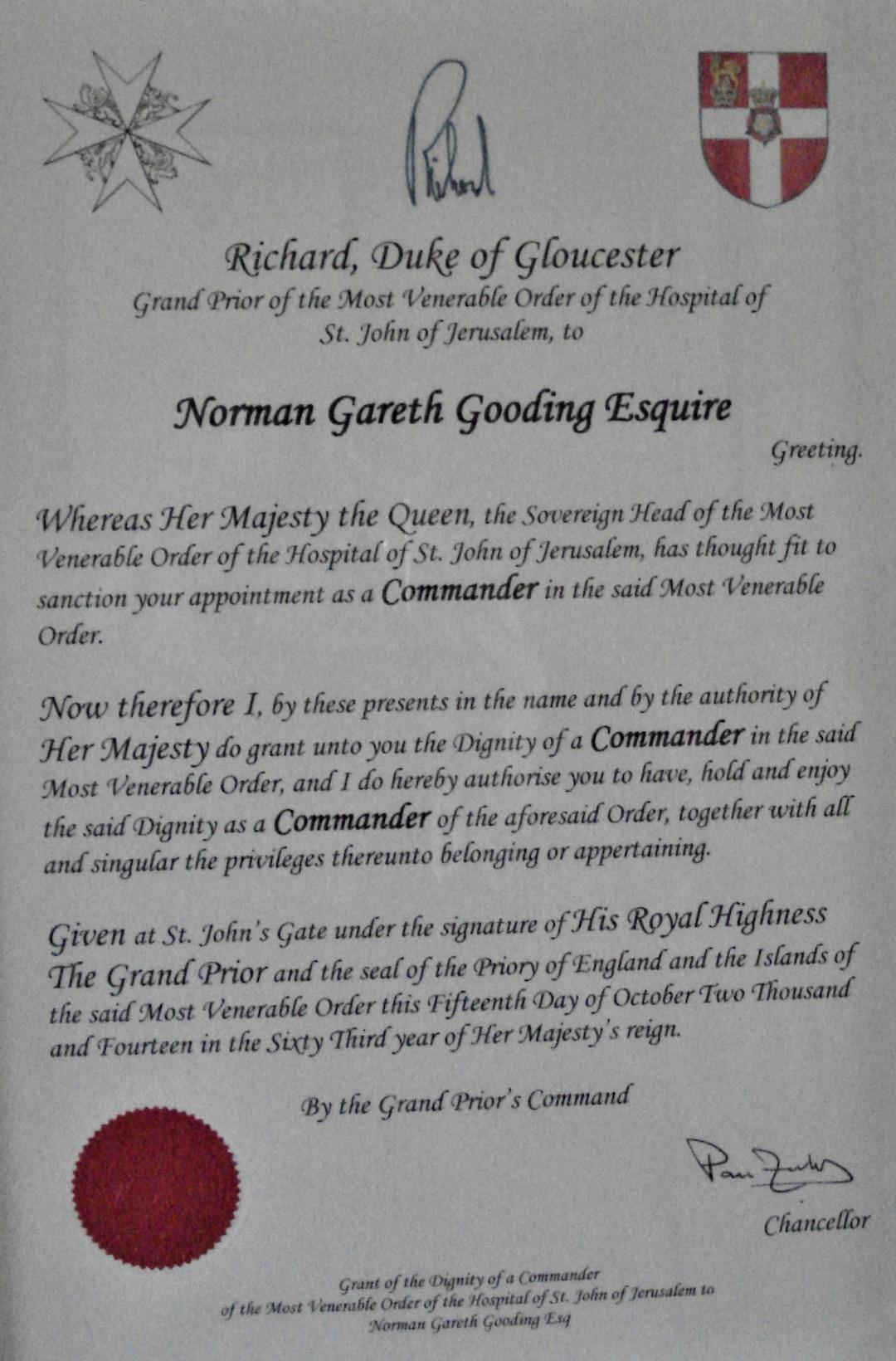
The Reg No on the diplomas presumably refers to a register of recipients. The number appears on a certificate dated 1999, but is missing from one in 2014.
It would seem that diplomas were not automatically produced for recipients of the Order, but were made available on payment of a fee. It is not known whether this has always been the case, but it was certainly true at the end of the twentieth century. This might also explain why, given the large number of appointments to the Order, there are so few diplomas around. All appointments to the Order appear in the London Gazette, so the lack of a diploma is not as important as it may seem.
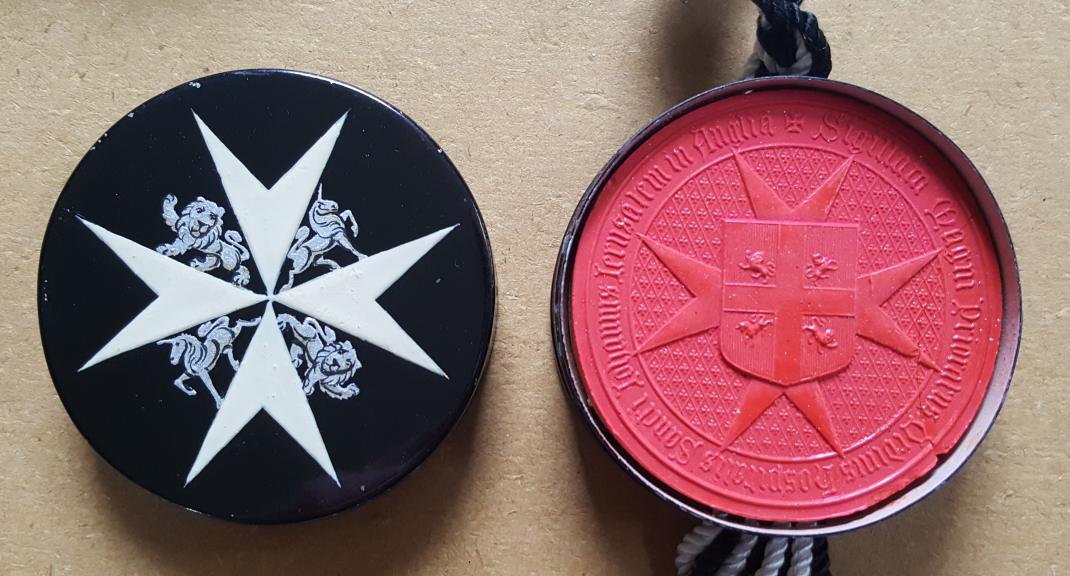
Seal
The seal is described as: the Badge of the Order, surmounted by an Escutcheon of the Arms of the Order, the whole surrounded by the legend: “Sigillum Magni Prioratus Ordnins Hospitalis Sancti Iohannis Hierusalem” This may be abbreviated to “Sig:Mag:Pr:Ord:Hosp:S.Iohis:Heir”
The seal is used in wax for the higher grades until at least 1918, but was replaced by a wafer seal by 1926.
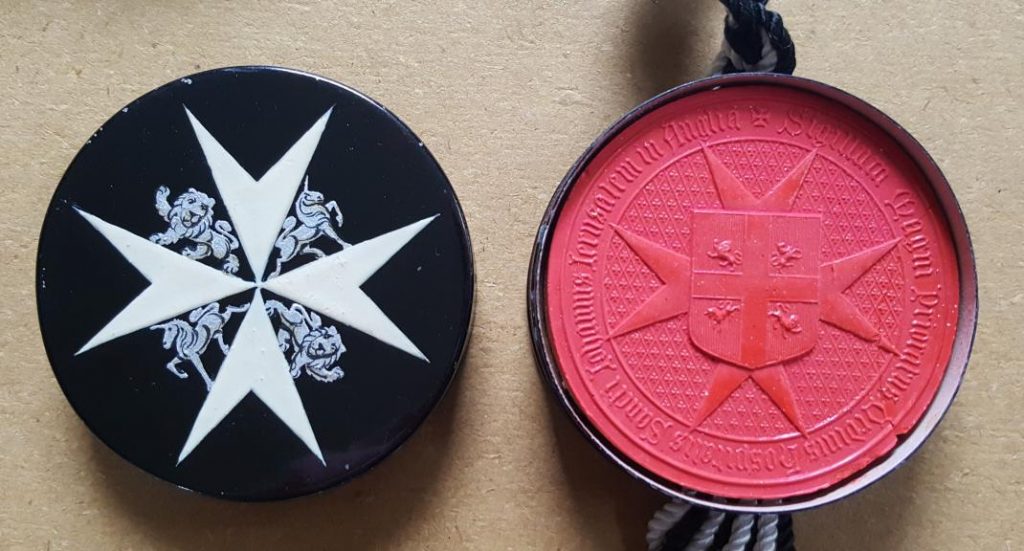
1912 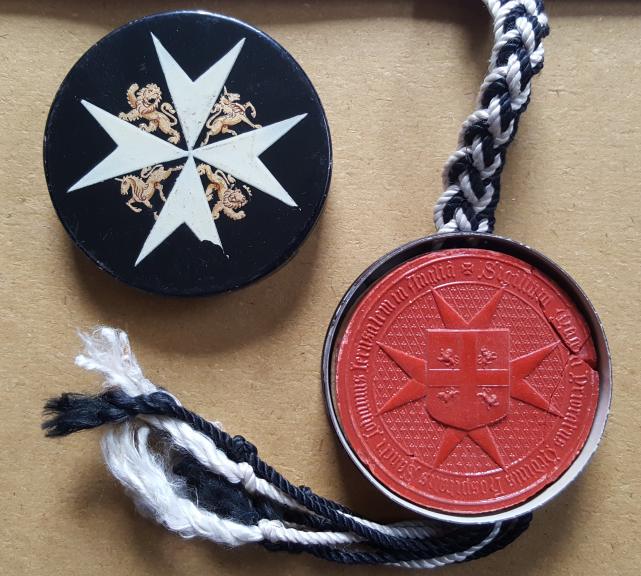
1918 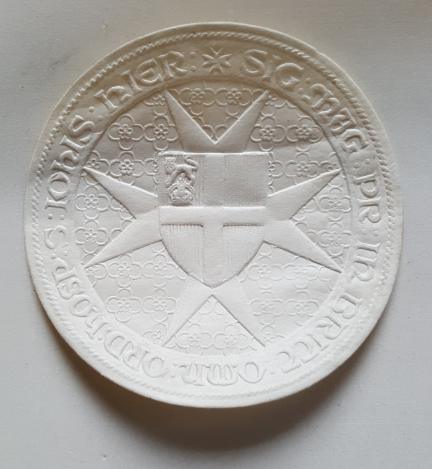
1926
Other Signatures
The sovereign does not sign the diplomas; that function falls to the Grand Prior. Other signatories include the Chancellor of the Order and it’s General-secretary.
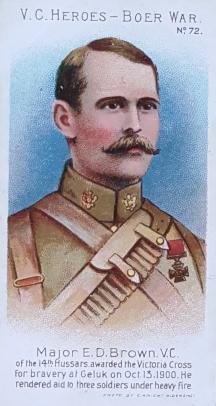
Case Study – Edward Douglas Brown-Synge-Hutchinson, VC
He was appointed a Knight of Grace in 1911.
Warrant 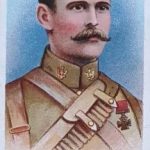
Cigarette card
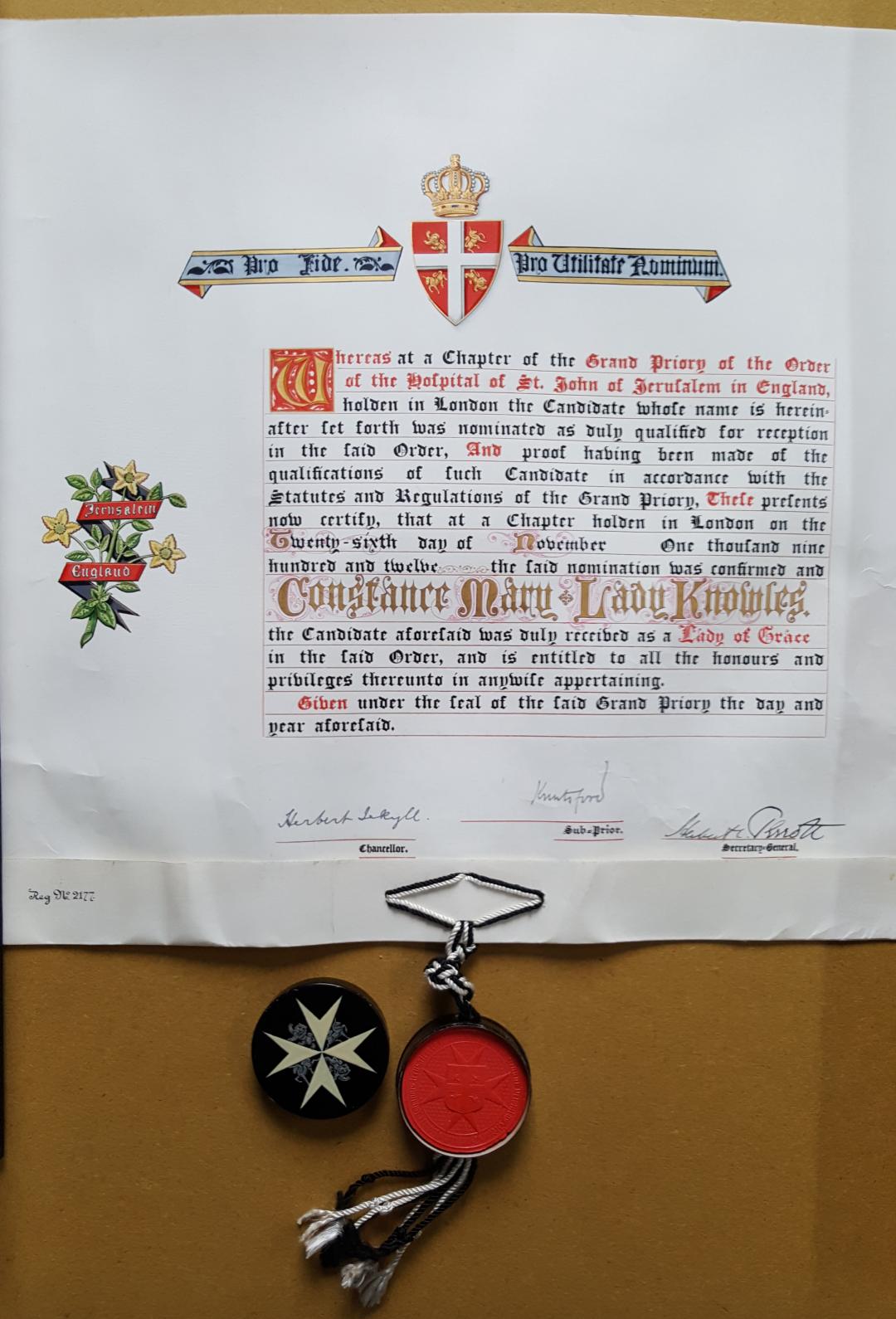
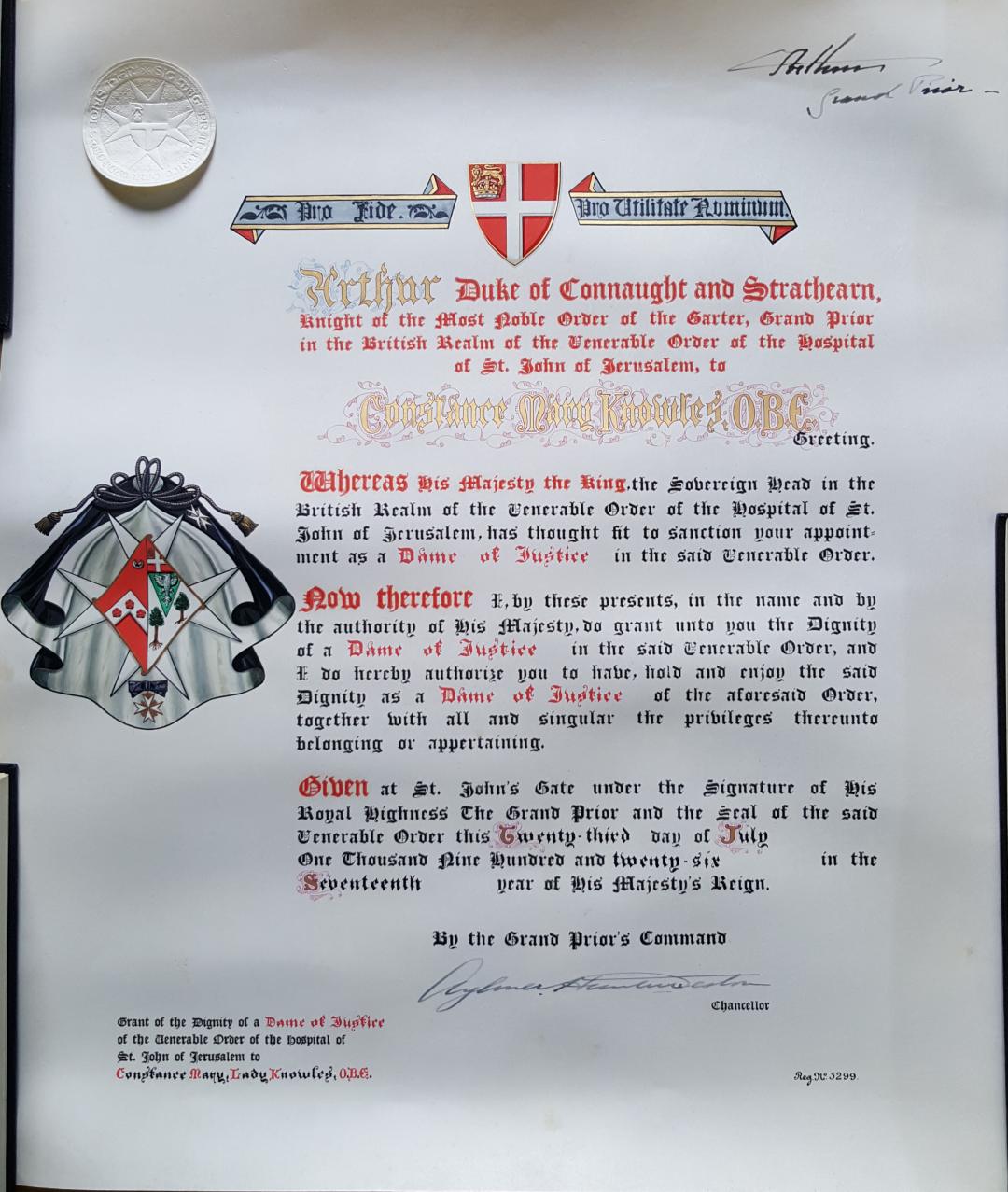
Case Study – Constance Mary, Lady Knowles
Lady Knowles was appointed a Lady of Grace in 1912 and a Dame of Justice in 1926.
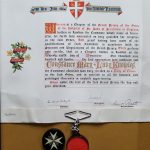
1912 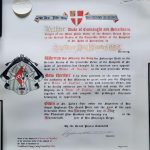
1926 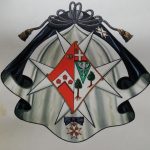
Coat of arms
Case Study – Earl of Liverpool
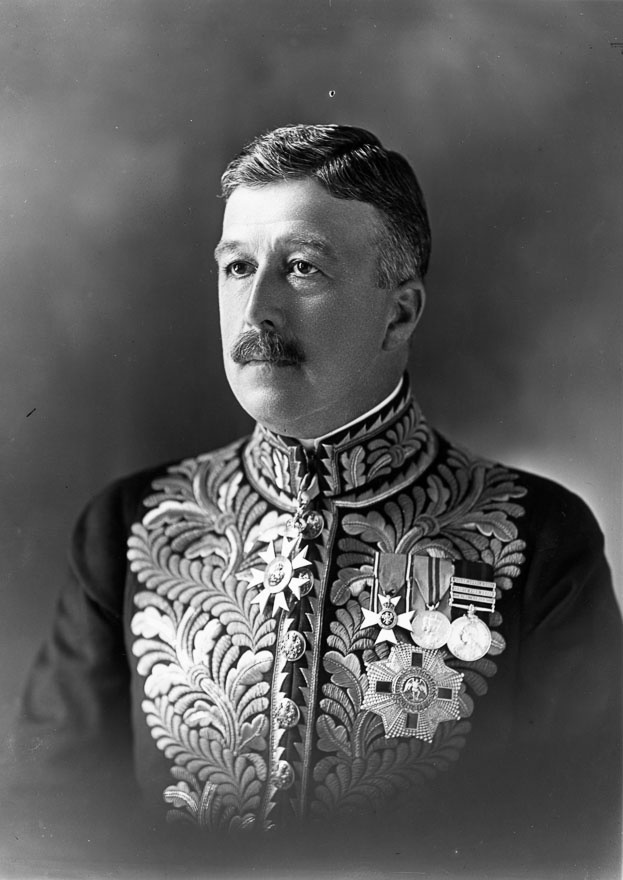
The Earl was appointed a Knight of Grace in 1913 and Knight of Justice in 1918. Please note that the Earl was never a GCIE (see 1913). The 1918 diploma includes a label for EC Collins Heraldic Artist. Other members of Collins’ family followed the same profession.
Earl of Liverpool 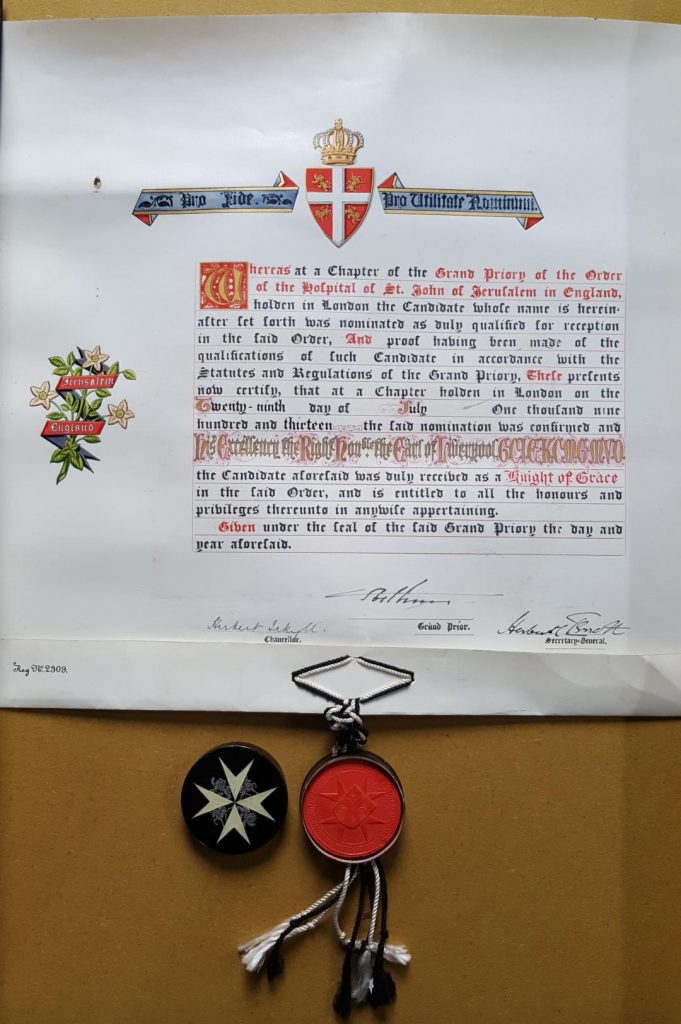
1913 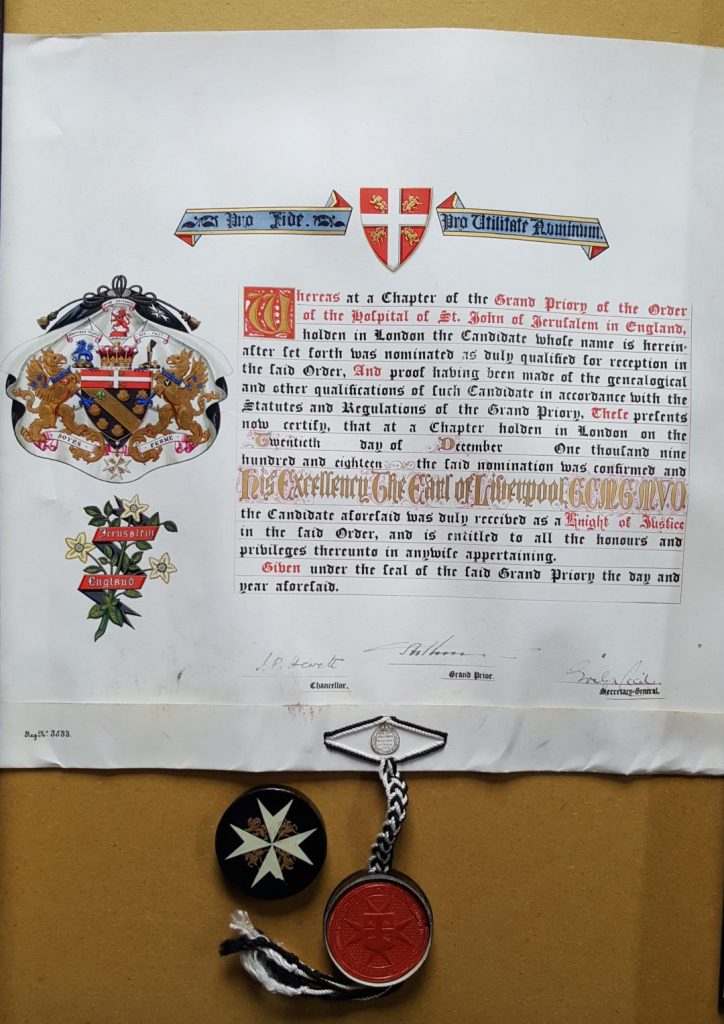
1918 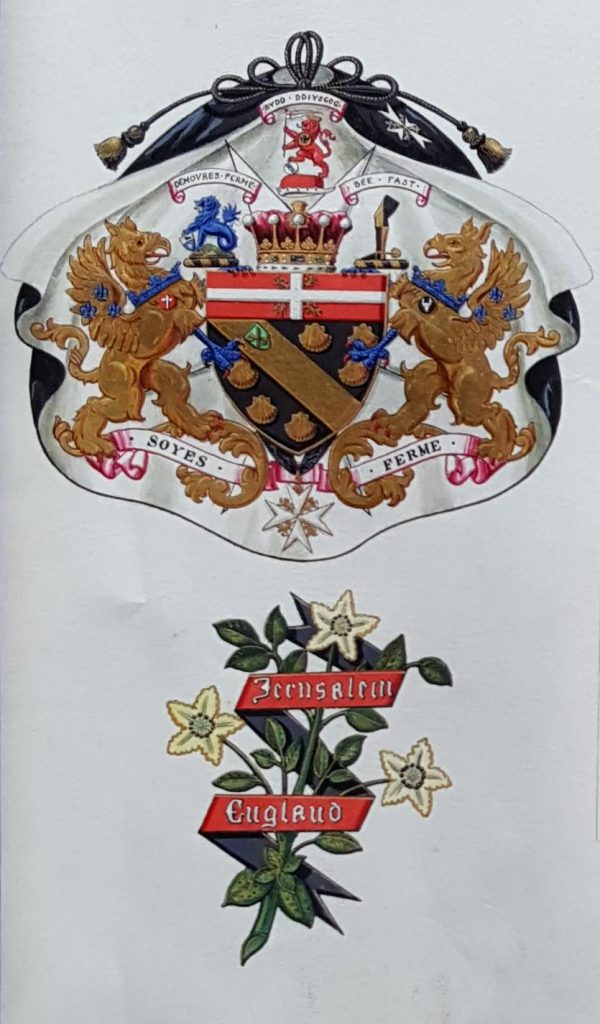
Coat of arms 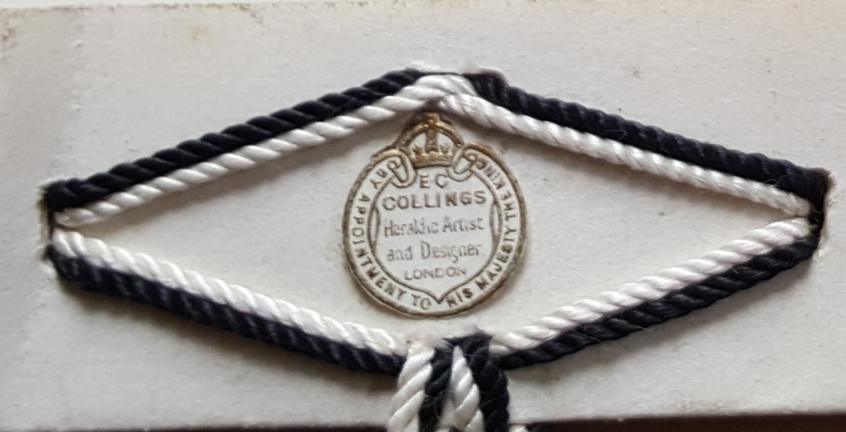
Artist
Case Study – Milbrough Marshall, Miss Parker
Miss Parker was made a Serving Sister in 1917. Although reasonably decorative compared to official diplomas of the time, it is noticeably plainer than for higher grades of the Order. Please note that, in this example, the arms of St John have been neatly cut out of the seal.
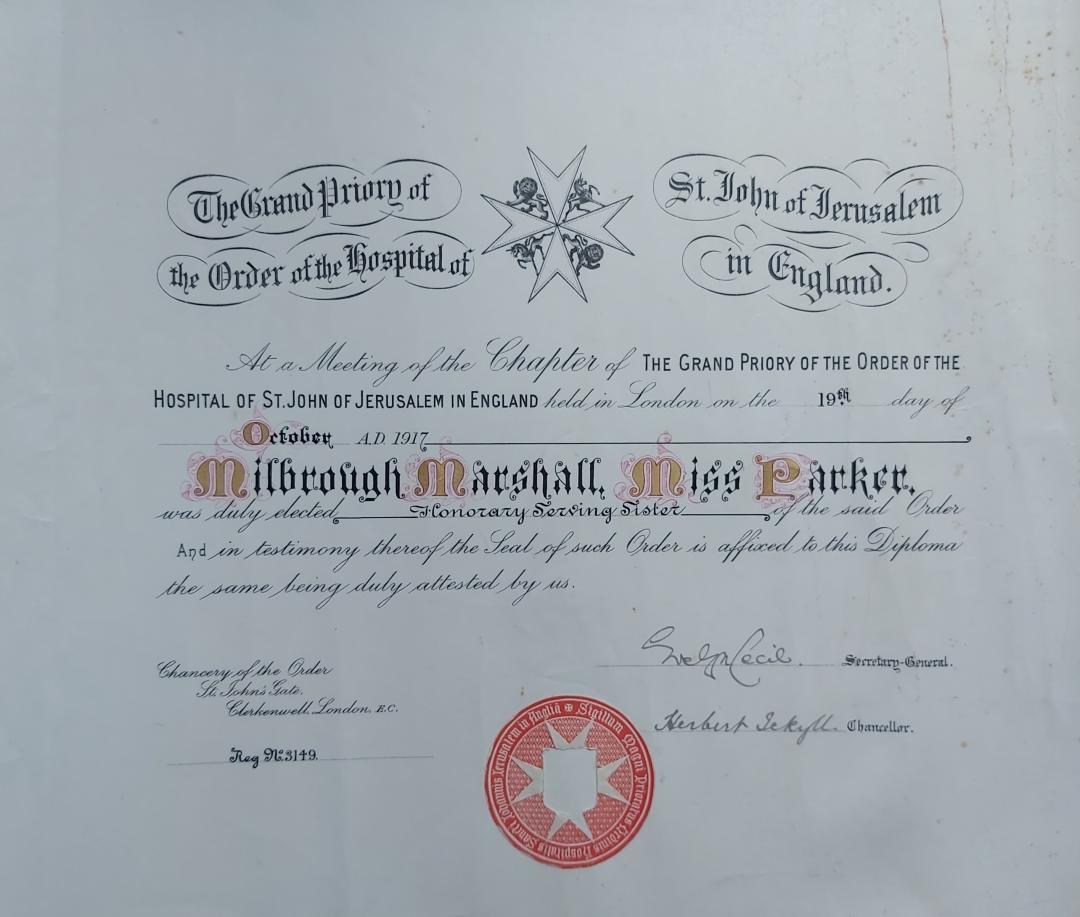
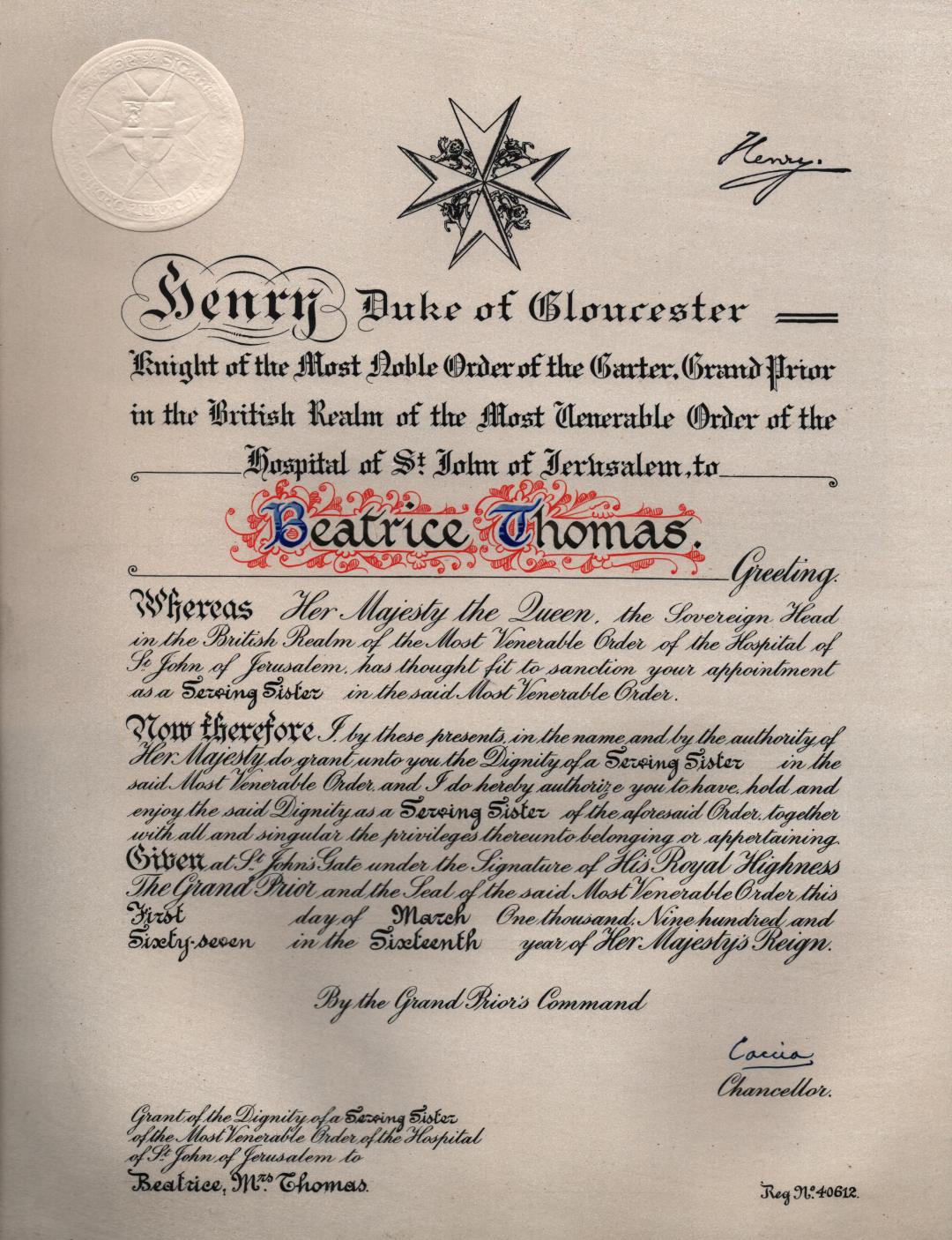
Case Study – Beatrice Thomas
Mrs Thomas was made a Serving Sister in 1967. Note that the diploma is now portrait.
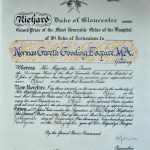
Case Study – Norman Gareth Gooding, MA
Gooding was made an Officer in 1999 and advanced to a Commander in 2014. A considerable amount of calligraphy went into the 1999 diploma – this was the work of Denis Collings. The 2014 diploma is plainer and presumably produced by computer at a much lower cost.
1999 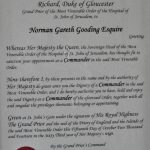
2014